


Never make blanket assumptions. Almost everything has the ability to surprise you. Even the least interesting things can transform into remarkable creations.
You might think of the Pontiac “Iron Duke” four-cylinder as a durable engine that vies with the Chrysler “Leaning Tower of Power” or the Ford “Thriftpower” six for the title of World’s Most Boring Motor. You’d never imagine that the mil under the hoods of old LLV mail trucks nationwide would be something you’d find in racing machines. I certainly didn’t, so my discovery of the Pontiac “Super Duty” four was quite a revelation, and one that I want to share.


Need A Big Aluminum Boat Anchor?
Some things are the right thing at the right time. By the late seventies, General Motors was feeling the brunt of the underdevelopment of its 1971 compact, the Chevy Vega.
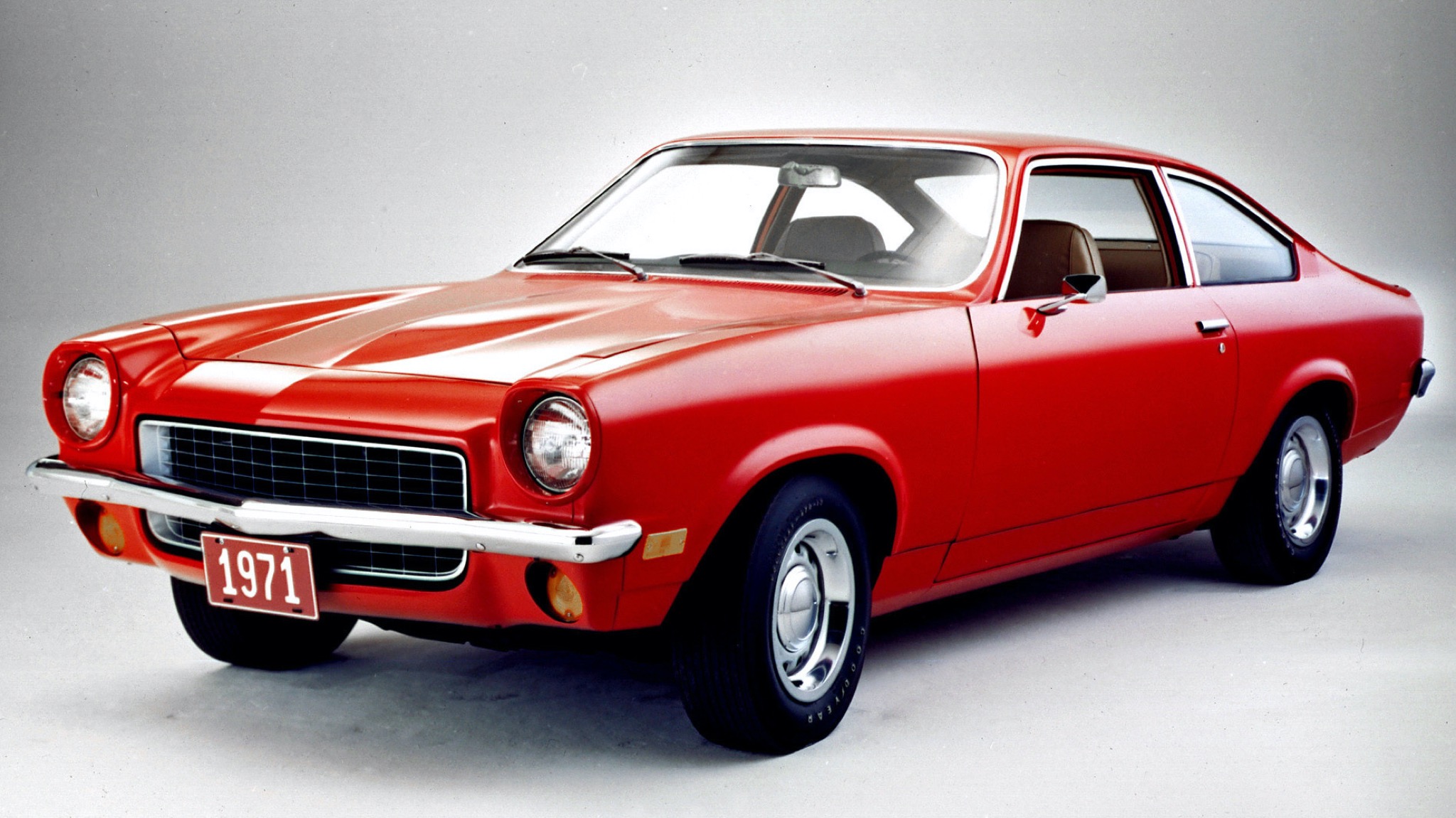
The Vega was a highly rust-prone showcase of a motor that quickly gained a reputation for oil burning, overheating, blowing head gaskets, and a number of other maladies.
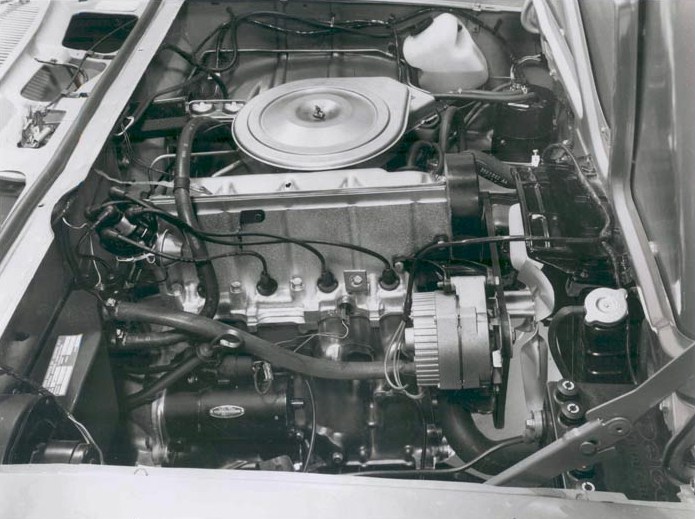
GM had to come up with a replacement. Launched for 1977, the new Pontiac-developed four-cylinder engine was a response to the overreaching of General Motors in the late sixties with the ill-fated powerplant used in the series of H-body subcompacts. This so-called “Iron Duke” was the polar opposite of the Vega motor. Gone was the linerless aluminum block and overhead camshaft, replaced by cast iron and pushrods. It seemed like a retrograde step, but at this point, GM was more concerned with avoiding warranty repairs and class action lawsuits than trying to match expensive European kit with a flashy spec sheet.
The design of The Duke was very similar to an earlier Chevy four-cylinder engine introduced in 1961, but no parts were interchangeable. The Duke also featured a relatively short stroke and longer connecting rods for less vibration and more power at lower revs; GM was well aware that most Americans were not going to go all Italian- or Honda-style and rev the crap out of their motors to get power.

High-revving, high-powered thrills? You aren’t going to get that with an Iron Duke. In base form, this 2.5-liter mill pumped out a mere 85 horsepower. It’s one of those motors that nobody loved, but everyone bought, simply because GM used this lackluster engine in absolutely everything. The front-drive “X” cars received the Duke as a standard engine, as well as the related larger, later “A” bodies.

Even American Motors products got the old Duke. It was also standard equipment on the S-10 pickup and infamously on F-body Camaros and Firebirds for those who could afford the look but not the power to back it up. That has to be one of the worst matches of powerplant and car to ever leave a General Motors plant; however, it wasn’t the absolute worst match. That title goes to another ill-fated sports machine.
The Duke Of (No) Oil
We’re constantly disputing what a “sports car” is here at The Autopian, but it would seem to us that, ideally, a sports car should have a sports car engine. That wasn’t the case for the first (and only) mid-engined Pontiac back in 1984: the Fiero.

The initial examples of this mid-engined coupe with Chevette front suspension and the whole Citation front drivetrain shoved in back came with The Duke as the sole motor option. With only 92 horsepower and an unwillingness to rev, the situation was made even worse by Pontiac having to cut the oil pan of the standard motor down to fit the low-profile Fiero, meaning it was always essentially running a quart low. Combine that with a batch of bad connecting rods finding their way into this new plastic-bodied sportster, and you’ve got a reputation-destroying disaster.

Still, this was the Malaise era, and it was amazing for something like the Fiero to see the light of day at all. It would have been criminal for a Fiero not to pace the Indianapolis 500 for 1984, and Pontiac actually had a special version of the clunky old Duke for the job.
Brickyard Beauty
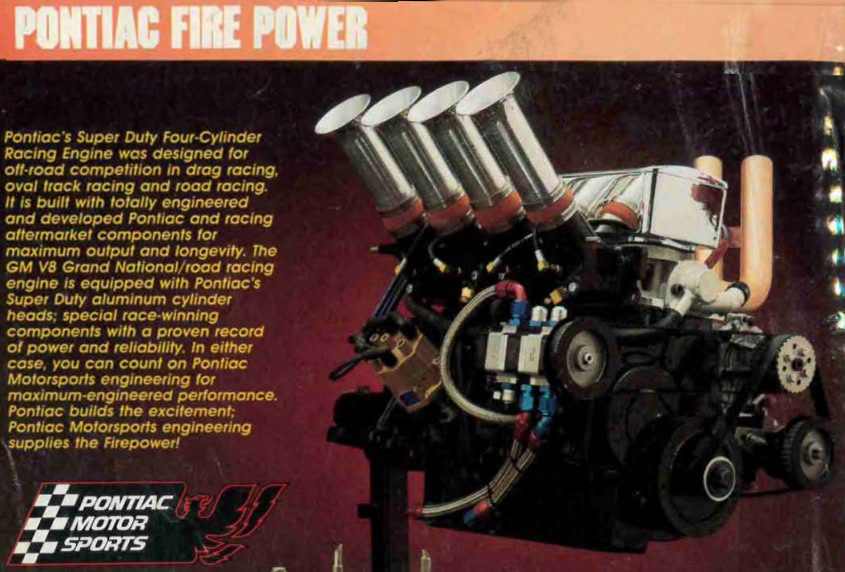
You would imagine a 92-horsepower four being a lost cause to make into something powerful enough to propel a car fast enough to get out of the way of a pack of Indy cars when the green flag goes out. Reportedly, the requirements of the time needed the car to be able to cruise at 125 mph and then stop within 500 feet. Thankfully, Pontiac’s skunkworks had already released a special Iron Duke that was the very last of their long line of “Super Duty” powerplants dating back to the famous motor used to propel the “Swiss cheese” Catalina and Tempest drag racer I reported on earlier.
At first glance of the basic specs and the block itself, a Super Duty might look very similar to the standard Duke in a 6000LE, but it’s not. Everything is built to a higher standard, from the reinforced cast-iron block with four-bolt mains, high-flow heads, forged internal components, and different headers. Do those intakes look stock to you?
The Super Duty was available in displacements from 2.1 liters (standard Duke was 2.5) all the way up to a whopping ill-advised-for-a-four-cylinder 3.2 liters.
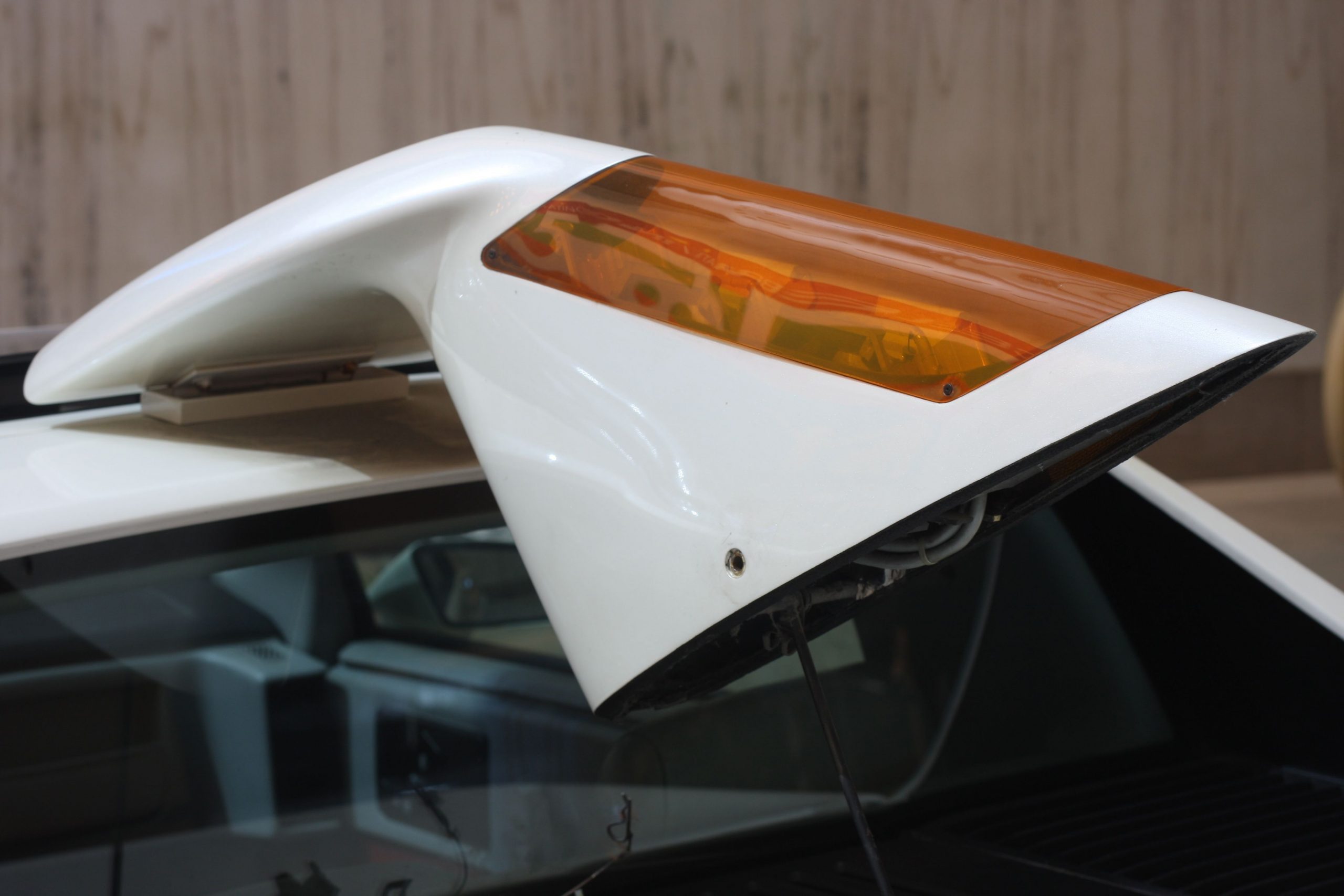
For the 1984 Pace Car, Pontiac popped a 2.7-liter Super Duty into a Fiero that produced 232 horsepower, good for a top speed of around 138 mph. With the new GT nose cone, smooth aluminum rims, and a roof snorkel, it looked fantastic. You can learn a bit more about it by clicking here for a short video.

Additional Super Duty Pace Car Fieros were made for the PPG Race Series, including one like the one below that came up for auction.
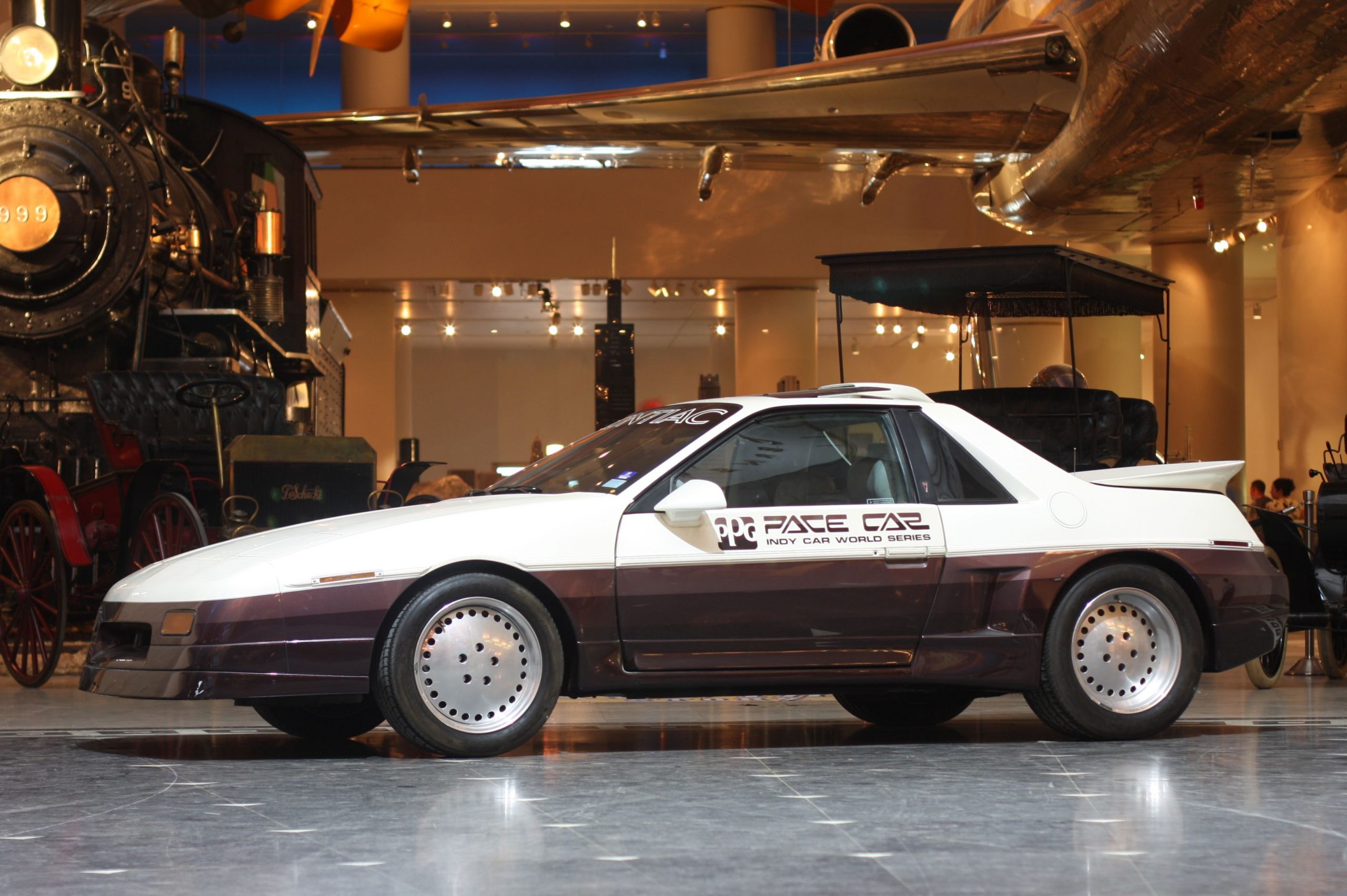
You can see that this later incarnation had more refined front body work but still had the cool “snorkel” air intake that incorporated the required flashing beacon.
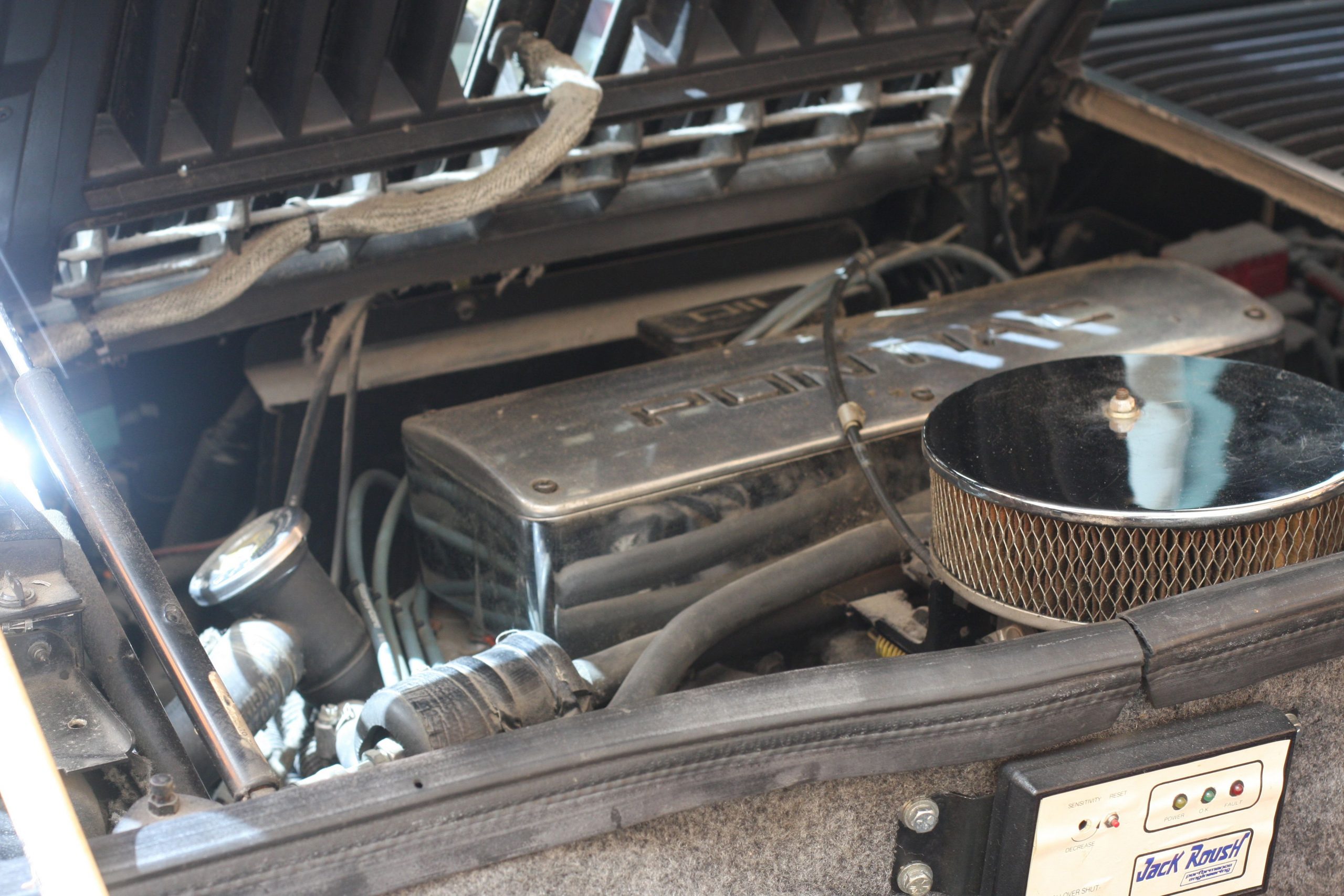
There’s the Super Duty in the back at the ready to keep up with competition cars.
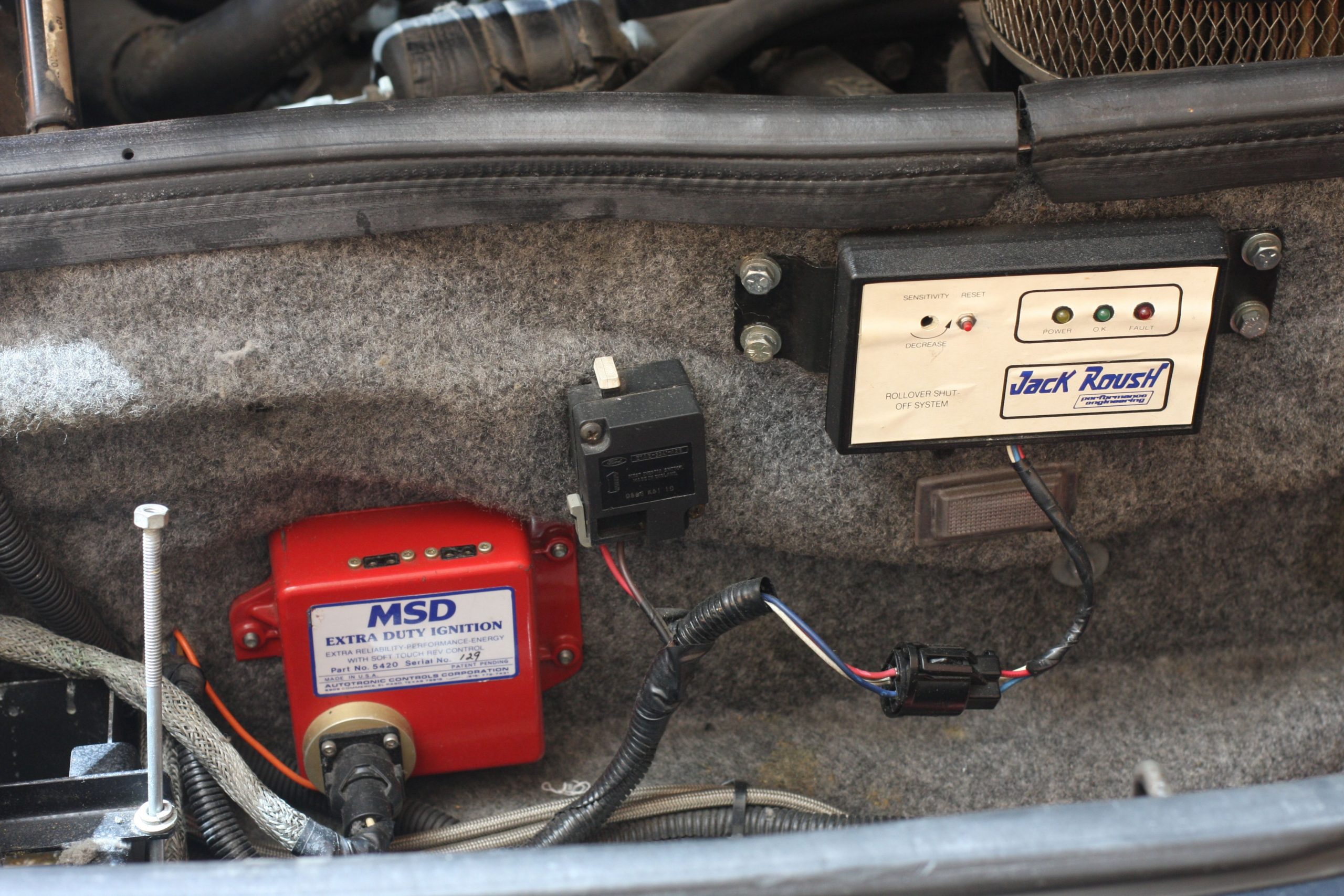
I like the old school “high performance” electronics in the trunk:
This one sold for $57,300; a reasonable price considering the work that likely went into it, even if you couldn’t easily (or even legally) run it on the street.
Too Super Duty For The Street
In typical seventies and eighties fashion, Pontiac had to offer a Pace Car replica edition of this Indy Fiero. In this case, 2,000 of them were built with the same flashy white paint and graphics as the Real Thing, including the typical installed-at-the-owner’s-choice PACE CAR placards for the doors.

Side note: there was a whole series of “Pace Vehicles” including some sweet-looking GMC S-15s in pace vehicle paint schemes that you wouldn’t be embarrassed to drive on the street, unlike some of the lurid more recent ones.

A big wing, but no snorkel on the replicas, though:

Seats with retina-searing red inserts and half-toned “Indy” logos featured in the tricked-out interior.

Super Duty powered? Uh, no. You’ve probably already correctly guessed what’s sadly under the engine cover in back. The Fiero Pace Car replica got the same 92-horsepower Iron Duke as any run-of-the-mill pre-V6 car, earning it a frequent place on those “worst pace cars” lists that I hate.

That’s a real shame when you consider how the Fiero was, conceptually at least, one of the most worthy cars to have ever paced an Indy Car race up to that point (and the only mid-engined vehicle up until the C8 ‘Vette decades later).
Ready For What GM Called “Off Road Use”
Naturally, the Super Duty Duke was never offered in a production Pontiac. Even if it stood a snowball-in-Death Valley’s chance of passing emissions, you can only imagine what a three-liter four-cylinder that didn’t even know what a balance shaft was might have been like at full song. If it didn’t rattle your fillings loose, you can be sure that any piece of trim on a Super Duty-equipped car would be trying to detach itself. This sucker was raucous.
As a track powerplant, though, the “Super Duke” more than delivered on its promise. The Super Duty was used a variety of motorsports like NASCAR’s Charlotte/Daytona Dash Series, the IMSA GT Championship (in GTP and GTU class cars), and ARCA stock car racing. Oddly enough, it even featured in American Power Boat Association racing boats. My favorite application might be this Super Duty-powered Fiero rally car. You might scoff at the idea of mentioning “Lancia Stratos” and “Pontiac Fiero” in the same sentence. Click here and scoff no more, homies:

Sure, the Ferrari Dino V6 sounds a little better, but listen to that ‘Duke just scream! When people weep over the Fiero, in many ways, it’s about the potential that this car and engine had, and videos like that prove why. What a cool and unexpected rally car.
Cosworth Without The Vega
Malaise Chevy fans will no doubt remember that legendary motor builder Cosworth created a twin-cam version of the infamous Vega engine for the short-lived Cosworth Vega. That apparently wasn’t the end of Cosworth’s GM collaboration on clunky compact car four-cylinder engines.

Apparently, Cosworth got involved once again to create a DOHC head for the Super Duty Iron Duke. I have very little information on this one, except for the fact that three of these were for sale some time ago, and a racing parts site.

A Cosworth fan site I found lists the undisclosed number of these made as a three-liter, and with around 370 horsepower. Yes, a twin cam Iron Duke. Yeah, now you’ve seen everything, right?
This Duke Was A-Number-One
Exactly how many Super Duty motors were produced is difficult to determine, especially since Pontiac apparently sold some of the heavy-duty parts a la carte besides complete engines. Also, while I can tell that the motor appeared around 1982, I can’t find a definitive answer as to when Pontiac finally stopped marketing parts, though I know that racing cars in some series with this motor were still competing into the 2000s. I can say that of the 3.8 to 4.2 million Iron Dukes made from 1977 to 1993, no more than a few thousand were these enigmatic powerhouses. It’s no wonder that so few people know that they ever existed, or, like me, just assumed that any fast Iron Duke had a blower on it. Still waters do run deep.
Most importantly, remember this: if the Super Duty block is really similar, if not the same as the standard motor, that means one of these hopped-up powerplants would bolt right into the most ubiquitous Duke Mobile: the LLV Mail Truck. A lightweight aluminum box with 300 loud horsepower? That’s something this world needs now; someone please make one!
Pontiac Points: 94/100
Verdict: Stepping on the ‘Vettes toes? Tough. Another glorious bone-in-GM-management’s-throat product of Pontiac’s rebellious skunkworks that wouldn’t take “no” for an answer.
topshot source: General Motors




Funny you should end the article that way, because stuffing an SD4 into an LLV is exactly my plan. The one I have is only a 2.5L displacement, but I’m keeping an eye out for other cranks. My current plan is to just swap in another Iron Duke so I can enjoy the LLV in its stock form for a bit before going crazy (the one in mine right now is in desperate need of a rebuild). But it’ll happen eventually! 🙂
I saw that Fiero (or maybe an earlier iteration) one year at the Rocky Mountain Rally. We were watching from the starting line and it made it about 100 yards from the start before grenading something in the driveline and coasting to a stop.
Wow, I never would have thought I’d read about a soup’d up/hopped up Iron Duke, but here we are! Thanks to The Bishop and The Autopian. Those pace cars are so awesome. It’s such a shame they used the regular engine in the replicas! What a sorry contrast that was. Fieros are awesome either way though.
“racing boats”
So they used them as boat anchors?
Ha ha
Just a weird little tangent, I was going to comment that I had good luck with the 3.0L 4-banger Mercruiser/OMC (GM designed) in a small ski boat. I had been told way back then that it was a variant of the ol’ Iron Duke 2.5L but I wanted to fact check that with the interwebs and it turns out that 3.0 engine is actually a relative of a 2.5L Chevy engine that shared virtually nothing with the Duke – the whole BOP vs Chevy engine stuff in the same company seemed so inefficient. It has the same bellhousing pattern as the Chevy 305 and 350 that were common back then so it makes sense for Mercruiser to share the stern drives across the platforms.
Believe it or not, I passed one of the Pace Car replicas this past Saturday morning. It was sitting proudly in front of a house across the road from the Monongahela River, looking top be in pretty decent shape. It was actually there last year as well, when I went on the same bike ride. I hope that it moved between then and now.
Anyway, I’m happy to know more about it, and I kind of want to print this article out and leave it on the windshield.
Plastic bodies don’t rust so Fiero often look great but have little remaining frame due to rust.
I actually recently picked up an 88 Fiero Formula for my project. No Iron Duke – its got the 60* V6 – but the 88’s improved suspension was pretty cool for the time. Plus the custom Fiero intake manifold is one of the coolest things in any car.
Great to see more focus on what was America’s only volume mid-engine car for a long time. RIP Pontiac
I came here to post this blast from the past: the Pontiac Motorsports Pro Street Fiero Formula I remember from its Hot Rod feature, equipped with a four-cam 3.0L Duke that made 273 horsepower… at 7,000rpm. Yikes.
https://www.hotrod.com/features/pro-street-1987-pontiac-fiero-technology-demonstrator-october-1987-982-1296-24-1