


It’s already not going well. I’m attempting to simply change a tire in a virtual world that feels a little like Lawnmower Man meets that one Dire Straits video. The issue is that I’m not following the proper procedure, which includes putting on safety equipment, and checking the car’s history. I am a mediocre home mechanic, and my career as a virtual professional one isn’t going so great. My ASE certification slipping away, my instructor is asking me if maybe I’d like to go back and not skip the instructions this time. That’s probably a good idea.
If I were a real world tech using the NAPA XcceleratoR XR Training Goggles, the comprehensive job assessment within the system would have probably flagged that I need to review some basic skills, and my evaluator would have started me at a very introductory level.


Thankfully, I’m just an overconfident journalist at an event previewing two new pieces of technology designed to help the world of fixing and maintaining cars run a little smoother. There’s a serious shortage of trained and certified technicians capable of working on cars, and NAPA’s new technology is trying to overcome some of these challenges.
The XR Training Goggles come with a 53-lesson curriculum designed to help speed up the process of certifying and training technicians. Once trained, another piece of technology called Technician Smart Glasses, is here to try and lower the amount of time necessary to complete a job.
Yes, That’s The Producer Of The Blair Witch Project
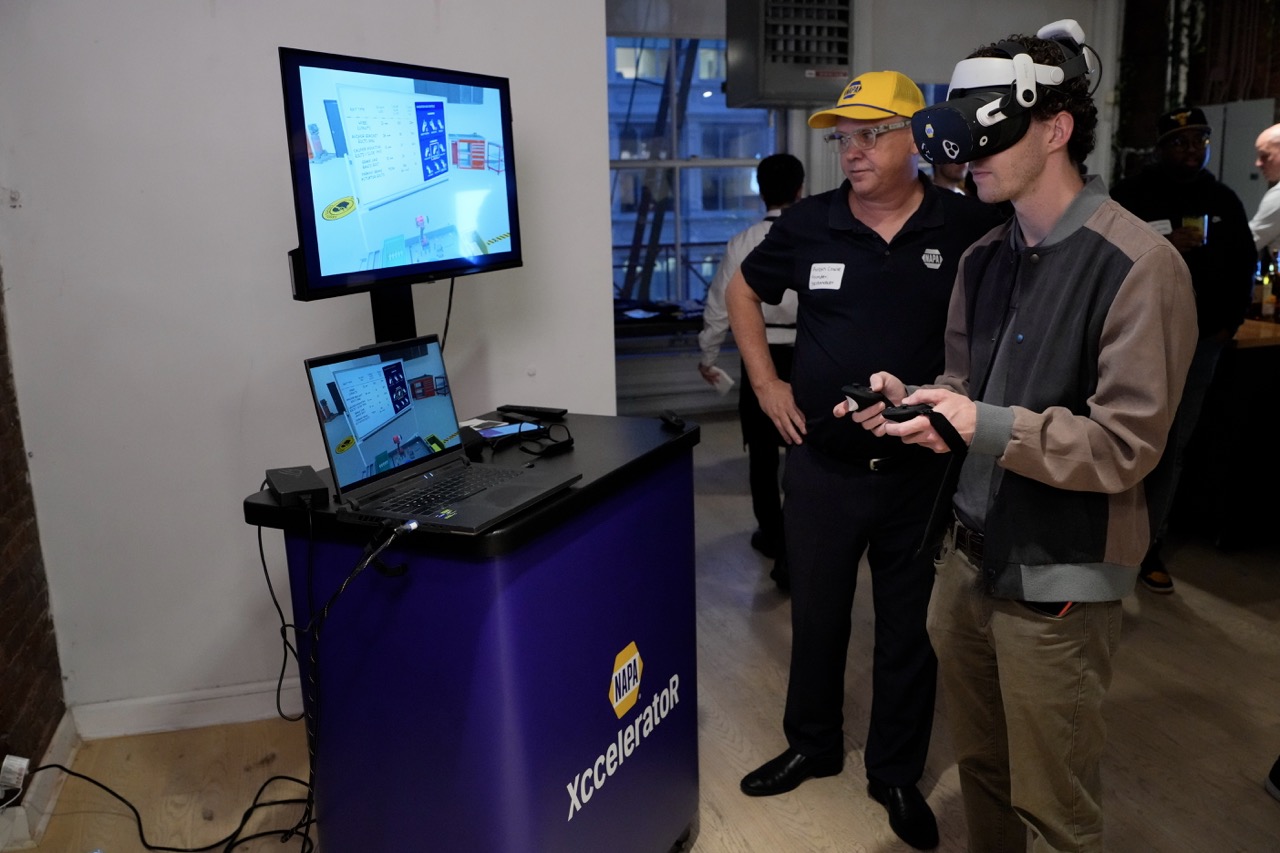
An event space in Lower Manhattan isn’t exactly the place I pictured in my head when I learned that I’d be given a chance to try out new tech aimed at the automotive service industry. Nor did I expect to meet one of the producers of The Blair Witch Project, but that’s what happened.
Doing things a little differently is embedded in Robin Cowie’s DNA. Growing up in South Africa, Cowie says his father realized that the training of miners was inefficient and dangerous. Rather than just tell people how to do something, his dad filmed activities from a first-person perspective, so he could show them. You can see how a film like The Blair Witch Project, which is comprised of ‘found’ footage all shot from that same first-person perspective, would appeal to him.
Cowie now runs Skillmaker AI, a company that focuses on using technology to train for various skills. NAPA partnered with Skillmaker to find a way to shorten the time it takes to get techs in the field. No one thinks that doing a virtual job is the same as doing a real one, or turning a real wrench, but the lack of techs means that any time a master mechanic has to take away from actual work to do very basic training so an apprentice can get certified is lost money (a NAPA spokesperson said the system is already in more than 400 shops, and the goal is to make certification take 30-60 days as opposed to up to two years).
Just don’t call it VR.
“I’ve done a tremendous amount of VR, but this really is XR. And when I say it’s XR, it’s because it’s a combination of the goggles and the glasses,” says Cowie. “So you’re wearing these glasses as you’re actually hands-on doing the work, right? You’re turning wrenches. But the glasses are there to explain something, check for you.”
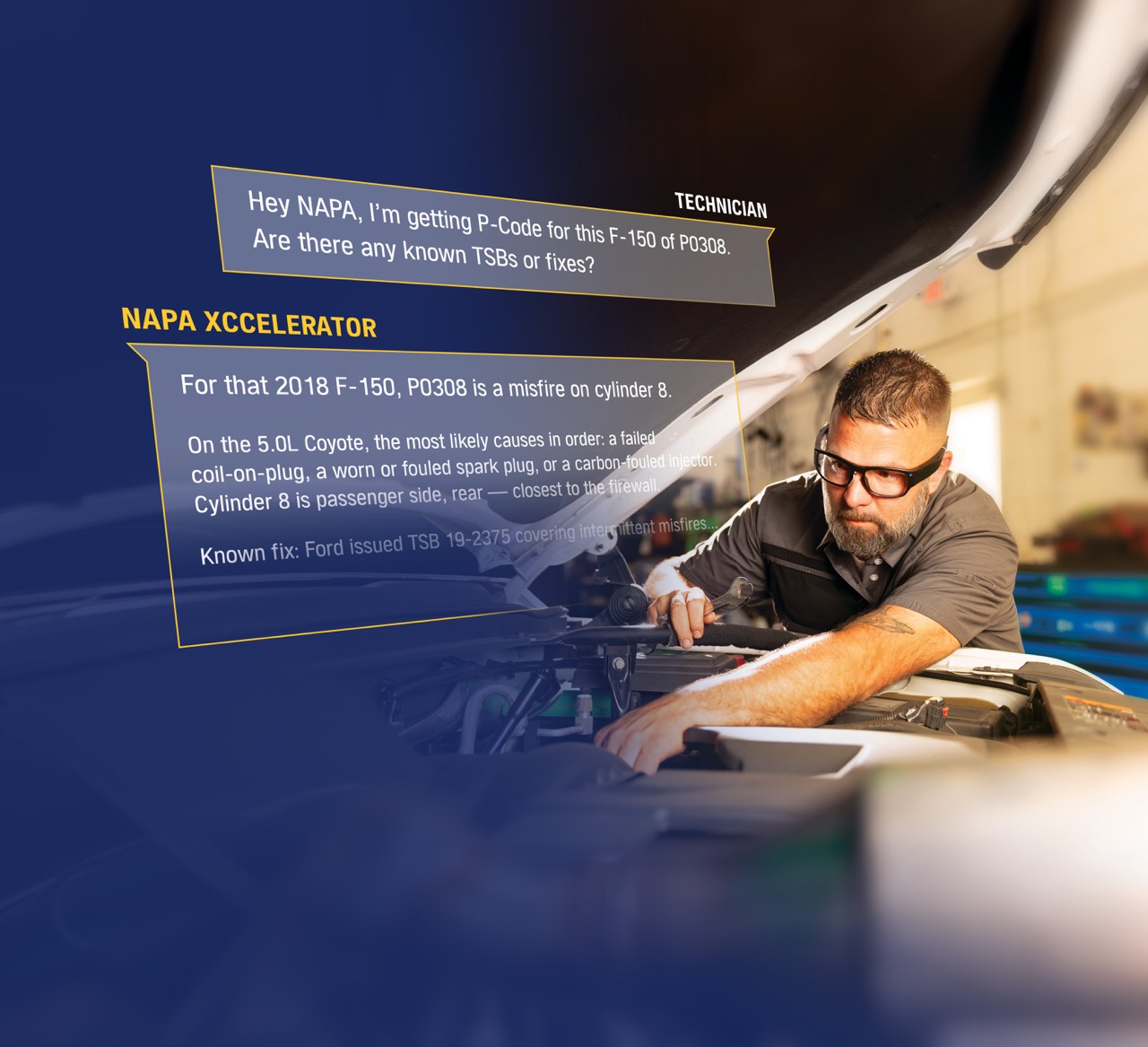
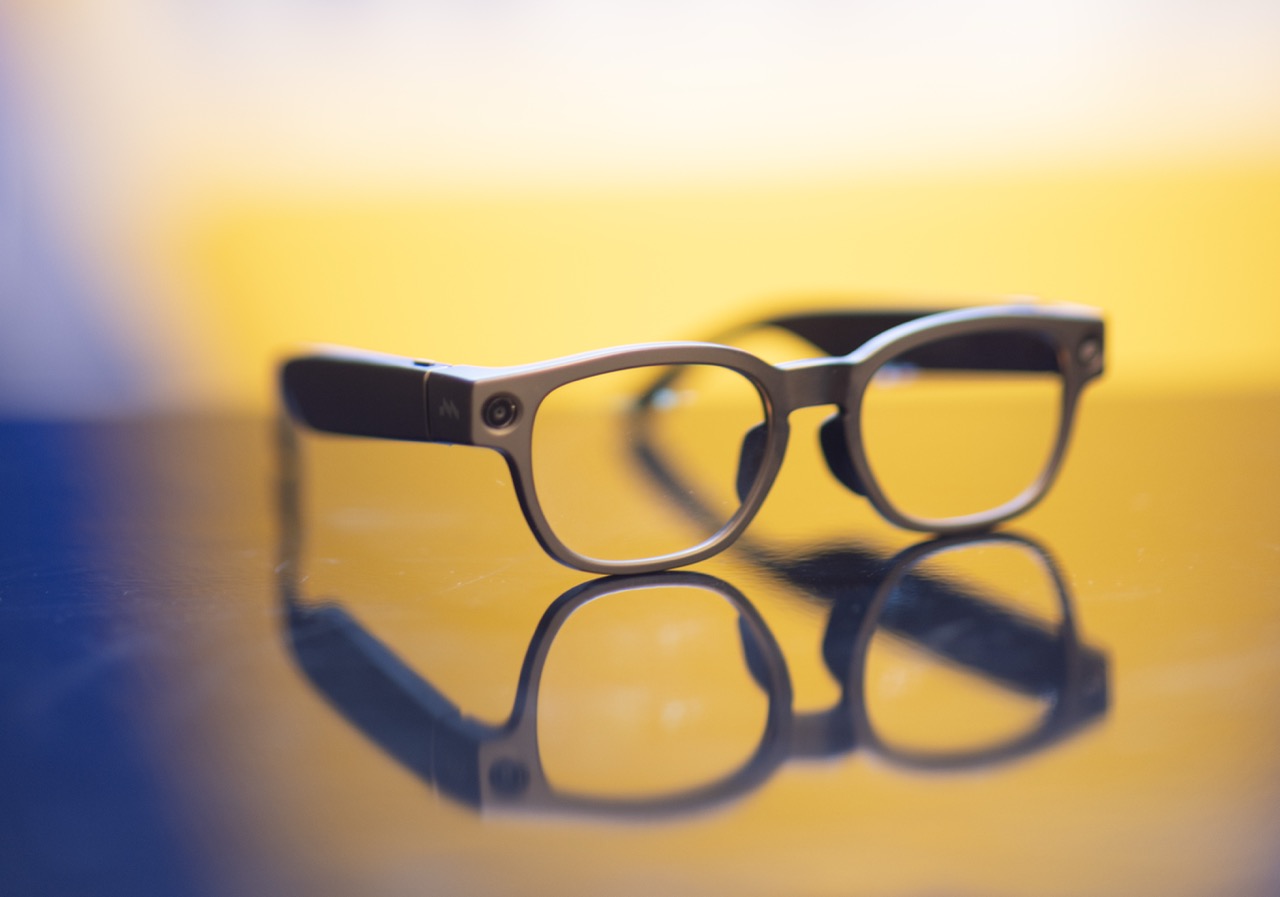
The glasses are, to me, the most interesting part of this. It’s one thing to do training, but as anyone who has ever turned a wrench knows, the frequent starting and stopping to review diagrams or check specs can be an issue with certain jobs. The glasses have cameras, mics, and connect via Bluetooth or WiFi to an Android or iOS device, allowing a mechanic to ask questions.
“I think one of the failings in the past was people trying to put everything in the goggles. That’s not going to work. It’s the combination of the glasses and the goggles that makes a huge difference,” says Cowie.
In order to demonstrate how this works, Cowie has a conversation with the glasses.
Cowie: Yeah, hey NAPA, how you doing today?
NAPA assistant: I’m doing well, thank you. How can I help you in the shop today?
Cowie: I’m actually working on a Camaro here. It won’t crank, and I’ve got no communication with anything on the scan tool. It all started right after the battery got replaced. The VIN number is 1G1FE1R74J0118368. Can you help me with this problem?
NAPA assistant: The VIN decodes to a 2018 Chevrolet Camaro 1SS with a 6.2-liter V8 engine. For a no-crank condition with complete loss of scan tool communication right after replacing the battery, common causes to inspect include:
- The battery fuse box and high-current main fusible links near the battery terminals, as power to central modules may have blown during replacement.
- The primary engine and chassis ground cables, to ensure they are clean and securely reconnected.
- The battery connections themselves and main power distribution terminals.
Would you like me to pull up the OEM electrical power distribution diagrams and repair procedure documents for this vehicle?
This was obviously a pre-planned discussion, so Cowie invites those of us gathered to stump the glasses, which are being used right now by a few partner shops in a test ahead of today’s further rollout. It’s an interesting challenge. If I ask for something too obscure–the bolt pattern for an 1898 Alldays & Onions Traveller–that’s not quite fair. Still, I like stumping machines.
I find the VIN of a product that was sold new in America. A LaForza! Without telling the assistant what the car is, I give a VIN and ask for the firing order. It admits it isn’t 100% sure, but thinks what I’m talking about is a LaForza, which means it likely has a 5.0-liter Ford V8, so the answer is probably 1-3-7-2-6-5-4-8.
Pretty good!
“So you build up a routine and an understanding of the system with the goggles,” says Cowie. “The first time you step up to a vehicle, you’ve seen this before, you’ve been there before, but now you’ve got glasses on. And if you get to a point where you’re like, “What was that last step?”, the glasses can get in there and help you out.”
Unlike an LLM, which draws from anywhere on the web, NAPA’s assistant can pull from a large and existing corpus of verified information about vehicles.
The system isn’t cheap, costing $3,000 for a single tech for the first year, or $167 per month/per technician for larger shops. A shop owner at the event who has been testing the system says it’s already paying for itself by shaving time off both training and ongoing work.
While NAPA is very focused on shop owners, I could see something like this also being useful for home mechanics. I’ve heard of people loading up their own shop manuals to an AI assistant so they can ask questions while they work, and this is just a bigger, more formalized version of the same thing.
NAPA is at SEMA today and is rolling out the NAPA XcceleratoR fully to shops.
Top photo: NAPA/DepositPhotos.com


I grudgingly admit this may be a use case for LLMs, but I still don’t trust that the model has been ethically sourced.
That’s definitely the most important bit. It still gives answers like an LLM, so I assume it is still an LLM, just one that has a more focused set of training data. Of course it can still “hallucinate” because that seems baked into them, but hey it’s definitely a good tool to have. Beats waiting on Jerry the senior tech to finish his work before he can answer your questions.
But I will never ask a stupid AI chatbot how it’s doing today, that’s so silly.
My brother in law used to work for a company that sold VR systems for training automotive painters. The glasses are an interesting next step.
For such an expensive system it’s crazy that they’re using crappy Quest 3S headsets instead of the Quest 3. For a savings of about $200 retail they’re giving the user lenses about 10 years behind the times.
Being an auto mechanic is the worst job in the world. The shortage is the industry’s own fault, and they deserve it. Maybe if it gets bad enough, they’ll start paying fairly.
The next logical step in the evolution of expert systems of forty plus years ago. Great mashup of ai and other new tech. I can see widespread application of the concept once the making stupid gifs trend goes away (likely never, cause we are lazy crass humans).
Having diagrams and torque specs pop up as you’re doing a job would be so helpful. Or even just recognition of socket sizes, etc. I started reading this article thinking it was just another marketing gimmick but nah, this is a pretty great idea if implemented in the way they’re saying.
I considered something similar with my homelab, basically streaming live video data to a context layer that has already ingested all the tech manuals of my vehicle.All very doable.
This is fascinating. Can’t wait for any additional insights from Matt Sexton.
I really enjoy that this tech was imagined in the lesser-known but quite good 90s Michael Crichton novel Airframe, a rare industrial thriller about the aircraft industry.
I learned so much about planes from that novel.
Seems like they’ve poured an entire can of Napa-Knowhow in those goggles.
You know I hate to admit it but this might be cool (not that it even remotely makes sense for a driveway mechanic).
My Legacy threw a CEL awhile back and wasn’t making much boost, used an LLM to narrow it down based on symptoms and the code(s) I was getting. The problem was one of the first things it suggested, a small vaccuum hose T fitting under the intercooler. Now I’d like to think I would have found this anyways, but I probably would’ve been poking around on Google for a couple hours and spending some quality time with a smoke machine in the driveway. Obvs the google ai is not actually diagnosing it, but probably did save me a bunch of time. Of course then in my excitement at finding out it was such a simple and easily fixed problem, I cross threaded a bolt going into the turbo inlet which quadrupled the amount of time I spent on the project, sigh.
Did you partake of a shady tree to consider the problem?
Well the neighbor’s plum tree does somewhat shade my driveway at the late afternoon post-work hour I was working on it….
I would argue the opposite; once it comes down in cost, or can be offered as a subscription. I’ve built up a lifetime of experience doing things the wrong way, or only kind of knowing what I’m doing; having a full arsenal of the right specs, tools, and diagnostics data at my eyeballs would make me a much more competent wrench. Definitely not at the current pricing though.
Yeh I mean we already imo live in sort of a golden age of DIY wrenching (though I wish everything hadn’t moved from the forums to youtube) but every job that’s more complicated than an oil change or brakes I feel like I’m stopping 20 times to re-watch part of that youtube tutorial, look up torque specs, etc and it adds up.
It will be interesting to see if this makes its way down market over time. And curious to see if this becomes more widespread, the AR thing has always seemed more interesting and useful to me than VR.
Absolutely, I have tackled many jobs I wouldn’t have in the past simply because I can watch a bunch of other people do it first.