

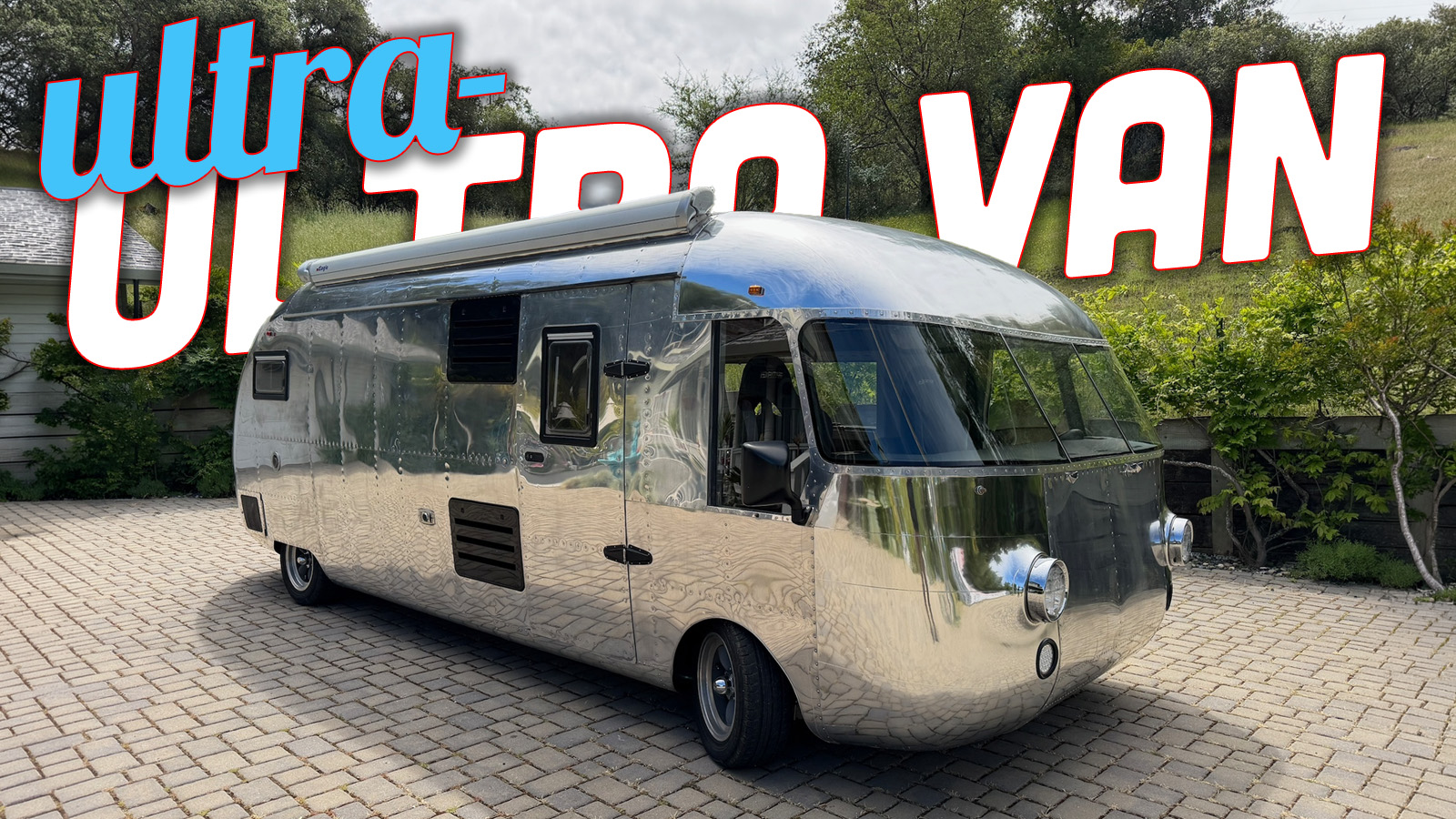
Most of the Class A motorhomes throughout history have been built using the same formula. Take a heavy truck chassis, bolt a box to it, then send it through the wind at highway speed. Some motorhomes have taken a different path. The Ultra Van is unlike other motorhomes because it isn’t made like an RV. Instead, it was built like a plane, weighs less than some cars, and is designed to drive like a highway cruiser, making it one of the coolest, most innovative RVs ever built in America.
I’ve known about the existence of the Ultra Van ever since I started writing about vintage RVs back in 2020. However, whenever I got around to writing about one, either I missed an auction, or I had to work with a listing featuring pictures with fewer pixels than a Tesla Cybertruck has polygons. You can only imagine my excitement when I turned to Bring a Trailer today and saw not just an Ultra Van in full high definition, but one given an incredible restoration.


The Ultra Van sounds like the kind of Class A motorhome that buyers would pay a hefty price for today. These motorhomes featured fiberglass and aluminum monocoque bodies, no chassis underneath, a car engine, car tires, car handling, and a car-like low floor. They even got decent fuel economy for a motorhome from the Chevy Corvair powertrain. The Ultra Van was even a featherweight compared to modern motorhomes, and weighed under 6,000 pounds when loaded with food, water, gasoline, gear, and people.
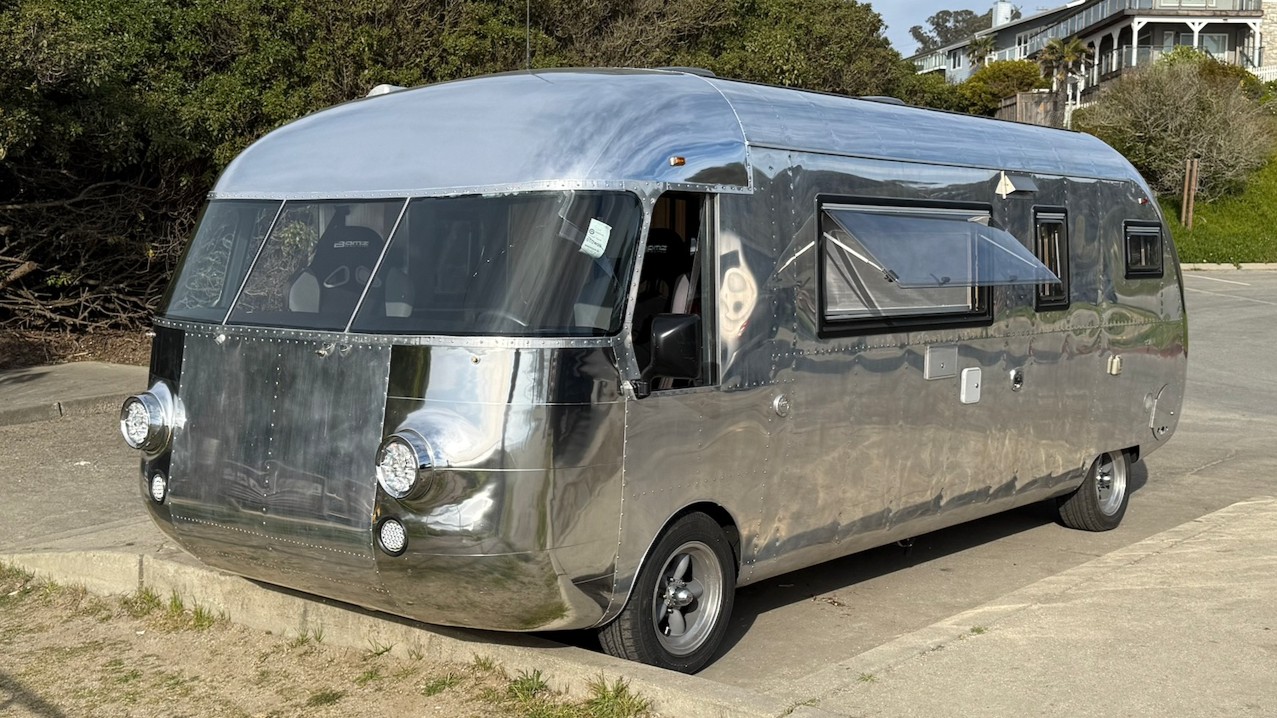
What happened? Why aren’t we all driving around in lightweight motorhomes that look like loaves of bread?
A Man Who Loved To Fly
This story starts in 1959, just after the launch of the 1960 Chevrolet Corvair. The Corvair was a revolutionary vehicle, not just for General Motors, but for all of American motoring. This was a car with a rear-mounted air-cooled flat-six engine, a unitized construction, and independent suspension on all wheels. Both the press and the public went gaga for America’s most innovative car.
One of those people was David G. Peterson. According to the Ultra Van Motor Coach Club, Peterson was born in 1914 in Minnesota, and spent his childhood tinkering. His father was a carpenter and a preacher who taught Peterson the skills of his trade. Peterson would put those skills to work when he helped his father build a camper to tow behind the family’s 1926 Chevrolet.

His father passed away when Peterson was just 15, and he would use his carpentry skills in his high school’s woodshop to help his mother pay the rent. It was in this shop that Peterson designed and built his first glider, which he used as an inexpensive way to teach himself how to fly.
After graduating from high school in the early 1930s, Peterson would make money by repairing wooden spars on airframes. In 1936, he reportedly worked within the Stearman Airplane Company as an engineer. A year later, he would buy a forgotten 1930 Cessna and use it to officially earn his pilot license.
Peterson would go on to work for Beechcraft, Boeing, and the Sinclair Oil Co. as a pilot, aircraft designer, and builder.
The First Ultra Van
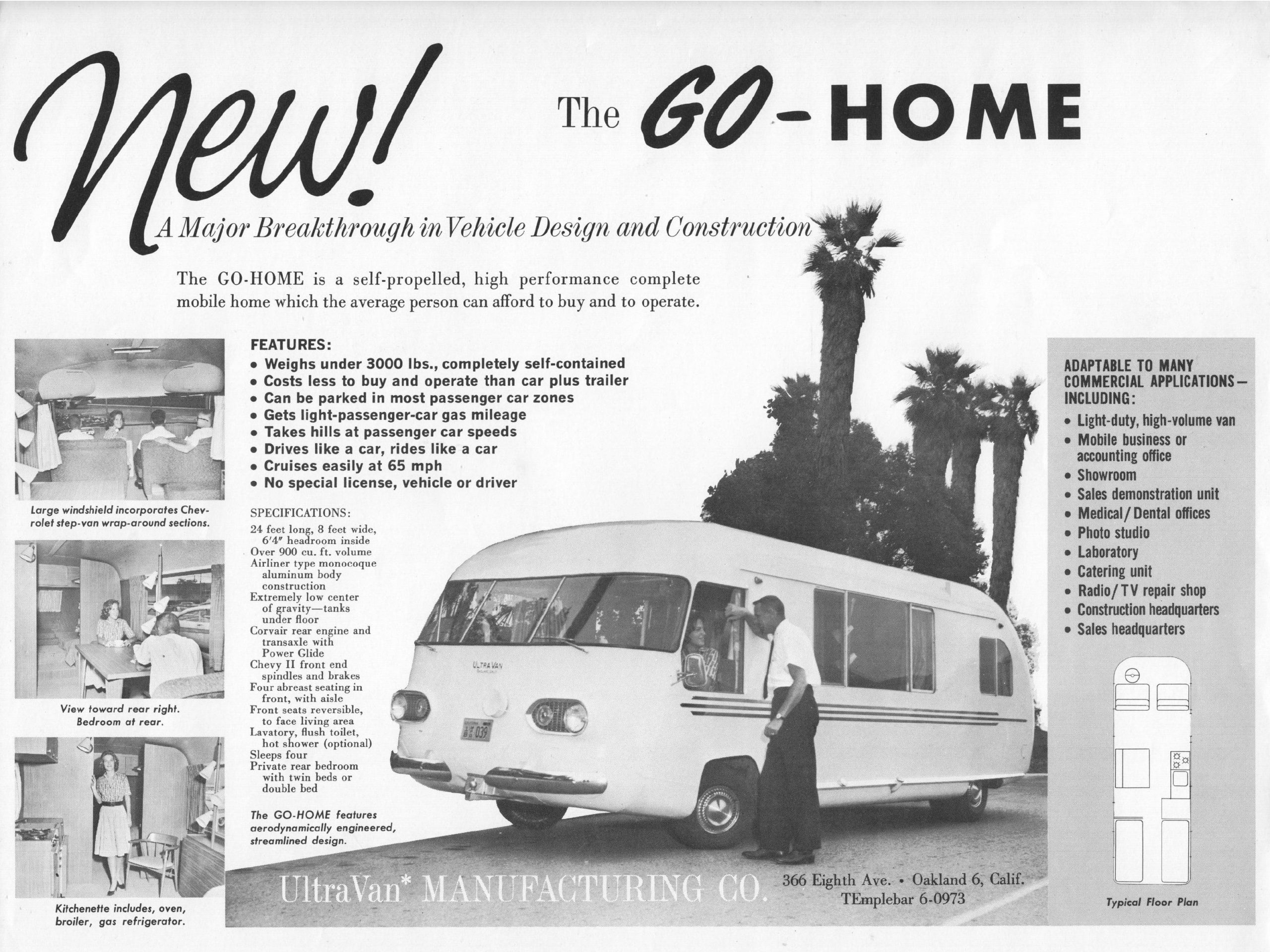
The Ultra Van Motor Coach Club says that Peterson came up with the Ultra Van in 1959, during the time he was developing a twin-engine Beechcraft Bonanza. One day, he was pulling his Spartan trailer to Mexico and thought that the whole trailering experience would be so much better if he could just put a drivetrain into the trailer and leave the car behind. The additional benefit was that he wouldn’t have to choose whether to tow his trailer or his boat, because the trailer could then become the tow vehicle.
According to FMC Magazine, this would blossom into a dream to build a singular camping vehicle that can go anywhere on a moment’s notice without prior planning. This vehicle would be self-contained and eliminate the need for a tow vehicle. Of course, since Peterson was an aviation fanatic, he wanted to bring some aircraft logic into the build. His dream RV would be one that was easy to handle and didn’t cost a fortune to operate.

As luck would have it, General Motors was building just the right kind of vehicle for the job, the Chevrolet Corvair. Peterson was reportedly impressed with the tidy and compact drivetrain package that lived in the Corvair, and thought that this would be the powertrain was the perfect candidate for his self-powered trailer.
In 1960, the first Go-Home (the motorhome wasn’t called the Ultra Van, at first) was built, using a wrecked Corvair as a donor vehicle. It featured a 140 cubic-inch flat six from the Corvair, which made 80 horsepower. Peterson robbed the Corvair of all of the parts he could, transferring the vehicle’s two-speed Powerglide automatic, the suspension, the instrument cluster, and even the lights from the Corvair. The three-piece windshield was sourced from Chevrolet stepvans, and the bumpers came from a Chevrolet 3100 truck.
The body on top, which had a shape inspired by Spartan trailers, was largely made out of a riveted aluminum monocoque with fiberglass end caps and supported by aluminum ribs. Apparently, Peterson cut out the Corvair’s front and rear suspension assemblies and then riveted them into the Go-Home’s body. So it was still a Corvair through and through, but now with a much bigger body. Reportedly, the original Go-Home was even given dual rear wheels, but they were just for show as the vehicle still used the Corvair’s stock suspension.
Given an empty interior, the Go-Home weighed only 1,800 pounds. That was impressive in itself. This was a 24-foot-long, mostly aluminum bread loaf that was somehow 400 pounds lighter than the Corvair it got its drivetrain from. It’s said that finishing the Go-Home out as a functional motorhome added only 1,200 more pounds.
The finishing touches to the coach were a trailer hitch in the rear and the front. The one in the rear hauled Peterson’s boat, while the one up front helped launch and retrieve the boat.
The Ultra Van Goes Into Production

It wasn’t long before people started begging to have their own Go-Home. It’s easy to see why. Back in those days, most motorhomes, which were still called house cars, were built atop truck chassis. These motorhomes had poor handling, awful fuel economy, flimsy builds, and didn’t look particularly sexy. The Go-Home seemed out-of-this-world by the standards of 1961, and well, by today’s standards, too.
Peterson suddenly found himself with an opportunity to make a new business, and he founded the Ultra Van Manufacturing Company. He gathered up some students in a technical school apprentice program and built 15 more motorhomes, advertising a price of $6,995 (about $74,752 in 2026). As FMC Magazine writes, the ascension of the Ultra Van came a little later, with magazine publisher John E. Tillotson. He wanted to retire on the road and found out about the Ultra Van. Tillotson loved it so much that he decided to seek licensing in 1965. Production started in 1966.

Tillotson would produce Ultra Vans under the name Ultra, Inc., and the company would go on to produce around 346 coaches between 1966 and 1970. The Ultra Van Motor Coach Club said that the original buyers of the Ultra Van got a motorhome with 14-inch car tires that turned 50 degrees, a large rear bed, a bathroom with running water, a full kitchen, and a full complement of holding tanks. The fuel tank and holding tanks were made out of aluminum, and there was a macerator system to grind the contents of the black tank so that the tank could be pumped into a sewer without the use of a dump station.
One of the selling points of using car tires was that any tire shop could replace an Ultra Van’s tire, and that the owner could easily change a tire on the side of the road.

Sadly, while the Ultra Van was perhaps one of the most innovative RVs ever built, keeping production going was a struggle. In 1968, due to ballooning manufacturing costs, the Ultra Van’s base price rose to $10,000 ($96,836 in 2026). That made the Ultra Van more expensive than some competitors. Rumors about the cancellation of the Corvair also depressed sales. Then, in 1969, Chevy killed the Corvair, eliminating Ultra Inc.’s source of engines. This forced the Ultra Van’s makers to scramble to find a new powertrain.
The Unitized Power Package from the Oldsmobile Toronado would find its way into the fronts and rears of Ultra Vans. There would also be a Toronado-powered Ultra Van derivative called the Tiara. Later, there would even be Ultra Vans with 307 cubic inch Chevrolet small-block V8s. The Ultra Vans with these 200 HP mills were commonly called the “Corvette” Ultra Vans. The 307-powered Ultra Vans had their engines mounted in the rear and connected to an aluminum Powerglide, which sent the power to the rear wheels through a marine V-drive. Only 47 examples of the total Ultra Van production had these V8s.
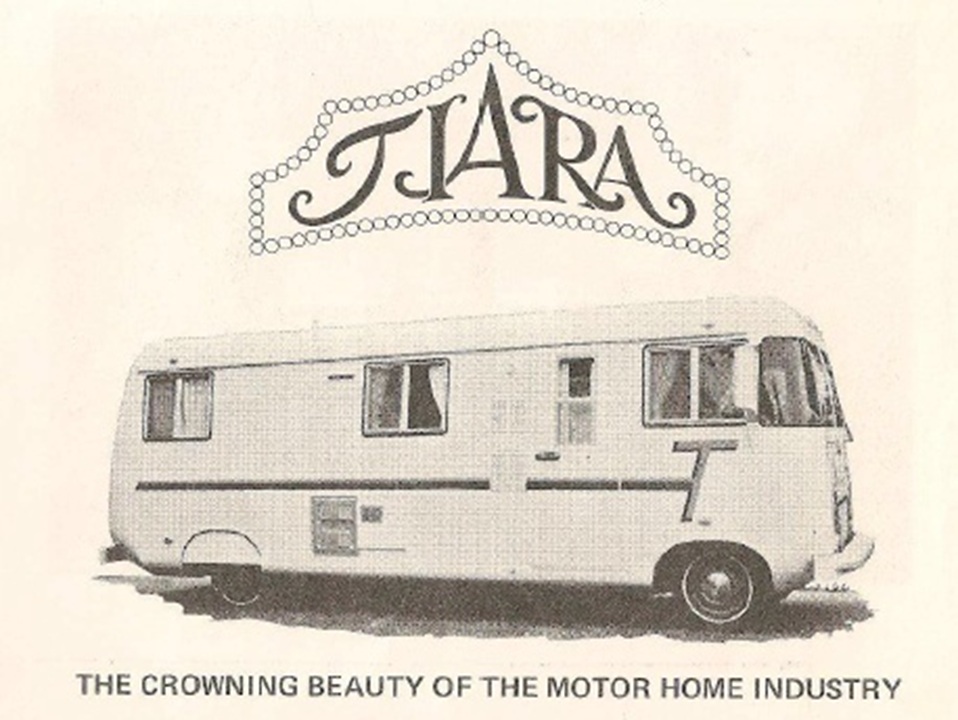
Sadly, while adding V8 power to the Ultra Van cured the company’s engine woes, it also drove the price up even further. Ultra Inc. ceased production in 1970. Peterson didn’t want to give up the Ultra Van dream and founded a new company to retrofit existing Ultra Vans with V8 engines. Peterson also built five more Ultra Vans. But by 1973, even he was out of the game. Later, Peterson would admit that, had the Toronado’s UPP been available in 1960, he would have built the first Ultra Van with that, and not the Corvair powertrain.
This 1966 Ultra Van
Today, the Ultra Vans are coveted and cherished motorhomes. They’re even recognized by the Corvair Society of America as a legitimate variant of the Corvair. By now, so many of them have also been customized far beyond their original forms, with modern power, interiors, and amenities. Yet, they still retain that distinctive shape. Part of why it took so long is that the Ultra Van was rare even when it was new. Only about 376 Ultravans were built between 1961 and 1970, and somewhere around 200 or fewer are believed to survive today. I have only seen a working Ultravan twice in the past six years.
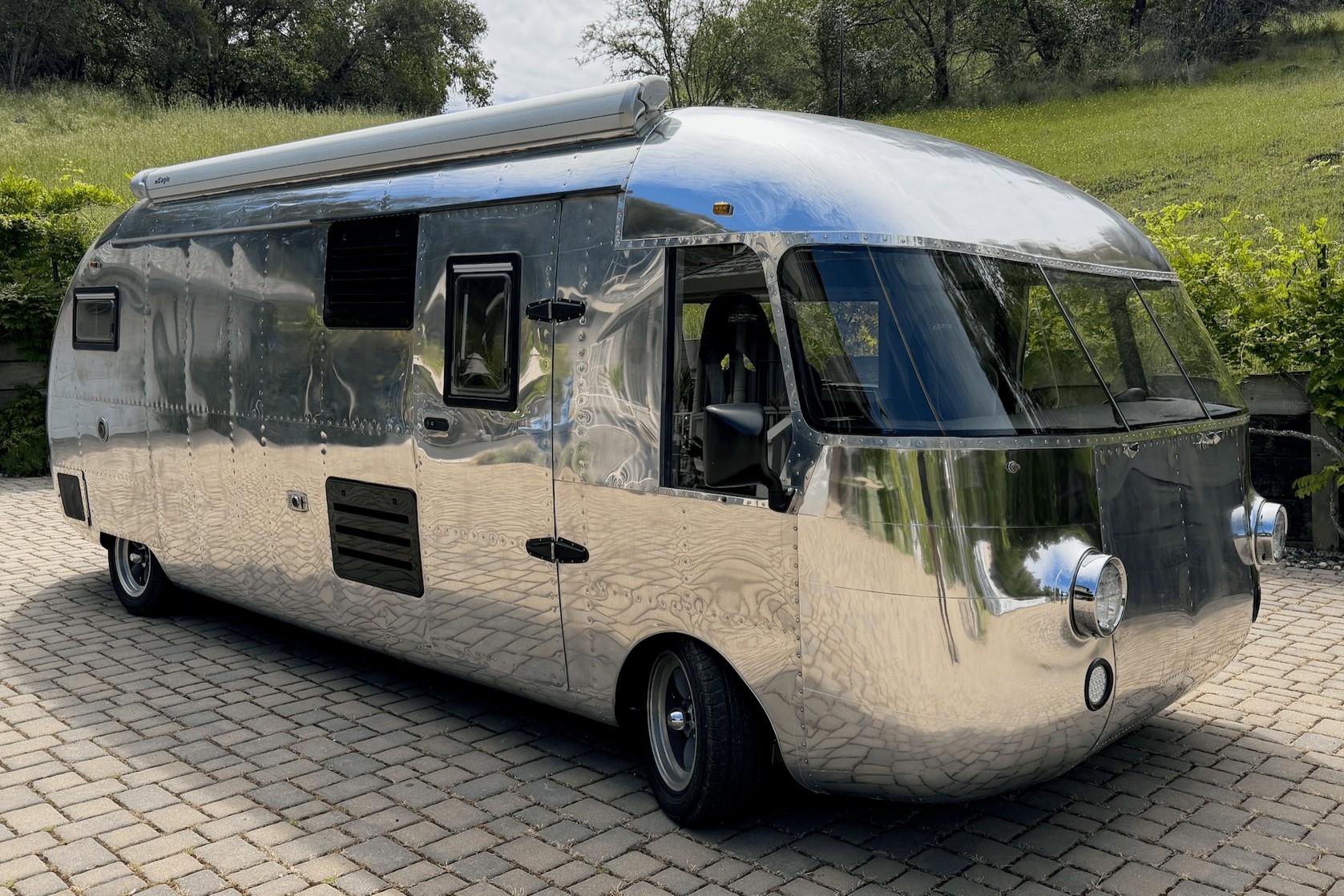
That brings us to the 1966 Ultra Van for sale today on Bring A Trailer. This one is special because it has been restored, but it wasn’t overdone. Here’s what the listing says:
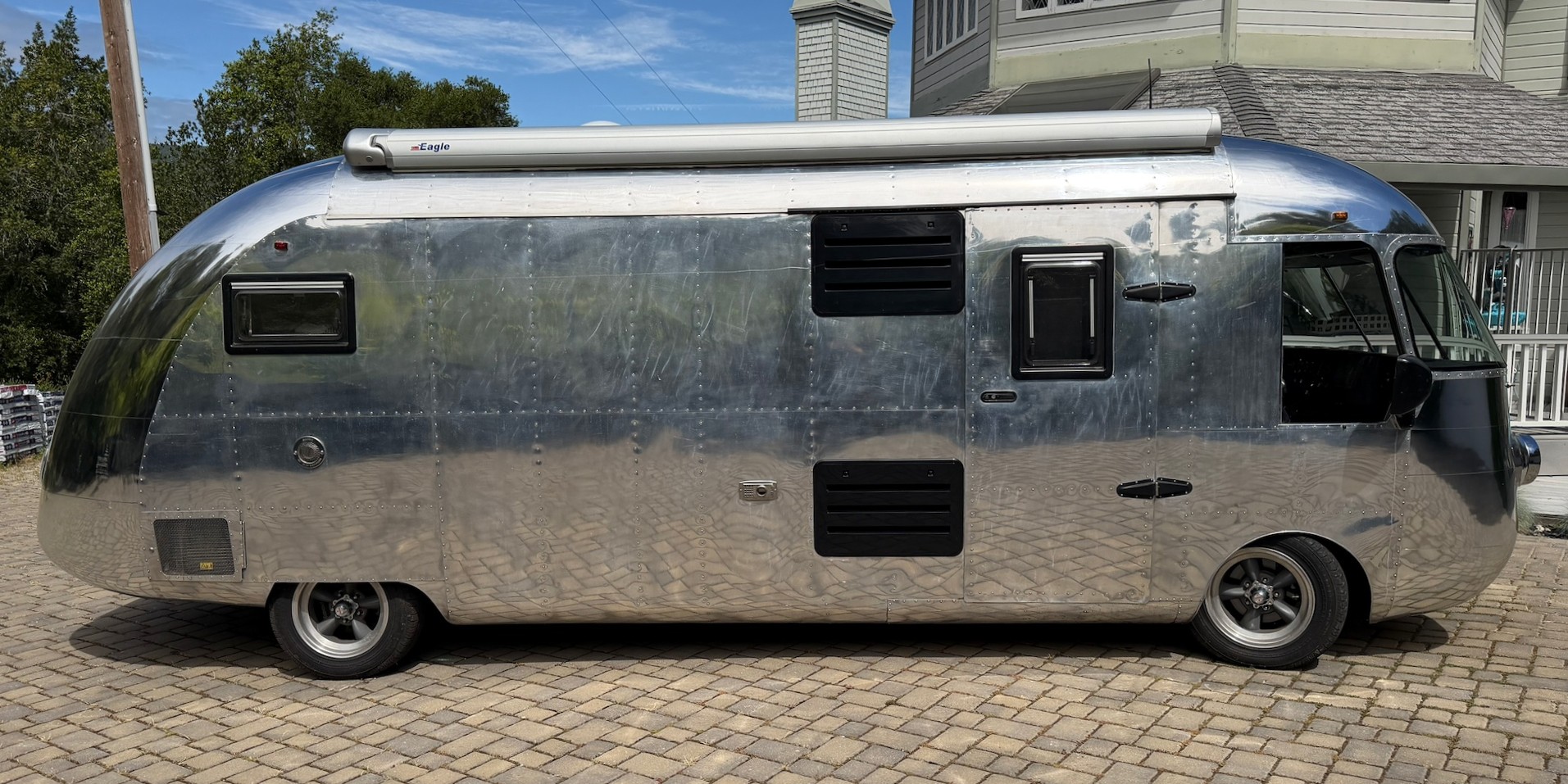
It was purchased by the seller in 2009, and the subsequent refurbishment work spanned more than 15 years. The exterior was fitted with replacement aluminum panels, a solar-panel setup was added atop the roof, and the interior dinette, galley, bathroom, and sleeping area were refreshed. Power is provided by a Corvair-sourced 2.7L flat-six with electronic fuel injection that routes power to the rear wheels through a two-speed Powerglide automatic transmission. The motorhome measures roughly 22′ in length and has 15″ American Racing wheels, Wilwood four-wheel disc brakes, air suspension, and Ridetech shocks. Bomz racing seats, a MOMO steering wheel, and a Pioneer touchscreen linked to Kicker speakers are fitted up front, and the motorhome is further equipped with a propane tank, an air conditioner, a power-operated awning, utility connections, and holding tanks.
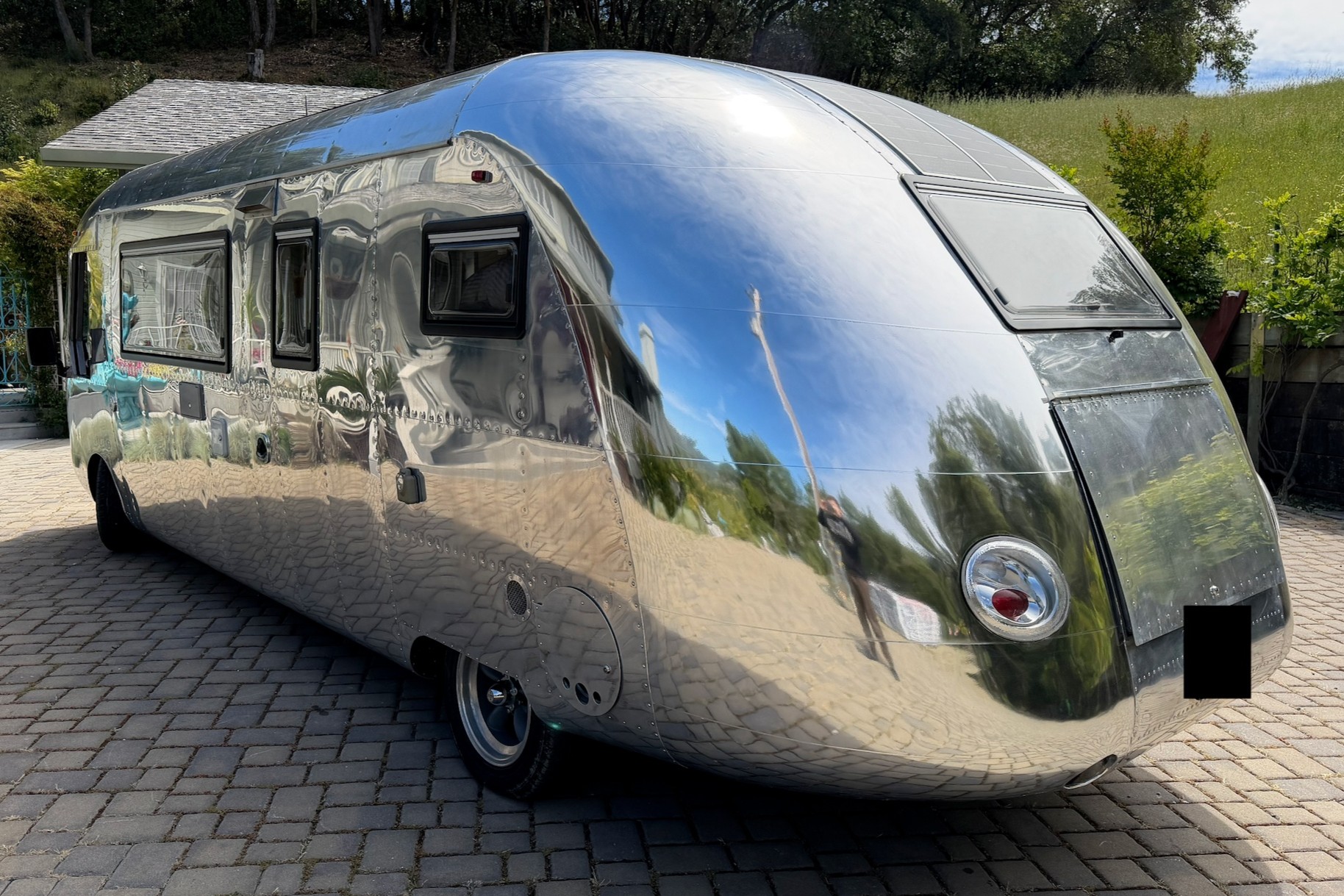
The exterior is what drew me to this Ultra Van, at first. Every single Ultra Van that I have seen online was painted. Same with the two that I’ve seen in real life. Weirdly, an Ultra Van with paint almost looks like it’s made entirely out of fiberglass. Stripping an Ultra down to bare aluminum just helps to illustrate how much of a work of art these motorhomes are.
The aluminum panels were replaced during the restoration of this Ultra Van, and it has some modern touches like a Fiamma awning, LED lighting, and 19 roof-mounted solar panels that feed to a lithium battery. Also new is the Accuair air suspension, Ridetech shocks, and Wilwood disc brakes on all corners. It also has 15-inch wheels and power steering.

Bring a Trailer continues:
The refurbished living quarters feature woodgrain flooring, wood cabinetry, and a dinette with bench seats, a fold-down table, under-seat storage, and a pop-open picture window. The galley has a refrigerator, a stainless-steel sink, a four-burner range, a warming drawer, a range hood, and a microwave. The sink and the range feature hinged covers, and there is storage overhead on both sides of the galley. The sleeping area at the rear of the van is mounted above the rear cargo space and engine hold. The mattress is joined by pop-open windows on three sides as well as overhead lighting, a 110-volt outlet, and a flat-panel TV that is mounted to a swing-out mount. A toilet, sink, and wand-style showerhead are located in the bath, which also has a roof vent overhead.

Up front, Bomz Racing bucket seats trimmed in gray and black fabric are installed on swivel bases, and an air conditioning unit has been built in behind the driver’s seat. The dashboard is wrapped in gray leather and houses an air suspension control panel, a Propex thermostat, and a Pioneer touchscreen infotainment system that is connected to Kicker speakers and a subwoofer. A leather-wrapped Momo steering wheel sits ahead of a 120-mph speedometer and auxiliary gauges. The digital odometer shows 5k miles, which is noted to be the amount added following the refurbishment. Total mileage is unknown.

Power comes from a 164 cubic-inch flat-six paired to a two-speed Powerglide. This engine, which made 110 HP when it was new, now drinks from a Microsquirt ECM-based Electronic Fuel Injection system. It’s unclear how much power the engine is making now.
While I’m not a fan of the racing seats, I do like all of the other upgrades. An early, original Ultra Van had 13-inch or 14-inch wheels, no power steering, no air-conditioner, unassisted drum brakes, and a limited carrying capacity due to the Corvair bones. This coach still keeps the Corvair heart and two-speed Powerglide, but adds just enough modern touches. It even has three proper holding tanks, an electric tank dump system, and a remote-controlled macerator pump.
A Dream Coach

This 1966 Ultra Van is up for grabs for the next six days on Bring a Trailer. Bidding is at $6,500. It’s hard to say what this one will go for. Ultra Vans are so rare that this is the first one to be auctioned on the platform. The last Ultra Van that Bring a Trailer even wrote about was all the way back in 2016.
It’s basically a modern motorhome with the bones of a well-built classic motorhome, and I adore that. The racing seats wouldn’t even be hard to swap out, either! Sure, 110 HP isn’t a lot of power, but the loaded weight of this motorhome is in the ballpark of 5,000 pounds, and the coach has a roughly aerodynamic shape. You won’t be getting anywhere particularly fast, but you should get there.
I think whoever buys this coach is going to have a great time. They’ll have a motorhome that looks like nothing else and probably has decades of service left in it. I’d love to see something like the Ultra Van get built today with a modern powertrain. Until then, I’ll have to keep drooling over old Ultra Vans and GMC Motorhomes.
Top photo: BringATrailer




A more modern VW TDI engine will generate more than enough power while giving this vehicle great fuel economy. This mill has been frequently swapped in place of the Vanagon’s boxer-4 with a 50-degree slant to one side to fit, and one can mate this engine to a Porsche G50 transmission.
Saw the exterior, thought, ‘Oooooh, nice’. Saw the pics of what the interior should look like, swooned. Saw what had been put in this one, puked.
While my reaction wasn’t that strong, I did wonder “what happened??”
Looking into the engine, which is not stock.
The engine was originally rated 110 hp (Gross). Most fuel injected build Corvairs end up being around the same power rating as stock, except a net instead of gross rating. So, this would likely dyno around 100-110 hp, perhaps a little more depending on how much cam and head work was done.
Doesn’t seem like a lot for an RV, but notice the weight. It’s about 3,000 lbs when the water, black and grey tanks are empty. Which is less than Chevy’s Greenbrier Van (3100 lbs), which typically cam with the 95 hp engine.
So, although it 100% is a dog by today’s standards, it would have been considered acceptable back when new and the engine modifications would make it not much worse than a modern RV in performance.
I sure would like to see the bones of that thing. That’s a lot of open interior volume and clear spans through the side, so I’d be curious to see the structure and how the punishment of highway driving and inertia of interior finish/furnish gets distributed.
It’s a monocoque construction. It’s like an insect as a result. The bones are on the outside. That’s how it has so much room on the inside. It doesn’t have frame, it has a shell.
It will still have an underlying structure. A soda can has no structure inside because the pressure provides support to the skin. An airplane still has an inner structure to provide support to the skin so it maintains its load-bearing position/shape. This vehicle does as well, as evidenced by this line:
I know what the structure of a plane looks like from my time as a GA mechanic and how it interfaces with the skin to give it structural integrity and transmit loads, but I can’t picture this one very well. There’s a lot of fundamental differences in load magnitudes and distributions.
It depends on the thickness of the skin to know if it needs ribs. I work with pressure vessels and piping. If you have a thick enough skin, you don’t need internal support or ribs. This think sees lighter forces than a small aircraft (which is where the designer is from) and thus can be made pretty thin. The drawings indicate a double wall design, so the additional structure is likely being made up by having the double wall with some bracing between the layers.
With that being said, I don’t trust the crash worthiness of it. I can stand and put all my weight on a pair of empty soda cans. But any sort of dent to the side calls them to buckle and collapse instantly.
Given how little this weights (empty 1800 lbs with the powertrain), the entire van has to be a crumple zone.
As much as I love this, I do not see an AC unit. There is no real house battery and I’d be drivjng an RV around with a Corvair engine.
When the time is right, I’ll grab a GMC Motorhome (ok, I could be tempted by a Vixen).
What I really want is a day trip van where I could sleep as a last resort. I keep hoping for the flood of #vanlife vans to show up at cheap prices but I don’t see them. I’m not scouring marketplace or craigslist for them – because most people that have them still think #vanlife is cool and price them accordingly.
At some point I’ll just end up adding a battery bank and inverter to a minivan to make what I want.
It looks amazing, but the cross-section combined with the low weight must make it a nightmare in cross winds.
Go big or…”Go-Home” Ha ha
“a car engine, car tires, car handling, and a car-like low floor. They even got decent fuel economy”
Sounds sorta similar to Blues Brothers!
“It’s got a c̶a̶r̶ cop motor, a 440 cubic inch plant, it’s got c̶a̶r̶ cop tires, c̶a̶r̶ cop suspensions, c̶a̶r̶ cop shocks. It’s a model made before catalytic converters so it’ll run good on regular gas. What do you say, is it the new Bluesmobile or what?
[a brief thinking pause while Jake attempts to light a cigarette]
Jake: Fix the cigarette lighter.”
It’s so interesting about those Tiara and Corvette Ultra variants!
Is Tiara connected to the boat company in Holland, MI?
I couldn’t find anything connecting them
Pretty sure there is one of these sitting on a driveway near me. AFAIK, hasn’t moved in years, but it looks decent driving by. Very, very cool! Probably second only to a Vixen 21 for me.
Wow! I’d buy it if I had a place to park it!
I always love these articles about vehicles I never heard of or have never seen. The cynical me always wonders if they were so great why don’t they do it that way now. And I wonder if they would pass current vehicle requirements to be made today.
I think I’d be afraid of being under that awning without a couple of support poles.
Miata activates its beta capsule and transforms into Ultra Van!
That dashboard / steering wheel / seats combo is so incongruous considering the – uuuuhhh – “performance” available from that drivetrain.
So wide. Wild to think about driving this on the highways and byways of the early 1960s.
Jeff at Corvair Ranch has one that he road tripped cross-country a few years ago, I don’t think its done much sense, but it sits at the shop and he opens it up to let people walk through when they have open house days
Very cool! And it predates the Vixen motorhome by a couple of decades with a similar concept — a reasonably-sized, efficient motorhome that’s more like a car or ordinary van to drive.
Also from the article… “Back in those days, most motorhomes, which were still called house cars, were built atop truck chassis. These motorhomes had poor handling, awful fuel economy, flimsy builds, and didn’t look particularly sexy.”
Not much has changed in 2026. The typical front-engine, gasoline-powered Class A motorhome is still built on a chassis with the heritage of a step van and a “sticks and staples” body not much different from a travel trailer plunked on top. Most rear-engine “diesel pushers” are built on a raised ladder-frame chassis that’s considered a specialty chassis, but they often retain many characteristics of medium-duty trucks. Either way, since the body is entirely separate and just bolted on top of a completely separate frame, there are inevitably issues with stress and twisting on the body structure and entire vehicle as a unit.
Rarer are the true bus-type builds which use two subframes for the steer axle and drive axle (usually combined with a tag axle) + engine support, which are connected by a lighter-weight “bridge” and then the rest of the body and roof framework are tied into the central structure to bear some of the weight and add rigidity. It’s not a true monocoque (the side panels/floor/roof aren’t really structural) but it’s what longstanding German bus manufacturer Kassbohrer Setra originally called “self-supporting” and is probably about the best description of that kind of construction. The “bridge” that holds the subframes together needs the rest of the body to be fully rigid and the “body” framework needs the bridge to form its central lower spine. only together is the whole assembly really roadable in any real sense. The outer skin isn’t stressed like in a monocoque design or even a semi-monocoque/unibody car (or a GM New Look bus, which does use stressed-skin construction.) Sometimes they’re called “integrated” frames as well.
There are a few higher-end Class A’s still being built that way, but most have gone to the raised ladder-frame construction. The self-supporting style of construction is how the big Prevost/MCI/Eagle motorcoaches are built and has a lot to do with their longevity.
I’m marveling at 80 HP through a 2AT slush box to move 6000lbs and a boat both on a trailer and to haul it out of the water.
WOW!
Thanks to inflation doing that today that would take at least 800 HP through a 9AT.
I suspect engine oil and trans fluid temps could get pretty toasty in hot weather. Although they have seal kits for the Corvairs now with Viton material.
Pretty sure that would have been true of most tow pigs of the day.
Were there ever any manual Ultra Vans or would swapping in a Corvair 4-speed be the easy part but then you’re on your own for extending the shift and clutch linkages?
I dunno. I wonder if the shift linkage from a VW Van could be made to work though.
Although one from a Corvair 95 would be closer if that was doable. Certainly it’d be more likely to have the right fittings on the transmission end.
True dat.
The “production” models, after the first prototype, had the 110hp engine standard, with the 140hp one as an option, they had a power to weight ratio of either 35 or 45 lbs/hp, which is actually a bit better than most current motorhomes, the 80hp prototype was probably a bit of a slug, but the rest of them were pretty acceptable. They did all have the Powerglide though, not really sure why, since the majority of the FC95 pickups and vans left the factory with manuals
I think I know why the PG was used.
It’s a good enough transmission for this application and it was already figured out during the prototype stage. So, why re-invent the wheel?
I assume they’re lying.
I wouldn’t want to haul an RV body plus a boat with an engine meant for a ~2500 pound passenger vehicle.
If you read the article, the Ultravan, when empty was lighter than the Corvair, so full it was likely no worse than a Greenbriar van with the seats i it.
Super dope. I wonder what’s it like to drive, not necessarily power but steering, suspension etc.
What a cool motor home. Those headlights are perfect. I don’t love what the current owners did with the interior, but that’s all fixable.
I’d love to see airstream make a modern version of this. Put in a reliable/simple motor like the 7.3 from Ford in it, and it would last forever theoretically with a little care.
Great article! 🙂
Cool!
Thanks again for bringing something previously unknown into our lives. 🙂