

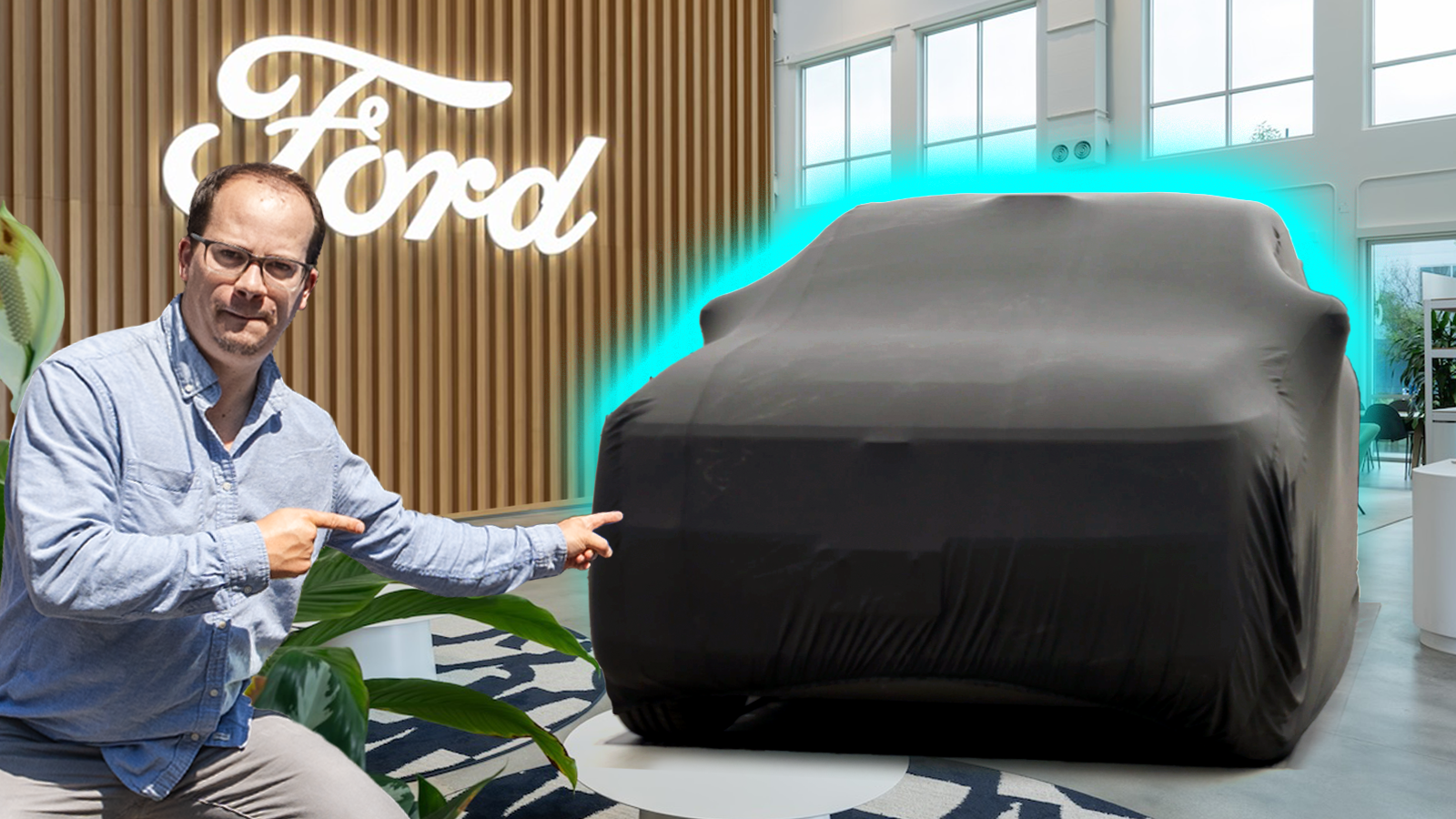
Ford is going for it. In an America that many think has given up on EVs and conceded defeat to China, the Blue Oval brand has nixed its high-dollar EV projects, and instead put all of its chips on a secret program called The Universal Electric Vehicle Platform. With the first vehicle expected to be a budget-focused, sub-$30,000 pickup truck for 2027, this Universal EV platform is meant to not just bring cool electric vehicles to the U.S., but legitimately competitive ones. And to do that, Ford has built a company-within-a-company — a Skunkworks — and has given me a behind-the-scenes look.
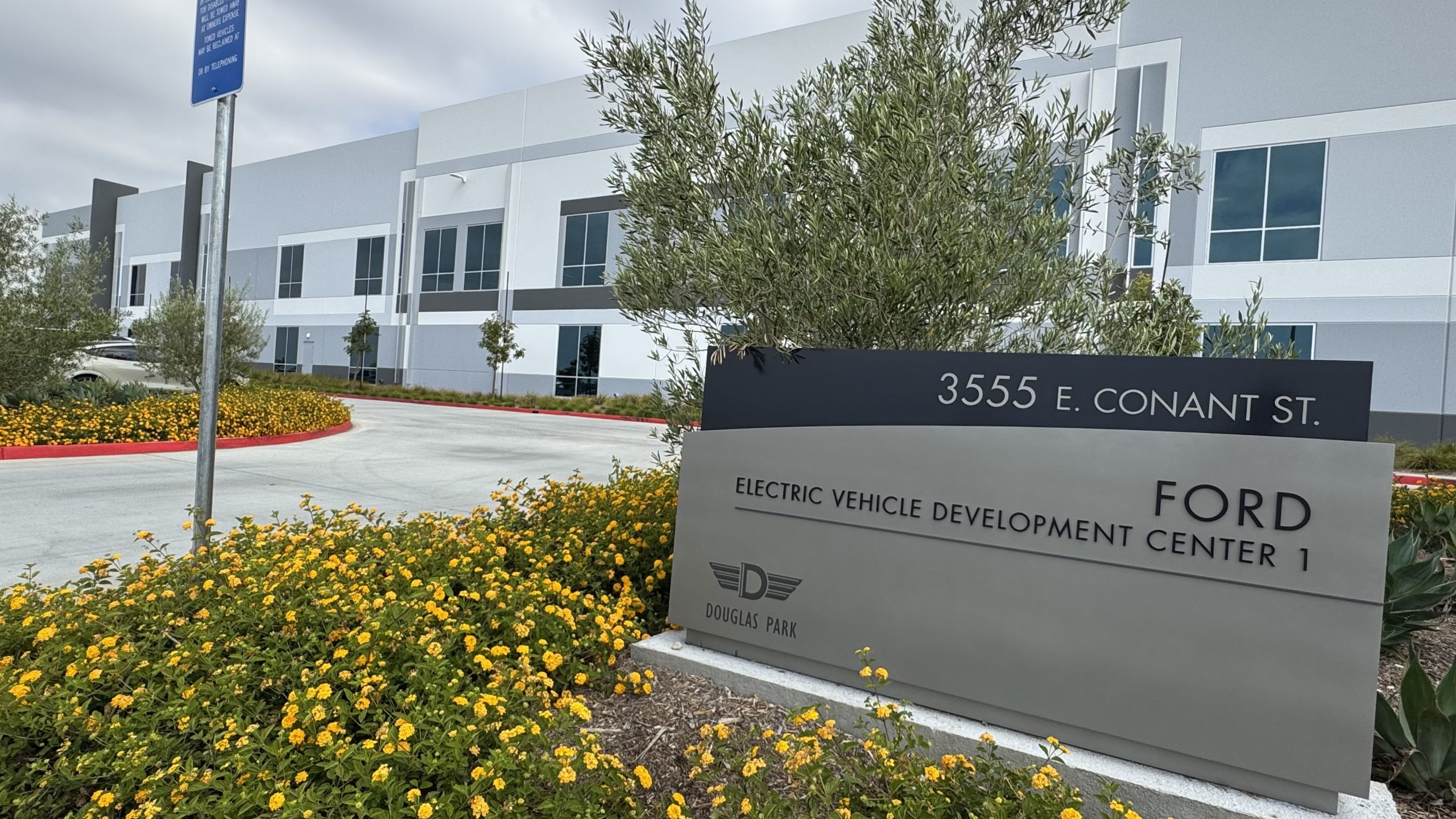
Rolling up to Ford’s Electric Vehicle Development Center (EVDC #1), located in Long Beach right next to an airport runway, I had little indication (other than a sign) that there was an entire miniature car company inside what looked like an office building but was actually much, much bigger.


Ford had invited a bunch of journalists with a note reading:
For the past two years, a small, hand-picked Ford team has been operating in secret in California with the mission to radically rethink electric vehicles from the ground up.
You are among a small group invited to explore the Ford Advanced EV team’s operation and new facility in Long Beach, CA. You’ll be guided by the team who is innovating and developing the next generation of electric vehicles.
Join us for a rare look behind the security badged areas at the new Electric Vehicle Development Center. You will go where the public isn’t allowed – into the labs and onto the shop floor – to see how we are engineering a family of affordable, high-tech electric vehicles.
Needless to say: I was excited. Extremely excited. But by the end of the tour, I would be even more so.
The Lobby
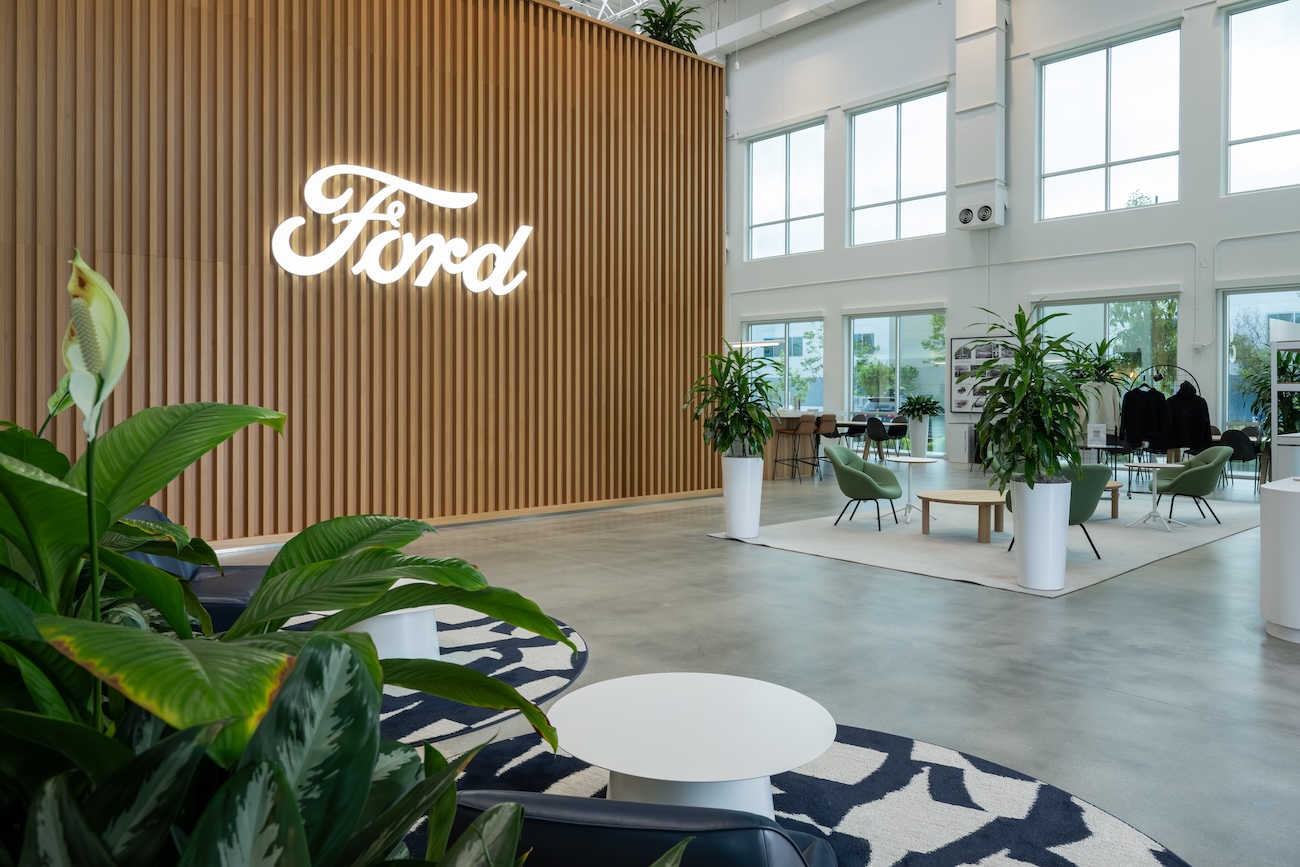
Upon entering EVDC, I was greeted by a lobby with a towering ceiling and an illuminated Ford script on the wall. Off to the side was a list of EVDC’s Cultural Commandments, which read:
- Fight Silos
- Democratize
- Step on toes
- Simplify
- …down to the atom
- Sir Isaac decides
- Be the end user
- It’s your job
- Explore constraints
- Fail fast
- Earn our right to exist
- Demonstrate ownership
If this sounds start-up-y, it’s because it is, and that’s what Ford wanted to get across upon greeting journalists. In order to build EVs in a way that’s competitive (both in terms of quality and speed-to-market – “Speed is the name of the game,” Ford said), Ford says it put together a small team, gave them resources and autonomy, and knocked down bureaucracy. “Try things, fail fast, and ideate,” Ford’s team said about this “company within a company” made up of around 300 designers, engineers, supply chain experts and more — many from EV startups, tech companies, and from within Ford.
The Visualization Studio
After Ford taped my cellphone to prevent me from taking photos, they led me through a pair of doors, on the other side of which was a sea of computers helmed by enginerds.

We walked by, through a set of doors that required a key-card, and into a “Visualization Studio,” where Kevin Young and Vladimir Bogachuk — Advanced Manufacturing Program Chief and Chief Engineer of Advanced Vehicle Structure Architecture, respectively — stood next to a body-in-white somewhat similar to this one:

You’ll notice that the front and rear wheel housings are aluminum castings, which Ford calls “unicastings.” These and the battery pack act as the backbone of the mixed metal vehicle structure, and because the castings are single units, they reduce the number of fasteners and joints, they reduce the amount of sealant used, they reduce the number of manufacturing robots needed, and on and on.
It’s fairly well established by now — especially after the world learned about Tesla’s “gigacastings” — that building a big section of a car in a single casting is way, way less expensive (and less error-prone) than building that section with a bunch of metal parts that have to be joined together.


This was a part of the tour where Ford iterated: The best part is no part. If there has to be a part, it has to serve multiple functions.
Bogachuk mentioned that he used to work at a body shop, and that it matters a lot to him and Ford that these vehicles be repairable (there has been a lot of concern over repairability of cast aluminum structures). “We at Ford have a lot of access to insurance companies,” he told journalists. Between this and input from Ford’s many dealers, engineers have studied how vehicles tend to crash and what areas are most prone to damage.
Repairability is usually a resulting factor, Bogachuk told us. But for the Universal EV Platform, Ford made it a constraint, ensuring that the bumper and body “convolutes” are designed collapse in a progressive manner, and that there are strategic cut-lines where a body shop can simply break off the damaged section, and then bond and rivet on a new section. “Repairability is a big constraint to enable affordability for our customer,” Bogachuk noted.
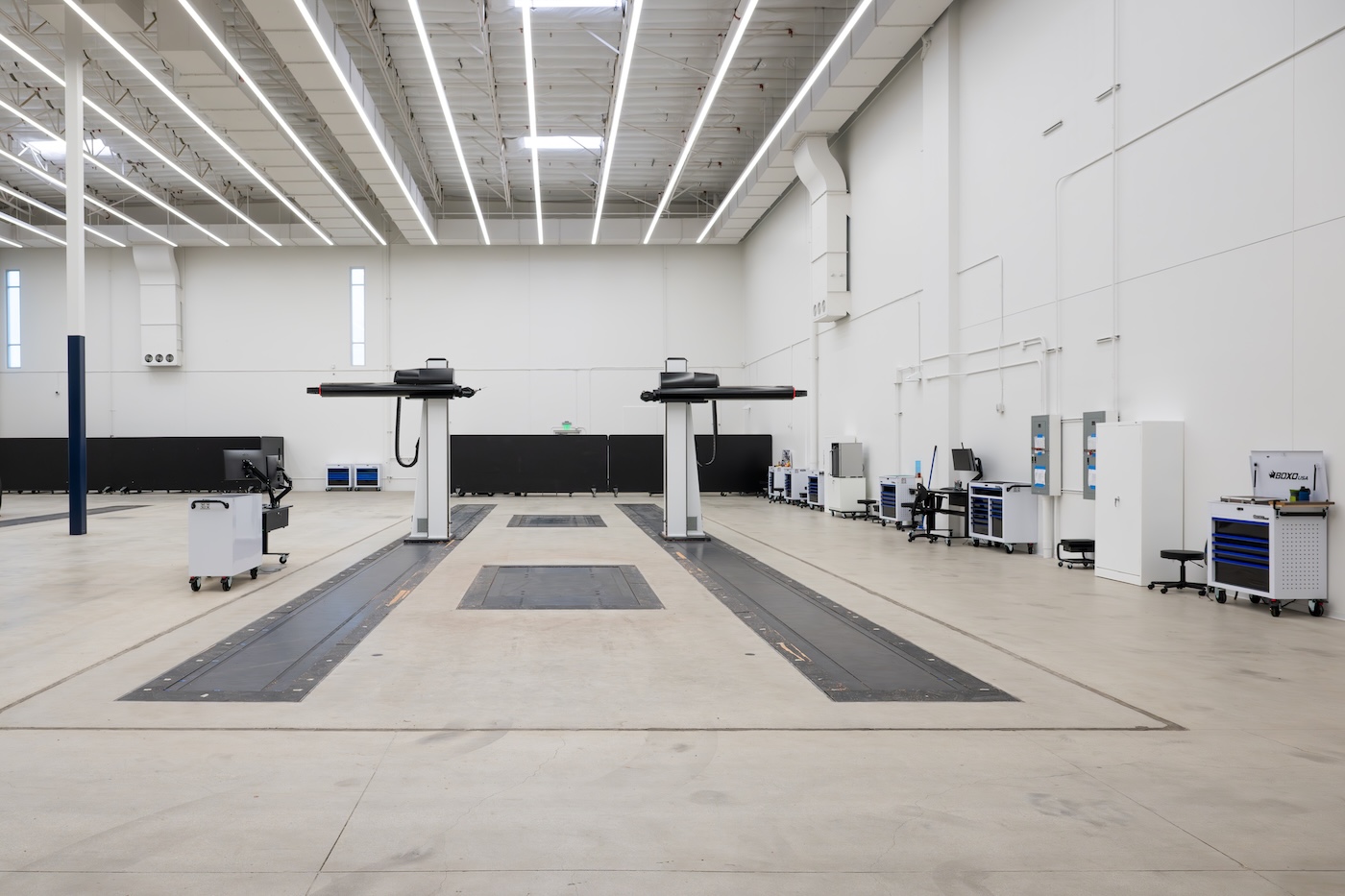
We left that visualization studio into a larger garage; this was the design studio. We walked past three vehicles hidden under drapes (see below), we saw the clay model milling machines you see above, and we spoke with designers about the new materials in the upcoming truck’s interior.
The team noted that its job was to define all the shapes and materials in the vehicles that would be built on the Universal EV Platform, avoiding “greenwashing” and prioritizing durability. I have in my notes: “They’re designing a lot of stuff from scratch; is that the cheapest way of doing this?” (Ford later pointed to “bounty culture” to answer that question — it’s all about constantly evaluating tradeoffs, with affordability being the guiding light).

Off to the side I noticed a late 1960s Ford Escort rally car. What was that doing in the design studio? I have no idea, but I’m going to dream that it is somehow being used as inspiration for the new truck’s design.
Trim Shop
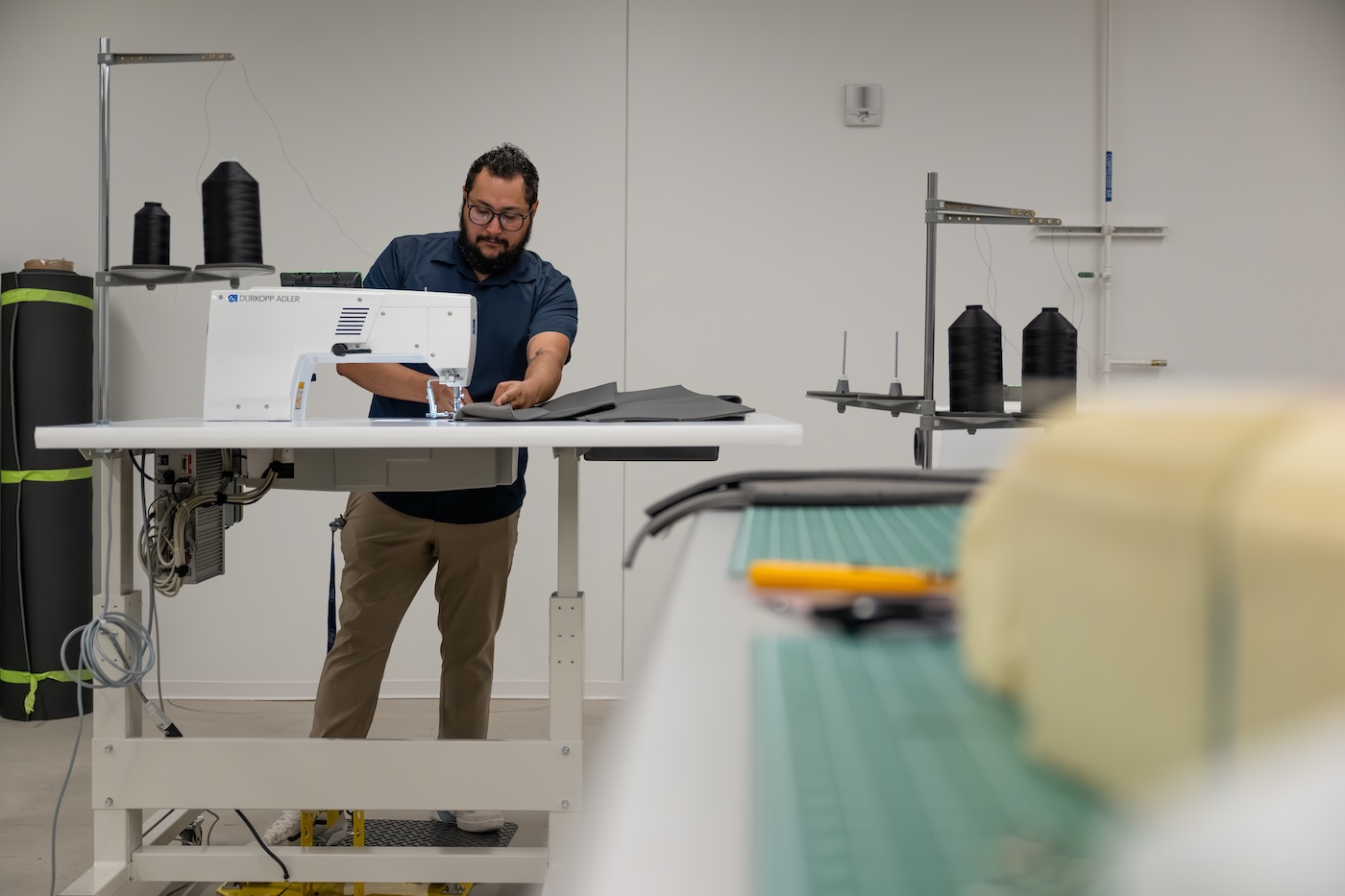
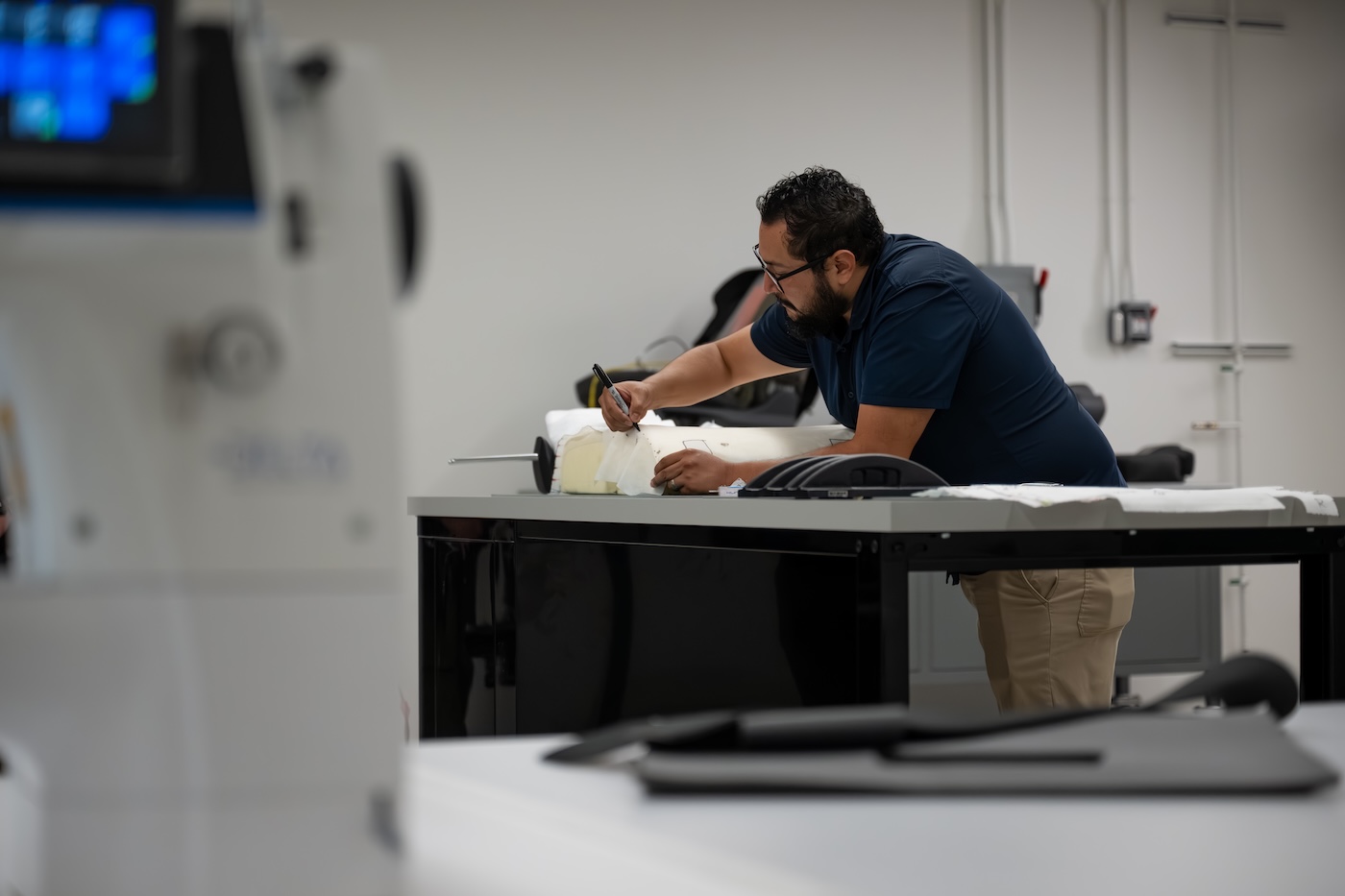
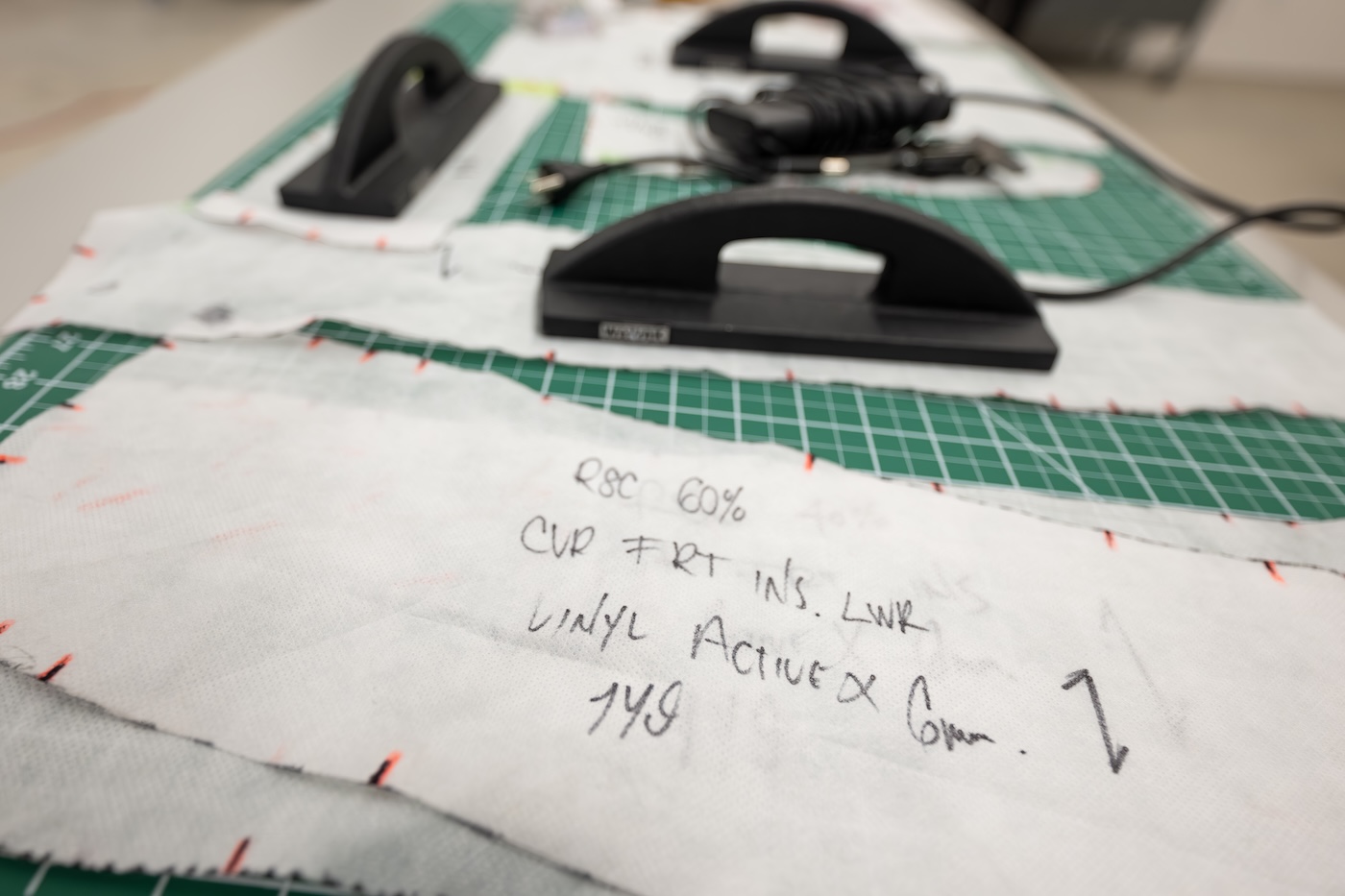
The next stop was the Trim Shop, where Scott Anderson (who formerly worked for Tesla) was showing us how his team was developing the new car’s seats. “What we are trying to do is iterate really quickly,” he told us, saying relying solely on a supplier to be able to test new seats would slow the team down significantly. He showed us the materials and the machinery his small team had at its disposal to very quickly create physical mockups of new designs so that they can test, evaluate, redesign, rebuild, and retest.
After saying it might take three months to get a supplier to send a seat after receiving specifications from Ford, Anderson reiterated how the company being able to do it all in-house was a huge enabler. “From concept to physical part in about two weeks,” he told journalists. “The bottom line for customers is improved comfort and durability at a low cost” as Ford has more control over the patterns and of the yield of the materials (i.e. how much of a material can use without having to scrap too much).
Fabrication
Ford took journalists out of the trim shop and past a five-axis gantry mill, namely the Endura Linear 911, by the German company Fooke:

It’s an impressive machine (here’s the spec sheet, for those curious), with Ford using it to mill clay, aluminum or foam of various sizes — all the way up to a full-size vehicle that might be used for aerodynamic testing.
While we were there, engineers showed us an entire hood that had been milled out of foam, plus they showed 3-D printed accelerator pedals and pedal brackets.

Ford mentioned that its three types of rapid prototyping/3D printing are:
- Fused Deposition Modeling (FDM)
- Polyjet (used for colorful parts like the taillights)
- Multijet Fusion (used to print hinges and clips)
Before we left the fab shop, Ford showed a rather crude looking “buck” made out of wood. It honestly looked like something a child could have scraped together, though Ford wasn’t embarrassed at all by the wood-car. The goal was to be quick, and slapping together some wood boards to get an idea of interior volume and overall vehicle proportion works. When speed is “the name of the game,” as Ford put it, you can’t always worry too much about elegance. That brings me to EVDC #2.
EVDC #2
The group of journalists exited EVDC #1 for a separate, also enormous building creatively named EVDC #2. Still under construction, this is where all the cool battery stuff happens.
The first area was the Pilot Pack Production area, which featured huge overhead cranes, as well as battery testing and teardown spots, plus a welding station and a thermal chamber (smaller ones and full drive-in ones).
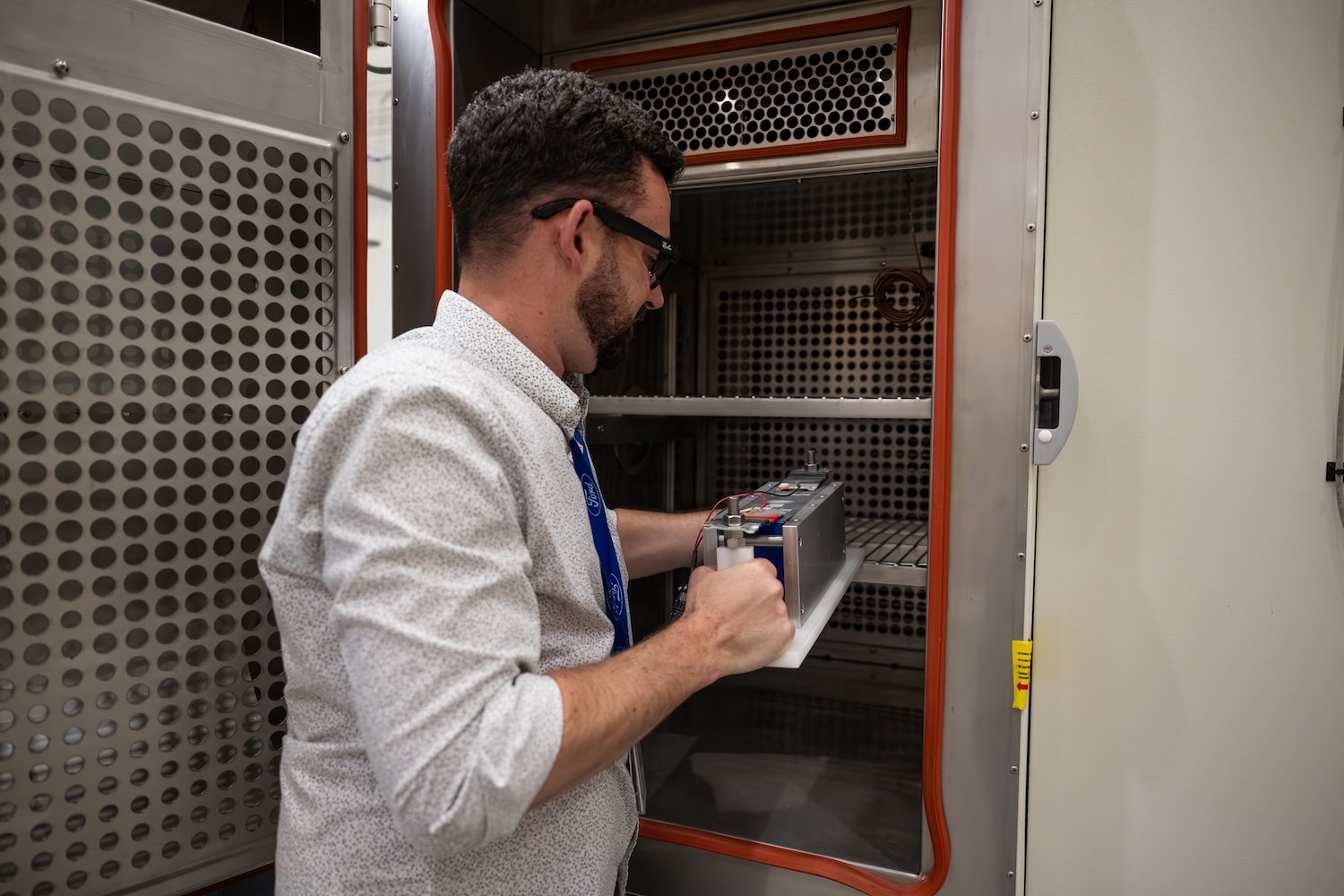
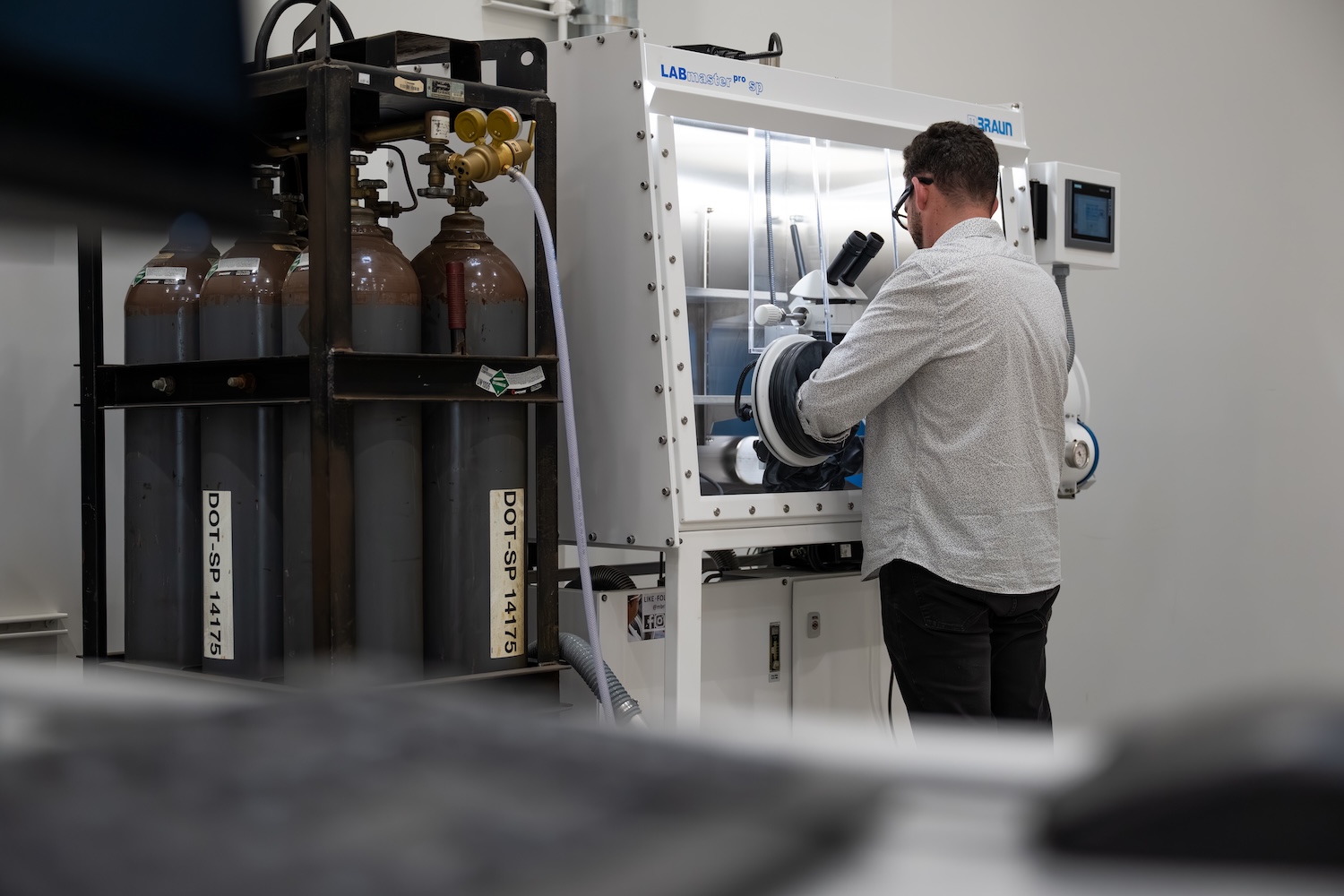
We then had a chance to meet Range and Performance Testing Manager Eric Kooinga, who showed us an impressively large chassis dyno (sadly I have no images of this). This allows a vehicle to be tested on rollers from -40C to 60C, in humidity up to 95%, with different solar conditions, and on various grades.
As Kooingo noted, the dyno is able to simulate road loads of a variety of drive cycles, accounting for aero drag, rolling resistance, mechanical drag, etc. Just off to the side of the dyno is a 400kW charger so that the vehicle can undergo a strenuous “tow-charge-tow” drive cycle at Gross Combined Weight. This is a good test of the thermal system, as well as a way to examine the robustness of the charging system and propulsion system.
Ford plans to use this massive dyno to create the data needed for full EPA range certification.
High Voltage And Thermal Lab
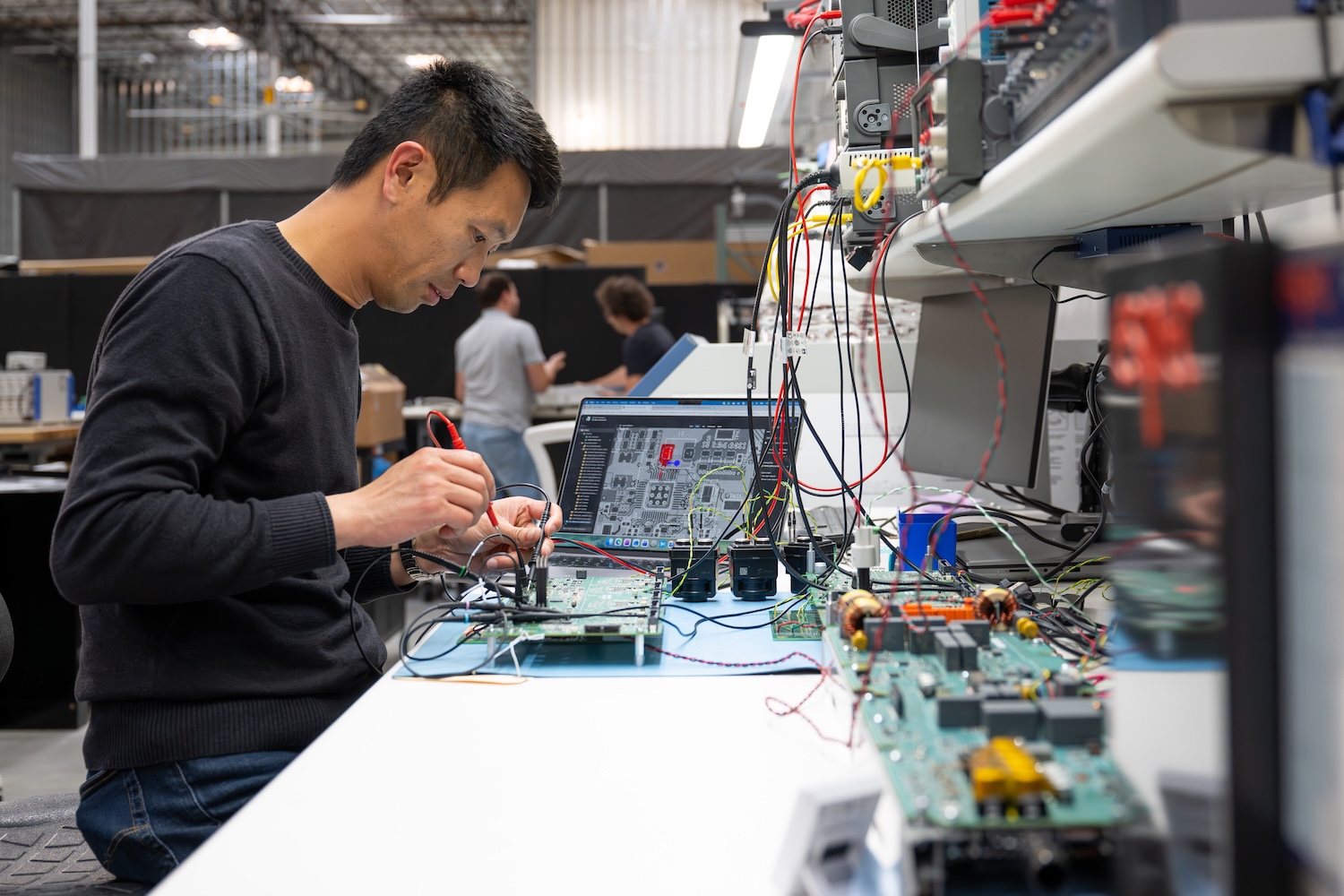
My favorite part of the Skunkworks visit was the High Voltage & Thermal Lab. This was a giant room with walls made of plastic (it was still under construction), a bunch of workbenches and desks, and scores and scores of engineers working on circuitboards, wire harnesses, the car’s LFP prismatic batteries, and cooling systems. I have in my notes “Gritty,” because this was far from a polished workplace.
It was a bit messy, a bit chaotic, but above all: You could feel the geekiness flowing as battery cells were being charged and discharged millions of times at temperatures between -40C and 60C, and as teams were trying to fully understand their cells’ battery chemistry/hardware characteristics so that they could build and test a robust battery management system.
On a monitor, Akshaya Srinivasan — Director of Range, Performance & Battery Systems Modeling — showed an EPA test cycle being run on battery cells. In order for Ford to do this, they have to understand, roughly, the vehicle’s Coast Down Coefficients (i.e. they have to have a good understanding of its aerodynamic profile, its rolling resistance, its powertrain efficiency, etc.), and they have to back-calculate the load imparted on the cells as the vehicle accelerates and decelerates in a way that ensures the vehicle’s speed-trace matches that of the EPA drive cycle.

My favorite part of this section involved cooling system engineers showing the buck you see above, adorned with the vehicle’s entire cooling system. Ford pointed out something called the “Compact Vehicle Thermal Management System” or CVTM. It is a beautifully integrated heat pump-equipped cooling system, and specifically I want to call out a beautiful bottle/valve setup that, to my eye, looked every bit as impressive as Tesla’s OctoValve. I noted down the outputs of the various cooling loops all integrated into this one bottle:
LTR1, LTR2, HC1, HC2, CC1, CC2, BT1, PE1, DGB, PE2.
LTR means low-temp radiator. HC is almost certainly heater core. The rest of it? CC might be cooling circuit? PE is probably power electronics? No idea. I’m ears if any of you, dear commenters, can make out what these all mean. But the thing I want to impress upon you is that, on first glance, this appears to be a tightly integrated, beautifully done cooling system.
 Engineers were proud to show the three main elements of the Universal EV Platform’s power electronics — the inverter, something called an E-box, and one of the three Zonals (the charge-port Zonal) — all of which were developed in-house. The inverter does what any inverter does — converts DC to AC to feed the motor; it is the highest-power part of the system, and so the team is frequently testing its die temperatures (my notes say the inverter integrates a water cooler for both the semi-conductors and for the motor oil cooler).
The E-box, which is about the size of a skateboard, “consolidates power conversion and distribution into a single module, which can provide AC power back to a home,” per Ford. It integrates a DC-DC converter (outputting 48 volts to the car’s three “zonals”), it’s in charge of cell monitoring, it handles battery charging, and on and on. It’s roughly the size of a battery module, so it disappears under the floor in the battery pack.
Zonals are meant to reduce wiring and integrate a number of ECUs all together into, in Ford’s case, three units. I could see all three zonals clearly in what Ford calls the “Lab Car.”
Lab Car

It’s basically a bunch of metal shelves (for lack of a better term) arranged into roughly the shape of the vehicle. The point is to provide a place to install all of the wires and controllers and bits of electrical hardware in one place to visualize and, above all, to test. Ford says it uses its Lab Car to do lots of load characterizations and to “de-risk assumptions,” ensuring that supplied parts all integrate nicely.
“This is the first time the harness, hardware, and software all come together in the same place,” Ford told reporters. An example of an error that might be caught on the Lab Car is a software issue or even something as simple as an incorrect pin-out from a mis-wired harness from a supplier.
The thing that I found most remarkable when looking at Ford’s Lab Car was just how tiny the wiring harness is. The zonal architecture, the way so many parts are integrated into so few, and the way that 48-volt system allows for reduced wire diameter, leads to a harness much smaller than any I’ve ever personally seen.
Harness Lab

Ford’s Harness Lab features spools of wires and cabinets full of every connector you could ever want. Front and center was a giant whiteboard with nails in it. When Ford’s engineers need a quick wire hardness, this harness lab uses this pegboard to fab up that harness, looping wires around nails as shown below.

This may seem primitive, but it’s pretty much the exact same process that Koenigsegg uses, as I saw when I visited Sweden.
Measurements
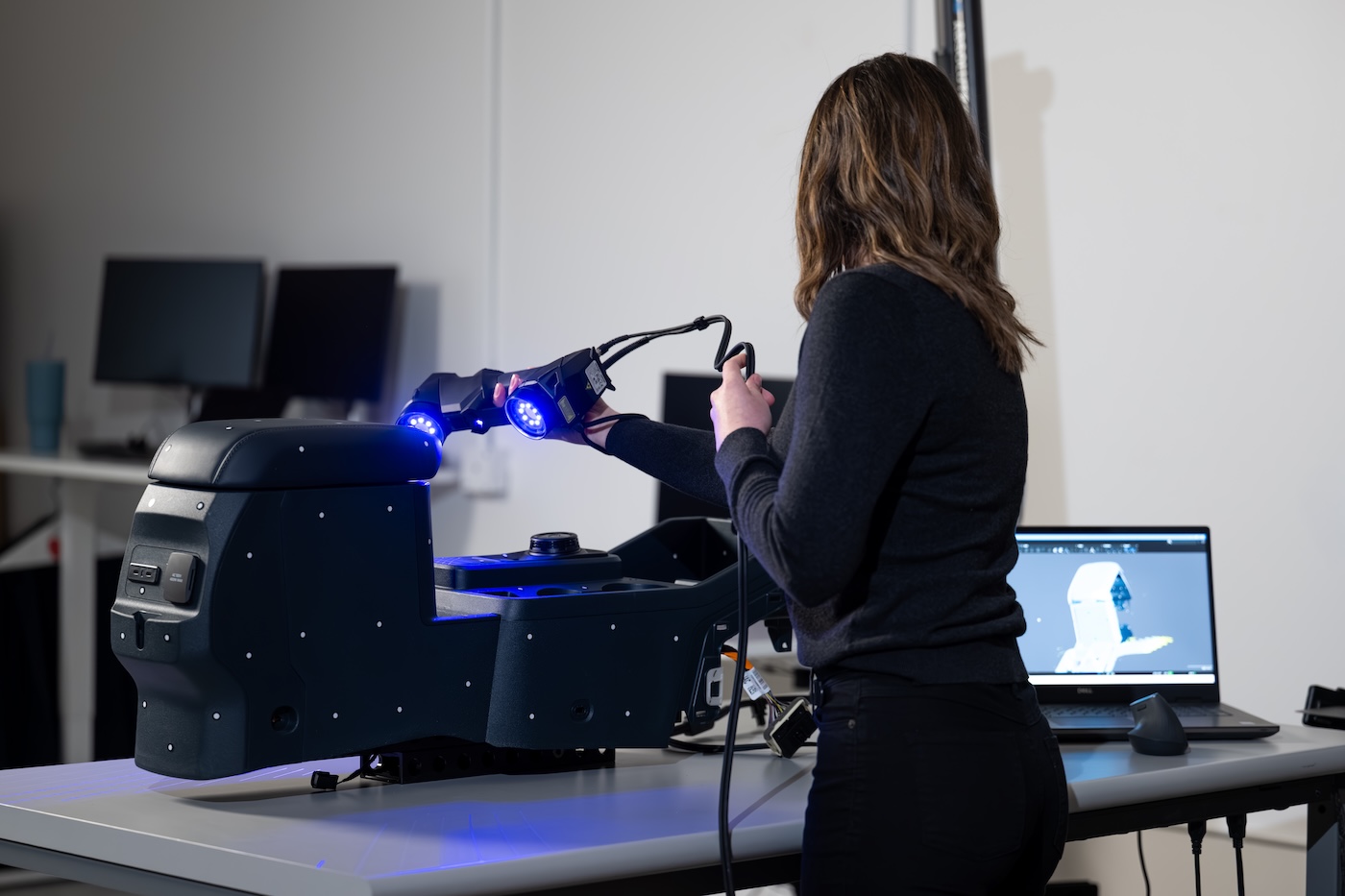
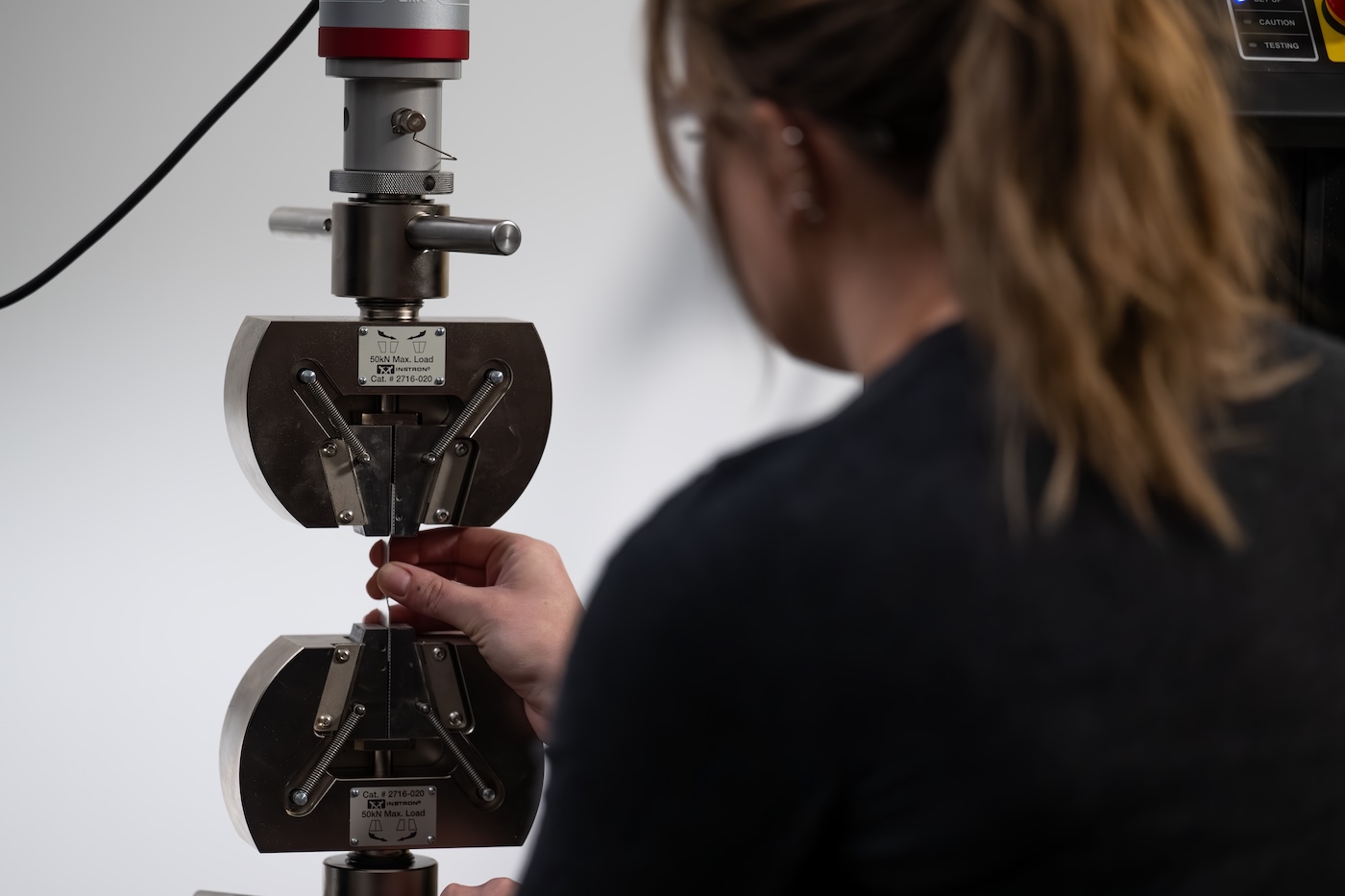
Ford concluded the tour by showing us the garage (which features a bunch of lifts) and the Metrology Lab, which is there to take precise measurements, not just ones in space, but also measurements of material strength. Here’s an engineer using a Blue Light Scanner on a Ford Maverick center console; you can see the image being imported into CAD on the right:
 Here’s a load cell so Ford can test material strength:
And here’s a CT scanner being used to provide an image of the inside of a speaker:

Before the tour was over, Ford’s tour guide joked “Oh, what’s that over there?”
A prototype truck drove by, adorned in full camouflage. I was unable to learn much about its styling, though its size and shape was definitely Ford Maverick-ish.
What’s The Takeaway?

The fact that a well-established company like Ford feels it needs to separate this program from the rest of the company tells you not only how different electric cars are from ICE vehicles, but also how much Tesla and China have disrupted the industry. Ford knows that if it wants to compete, it has to do things differently; it has to integrate and optimize, and it has to do everything quickly, and with the best engineers out there.
I guess that’s my takeaway of this rather brief tour: Ford is going for it. This became especially apparently when I spoke one-on-one with engineers. Unlike at previous Ford events, engineers at EVDC actually talked to me in detail about the geeky stuff, and it was clear that they didn’t feel they were constrained by PR’s “messaging.” This was perhaps the most obvious cultural shift that I noticed — that openness about what they were doing, and the excitement in their voice was impossible to ignore. This place is truly an engineer’s dream — a genuine Skunkworks Division where people have lots of tools and very little bullshit — a recipe for real progress.
Whether Ford can pull it off, and build a compelling $30,000-ish truck, we’ll find out next year. The company has had its share of quality issues, and competition from overseas is daunting, but it seems Ford isn’t afraid of the moment.
“There’s tons of pressure,” VP of Advanced Development Projects Alan Clarke admitted. “You can’t make diamonds without pressure.”





Meanwhile, over at Stellantis…
Engineer: Where’s the new EV Development center?
Vice President: You mean the room where everyone tries to make fun engine noises with their mouth? It’s by the bar. Grab me a PBR if you’re going that way.
Stellantis’ R&D is called the supply-base.
This is actually sounds pretty fun. If only I had gotten an engineering degree instead of Communications and English. There is definitely a dearth of covert technology development hideouts in my career.
More accurate to say their R&D is called the retail customer unlucky enough to buy or lease a Stellantis product.
It’s called ‘Leap Motor’
That is a Fooking awesome machine.
I wonder if it ticks anyone off there that they have to depend on a 911 to get their work done.
Only when it’s not an emergency.
So, for roughly twice the price of a used rust-free J10, we can get a brand new EV?
Who in their right mind would daily driver a truck from the 80’s?
Gladly. There’s a lot to love about modern cars, but sometimes its really nice to get back to the basics. Give me power brakes and power steering and I’d be happy to daily it.
Me! 😀
DT,
Thanks so much for your enginerd perspective about the tour. I’m hopeful for Ford’s chances of success.
Ford isn’t the first to create a ‘skateboard’ for multiple ‘top hats’. But maybe the first in local US production? (Not sure if GM is doing it to the same degree.)
Using the same large pieces (front and rear unicastings and suspension elements), structural battery boxes, traction motors and controlling electronics, etc. will allow a lower per unit cost when spread over 4-6 different vehicles. Guessing some cabin A surfaces and moulding will also be shared, as well as software, displays, switchgear, etc. and I’m fine with that if they’re quality pieces.
Ford please also provide mechanical switches for common controls, and reduce cab noise levels so the vehicles don’t sound cheap on the highway!
Exciting! And a most excellent story in general.
> After saying it might take three months to get a supplier to send a seat after receiving specifications from Ford, Anderson reiterated how the company being able to do it all in-house was a huge enabler.
Imagine that, vertical integration actually has benefits!
Fight Silos are great for corporate unity: two teams enter, one team leaves.
Because the other got laid off.
So like the Ford GT or mid engined Corvette, keep it away from the bean counters and corporate bureaucrats and you will create something wonderful? I’m
Sort of sad for Slate, but then it’s funded by Bezos so maybe I’m sad not sad.
So Ford are presumably spending huge amounts of money to build the ‘car of the future’…and it’s a pickup truck. How very American.
I assume they’ll be looking at carbon fibre leaf springs, and trying to make an electric motor that uses pushrods.
this whole Ford thing is hysterical
This is the third article I’ve read to come from this same tour. One at Ars Technica, one in the WSJ. This is the best of the three. Nice job DT!
DJT’s is great. Ford is DEFINITELY TRYING to let you know THEY’RE DOING SOMETHING NEW
Exciting. Of course what I want out of a small pickup — 4wd and a box frame for under 30K. Electric would be great, but ICE is fine.
I just hope they could someday develop their sub-$30,000 truck into two available models. The crew-cab-with-a-4-foot-box for people who want a rear seating area, and a regular-cab-with-a-7-foot-box for people who want to haul stuff like gas lawnmowers or snowblowers with it and have no desire for a second row of seats.
It being Ford, they will offer 200+ variations of it.
My wife and I tow a 2008 Colorado behind our RV, but it’s getting close to end of life. We’ve been considering replacing it with a Maverick. Interestingly the FWD hybrid version of the Maverick can be flat towed (four wheels on the ground). We like the thought of a compact truck better than a Jeep or other similar flat towable vehicle. This EV pickup would be an amazing vehicle to tow if it was possible, and even better if Ford could rig up a way to use regenerative braking (when getting a braking signal from the RV) to charge the battery. I imagine an EV vehicle battery would charge up quite a bit over 300 miles of towing and braking. I wouldn’t want it regen-charging during normal travel because that would add drag and worse fuel mileage for the RV, but aggressive regen braking would act as a supplemental braking system and a way to top off the EV battery for arrival at camp. I don’t think there are any EVs currently that can be flat towed. If Ford added this capacity, I think a lot of RV owners would be very interested.
I wish them well. Here’s hoping it’s a success, we need this kind of focus.
The cultural shift you noticed is definitely real, and something that is very overdue in the industry overall (IMHO). However, the clash between the “mothership” and the “skunkworks” team is / was not all wine and roses, especially at the beginning of the program…really interesting challenges / dynamics, but a definite breath of fresh air that is / was absolutely needed. I’m hoping the end result is something that will improve quality and cost, while changing the overall culture in how these products come to life (and hopefully make some return on the investment).
I think cheap electric pickups have a shot at being great fleet/work vehicles, but that’s about it. No one has yet shown there is much of a market here, and the shape of the pickup truck is not conducive to range. We’ll see, but given today’s gas prices, I’d be bringing back [electric] cars (like sedans, hatches and wagons)…
Range anxiety is overblown, but I’m hoping it does lead to the return of actual cars over barges on the road .
Agreed. I was hung up on that for way too long. High gas prices finally had me do a ton more research and we pulled the trigger on an Ioniq 5. Just picked it up this week and the fear over charging and charging times is unfounded. We don’t have a level 2 charger yet so went to the local target and hooked up to a Tesla supercharger. It was done charging by the time they found our pick up order. It took 24 minutes to add 50% of charge. That may sound intimidating to some but 1) the Ioniq 5 can charge faster than that on non-Tesla chargers and 2) if you line it up with a meal break you’ll be MORE than fine. Heck, I’ve sat in a McDonalds drive through line for longer on road trips sometimes.
This truck is supposed to be more crossover than truck and what Ford has shown so far has a pretty aero profile.
Ford’s image:
https://topelectricsuv.com/wp-content/uploads/2025/08/Ford-midsize-electric-truck-silhouette-teaser.jpg
One speculative render:
https://s1.cdn.autoevolution.com/images/news/gallery/everything-we-know-about-ford-s-30000-electric-pickup-and-the-universal-ev-platform_2.jpg
All of a sudden that ionic6 isn’t quite as fugly as I thought?
Ford rushing a product to market sounds like a disaster waiting to happen. My Maverick is 2 years old and has been recalled 5 times, all for stupid shit. They needed to update this module, and that module, and a backup camera whose image freezes up, and I’m still waiting for a software update because trailer lights can go on the fritz. This is my first Ford and this kind of crap does not inspire confidence. How long have backup cameras and trailer light plugs been around, and Ford is STILL having trouble? Come on. How many years will it take them to iron out bugs from a brand new EV platform?
I have one as well. I haven’t taken it in to get any recall work done yet but that list is growing. On the plus side, no drivability issues yet. Overall a decent truck but the recalls are worrying .
I blame it on OTA—no need to get it right when crap code can be patched too easily. The trailer lights must go through the computer? Funny in that I have no issues with trailer lights on my GR86 because they reside outside any computers (not hacked into the harness, I got a pair of inter-harness extensions that use the factory plugs between the body and tail lights with labelled redundant wires for all the lights).
Exactly what I was going to say. They’re experience should tell them to take their time. When’s the Bezos truck coming out?
This will fail without an EREV solution at the least. Most of its target market has nowhere to charge it.
They’re doing that too! It was mentioned on their conference call(s).
The target market is the 40% of household that don’t live in a detached single family home without dedicated off street parking?
I can see quite a few of these in the ‘burbs next to a crossover.
Big companies trying chase startups is always amusing. I know why they didn’t it in this case. But they could have done it just as well somewhere in the midwest though. Bring in the bright highschool kids who haven’t been beaten down by the “you can’t do that”s in academia and the fresh from academia that have somehow survived them. I always found it ironic how you bring in an MBA they say act like a start-up because they see unicorns. Meanwhile the unicorn is trying to act like the big company. Ford needs to go back to as vertical integrated as they can. That’s where all the start ups are going and where Ford went when they were a start up. It’s the only way to really control product and costs. Suppliers will nickle and dime a project to death.
Good for Ford! Xerox tried this with PARC. Set up an independent R&D operation on the other side of the country. However, the corporate management with the real purse strings remained in Rochester, NY. The rest is history. Let’s hope that Ford learned from that mistake.
Yeah, I’m curious if they actually let anything out of here or if they’ll kill it after a reveal and maybe a few car shows. GM had a massive lead with the EV1 and then killed the program, so will we see Ford do the same?
I was in Rochester when that all started to crater. Not great times for Roch-cha-cha peeps
At least we still have Koda….uhhh…Bausch and Lo……uhhh. Delphi. No, wait, shit. Ummmm….I’ll get back to you.
GAHHH at least there’s the Amerks and Dinosaur BBQ
Good for Ford! Xerox tried this with PARC. Set up an independent R&D operation on the other side of the country. However, the corporate management with the real purse strings remained in Rochester, NY. The rest is history. Let’s hope that Ford learned from that mistake.
Fun fact: Ford’s Greenfield office is only a half-mile from Xerox PARC in Palo Alto.
I know where that is. I worked at Xerox PARC in the early ’80s and I still live in the area. You think they allow visitors? Google maps doesn’t say. I guess I could call.
That would be hilarious.
I’ll let you know. It probably won’t be this week, as I’m just returning from an extended trip. Recovery at my age takes time.
The key difference is Ford still has the Ford family at the helm. Xerox didn’t.
Never underestimate what a family will do to protect generational wealth.
Shareholder‑run companies simply do not behave the same way.
I read about cars every day, and based on the aggregate, not hype, I am nearly certain Ford is going to crush it. Family‑controlled companies think in decades. Shareholder‑controlled companies think in quarters.
Look at the pattern.
Family‑controlled and still growing:
Walmart is growing faster than Amazon in multiple retail segments.
Lowe’s, influenced by family for decades, is growing while Home Depot is flattening.
Ford is rebuilding the lineup, fixing quality, and investing in EVs, hybrids, ICE, Ford Pro, manufacturing, and software because the family is protecting a 120 year legacy.
Now look at who is gone.
Sears, Kmart, Bed Bath and Beyond, Caldor, Zayre, Filene’s, Jordan Marsh.
What do they all have in common?
No family ownership. No long‑term steward. No one with skin in the game beyond stock options.
When the market shifted, they cut investment, cut staff, cut innovation, cut stores, and eventually cut themselves out of existence.
Toys “R” Us was family‑owned, but they waited too long. Family ownership gives you a chance, not a guarantee. If you do nothing, you still die.
This pattern repeats everywhere.
Family‑controlled winners:
BMW, Hyundai and Kia, Estee Lauder, New York Times, Mars, Cargill, SC Johnson, Publix.
All stable. All long‑term thinkers. All still here.
Shareholder‑run casualties:
Circuit City, RadioShack, Linens ’n Things, Borders, Sports Authority, Lord and Taylor, Barneys.
All gone.
Here is the real formula:
Do nothing and you are gone.
Do something and you have a chance.
Do everything, which is what Ford is doing, and you crush it.
Ford is not reacting. They are rebuilding. That is the difference when a family is protecting generational wealth instead of a board protecting quarterly earnings.
Ford is building far more than cars. They are developing advanced batteries, expanding into energy systems, creating in house chips and electronics, rolling out large scale charging infrastructure, growing the Ford Pro digital ecosystem, pushing autonomy through Latitude AI, expanding government and municipal fleet platforms, and positioning for defense adjacent programs. These are long term moves only a family controlled company has the patience to execute.
Cars are just a piece of it.
And while we are here, let’s clear the air.
Ford has been doing more than cars for over a century, building airplanes, motorcycles, tractors, military machines, inventing the moving assembly line, powering NASA’s Mission Control for the Apollo Moon landing, and even fueling your backyard grill with Kingsford. Today they are driving advanced batteries, energy systems, chips, charging, Ford Pro, and Latitude AI. They did it by creating and engineering from within. It is their name, their company, their history, and their future, more than one hundred years of original American engineering.
So give them a break and remember the middle class was built on Ford’s shoulders, the words “one small step for man, one giant leap for mankind” reached Earth through systems Ford created, and even your backyard barbecue runs on Kingsford because of Ford.
It’s great to see a big old line company trying to be agile. The hard part will be integrating the two organizations in the next phase. I’ve been doing the ‘startup’ Fast Company thing for going on four decades and there are dozens and dozens of ways to faf it up. GL to Ford.
You’re spot-on. Part 2 is just as hard as Part 1.
I like how they’re testing for towing. More specifically road trip towing. That uses a lot of electrons and needs double the DCFC stops in my EV towing experience. So it’s good they’re anticipating people doing that daily for a few weeks at a stretch each summer. Now if they can put a bug in the fast charging industry’s ear to make pull through chargers that accommodate trailers, that would be excellent!
PLEASE give it some serious acceleration.
I don’t mean ludicrous or plaid level, but I won’t buy it without some ‘oomph’.
Hey David, I appreciate the behind-the-scenes article. After a long career at an OEM, followed by a job at an automotive start-up, I was quite familiar with your writing and an article I read Yesterday. The other article was in the WSJ titled “The Secret Team Blowing Up Ford’s Assembly Line to Make a $30,000 Electric Truck”. The author was described as “…an enterprise reporter covering the global automotive industry…”. The article is not written from a technical insight perspective and with only a rudimentary understanding of the industry, but the focus was on competing with the Chinese on EV development, price point, and manufacturing processes.
We will see what Ford can do. I don’t think we (US OEMs) can ever match Chinese EVs on price, but we should be able to catch up on design and manufacturing tech over time. Back when I worked in the industry, US manufacturing labor costs were 12-15% of the vehicle material cost. Reducing labor time typically requires complexity reduction/parts & systems simplification like giga castings and modular components, but that tends to drive up the material (and sometimes tooling) costs. The material cost of aluminum or magnesium is well above the cost of steel. Tolerances are definitely better controlled in one large casting vs individual stamped parts that are fixtured and welded together. Figuring out how to reduce material and labor costs simultaneously is key.
From the WSJ article:
“Rival automakers say overcoming China on EVs can’t be done, given their advantages: extensive government backing, low-cost labor and a massive head start.”
Apologies if this has been asked and answered, but has Ford provided any insight into the battery chemistry(ies) they are contemplating for this vehicle?
I’m excited about this vehicle and believe Ford might be able to pull it off. That said, there are factors outside their control, like raw material costs, that will impact their ability to deliver on the price target. Understand their battery chemistry and sourcing model will help us understand how likely it is they can hit the mark.
The article says LFP. It was buried in there, so easy to miss. A solid chemistry that’s more abuse tolerant than NMC. Some of the fastest charging mass produced cells in the world are LFP right now. Good on Ford for reading the room and figuring out some people will charge these up to 100% just because they can.
My interpretation of why they’re going with it is more from a cost perspective since it’s much cheaper than lithium-ion. So they are really focusing on weight reduction and aerodynamics to hit range figures.
Agree, this is why I was curious about this. Battery chemistry is one of the biggest drivers of EV materials cost (or differential in materials cost among various types of EVs, more exactly). Glad to hear Ford is using LFP, makes it much more likely they’ll get there on cost.
Thanks all for the comments here, interesting discussion!
‘Specially if this is meant to be a towing/road trip machine.
Peak power isn’t as relevant for that use. Thermal management for charge curve and cell degradation matters more. If it can tow 150 miles, fast charge to 80% in 20 minutes and do that all day a few times a year without degrading too much over 10 years, it’ll be a winner.
It isn’t. This is a “lifestyle” machine for people in the suburbs not a farm truck. Basically a more rounded and aerodynamic Maverick with a bigger back seat and a smaller bed.
That’s the vibe I’m getting from this too. It’s not going to try and compete with existing BOF pickups, where a decent amount of buyers want to tow. The Maverick has done well so it makes sense for Ford to develop an EV counterpart.
Ford partnered with CATL and TDK for a LFP plant in Michigan. They split from their venture with SK ON taking full control of the Kentucky plant. By the sounds of it Kentucky will be an LFP plant as well.
SK ON is a supplier for HKG and who slate plans to use.