

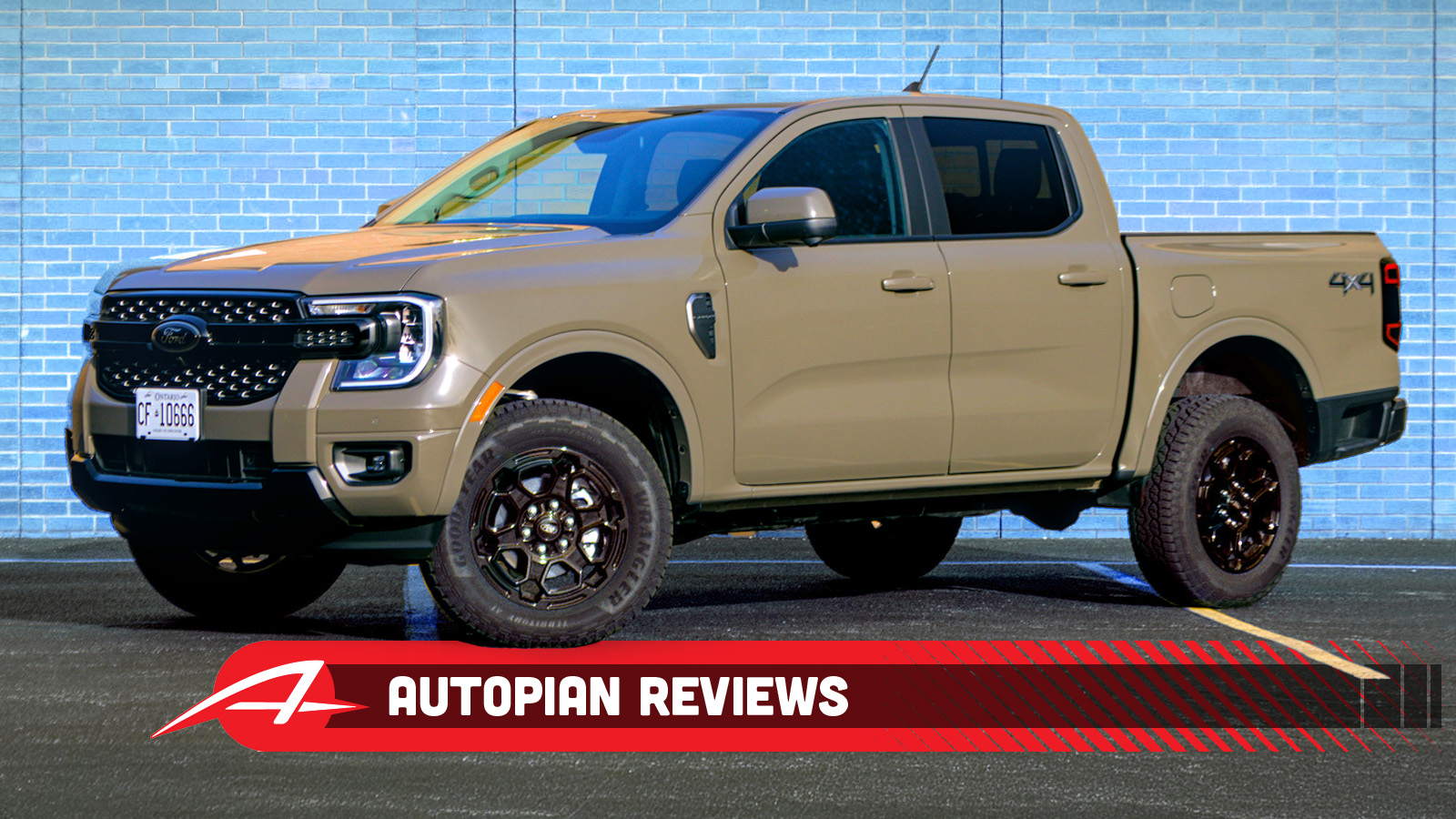
Throughout modern history, there’s always been one anomalously powerful yet stealthy midsize truck. Think Dodge Dakota with the 5.2-liter V8, or the first-generation Chevrolet Colorado and GMC Canyon with 5.3-liter V8 power. Today, if you really want to haul the mail in an unassuming midsize truck, that’s where the Ford Ranger should come in clutch.
If you poke around the options lists for XLT and Lariat models, you’ll find that it’s possible to get the 2.7-liter twin-turbocharged V6 from the F-150 in Ford’s midsize truck. Considering how even naturally aspirated V6s are a rapidly disappearing fixture in this middleweight class, a boosted six sounds like just the ticket on paper. So what about in the real world? I spent a week in Ford’s 2.7-liter Ecoboost Ranger to find out.


[Full disclosure: Ford Canada let me borrow this Ranger for a week so long as I kept the shiny side up, returned it reasonably clean with a full tank of fuel, and reviewed it.]
The Basics
Engine: Twin-turbocharged and intercooled quad-cam 24-valve 2.7-liter V6.
Transmission: Ten-speed torque converter automatic.
Drive: Part-time four-wheel-drive with low-range, available locking rear differential.
Output: 315 horsepower at 5,750 RPM, 400 lb.-ft. of torque at 3,000 RPM.
Required Fuel: 87-octane gasoline.
Fuel Economy: 18 MPG city, 23 MPG highway, 20 MPG combined (13 L/100km city, 10 L/100km highway, 11.6 L/100km combined).
Base Price: $45,410 including freight ($55,120 in Canada).
Price As-Tested: $55,110 including freight ($64,750 in Canada).
Why Does It Exist?
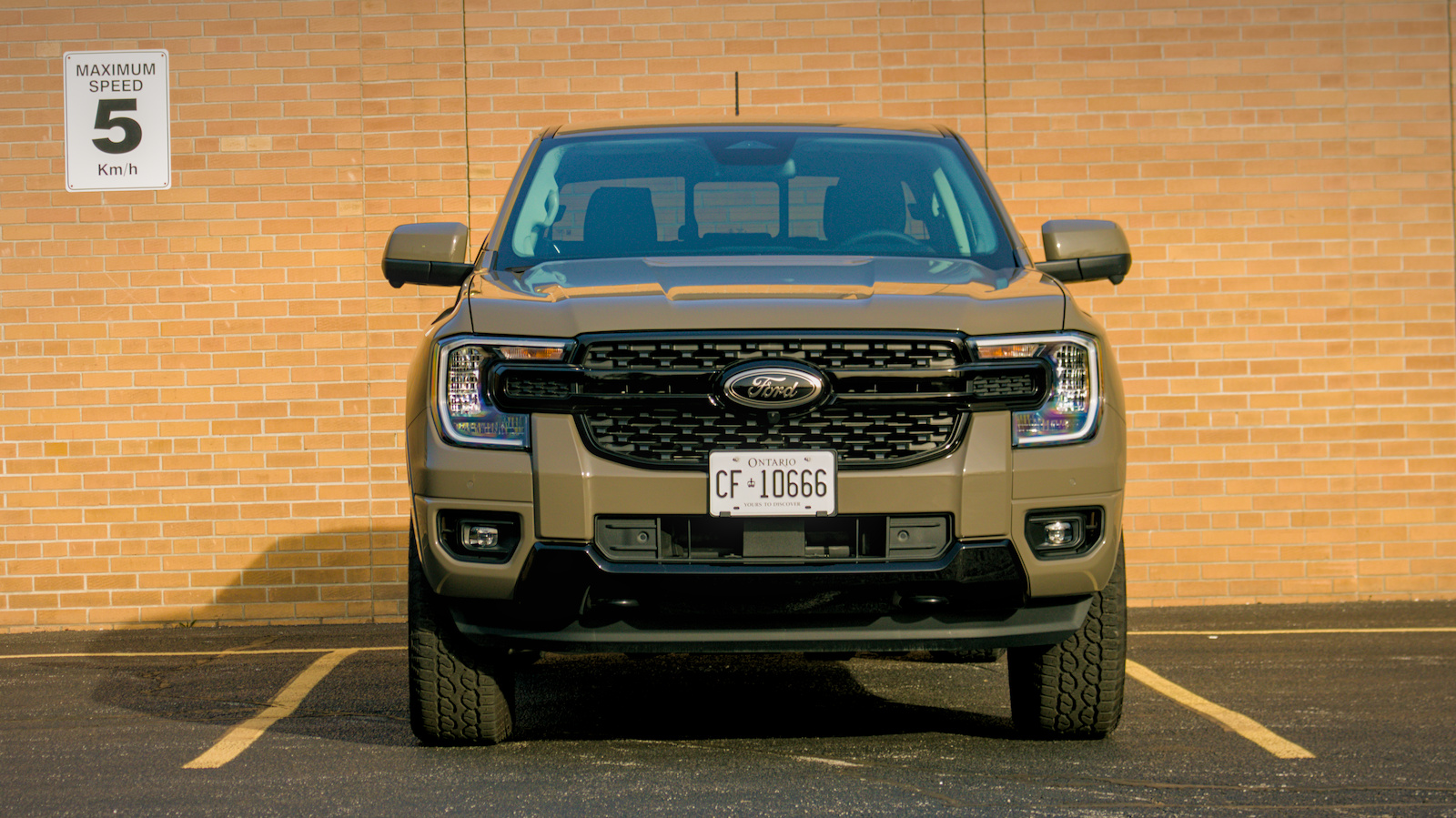
The Ford Ranger V6 is a classic case of raiding the parts bin in search of glory. Ford needed to fill an enormous 135-horsepower gulf between the base 2.3-liter turbocharged four-cylinder model and the fire-breathing Ranger Raptor, and not only was the 2.7-liter twin-turbocharged V6 from the F-150 already in the parts bin, but it’s also offered in the Bronco, which rides on the same T6 platform as the Ranger. The result is one of the more potent midsize trucks you can buy without stepping up to a full-on performance model, and the additional cost is exceptionally reasonable.
How Does It Look?
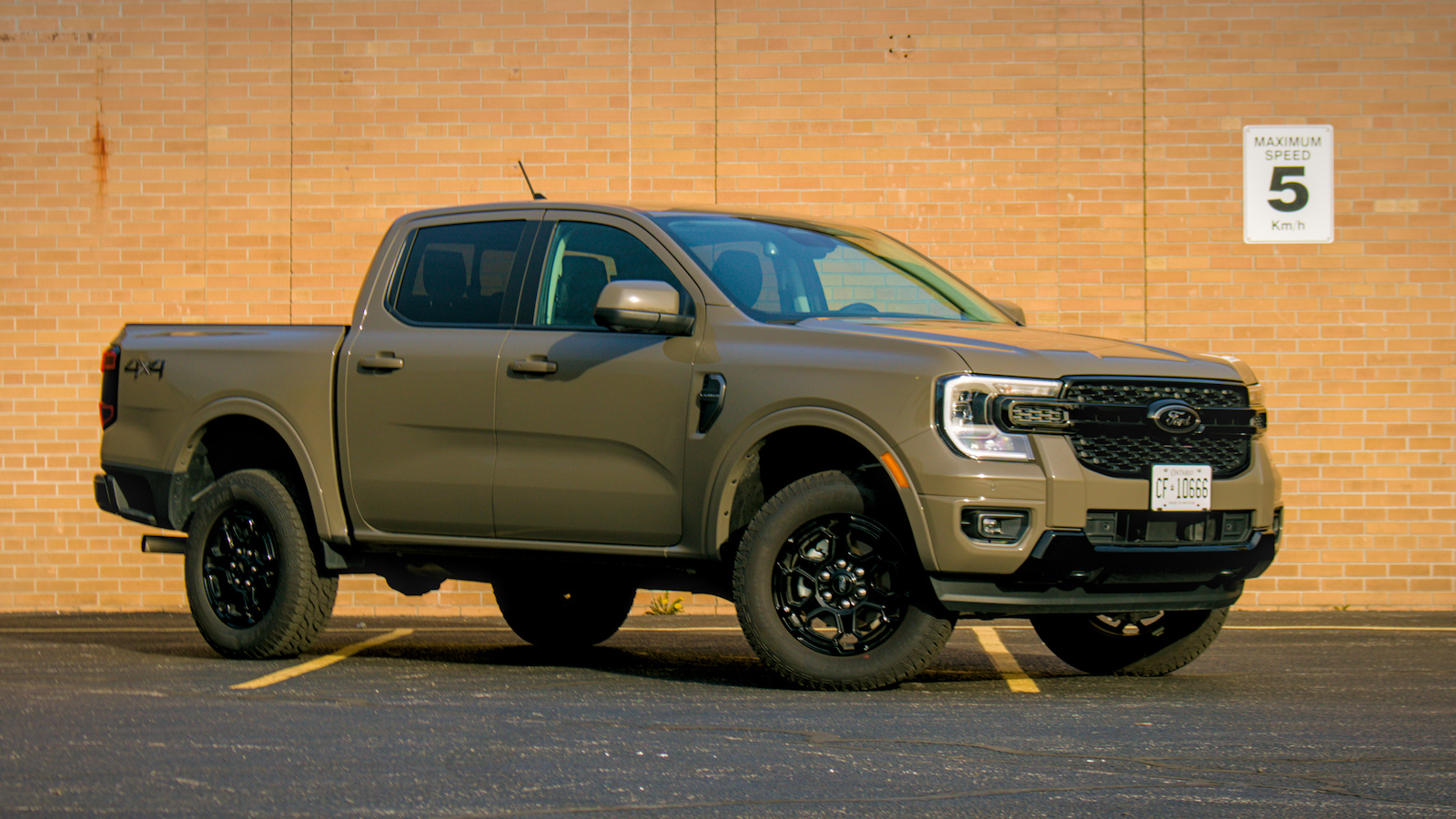
At a glance, you’d have absolutely no idea if a current Ranger is equipped with the optional V6, and there’s something pleasing about that. No engine-specific badging, no Double Gulp-sized exhaust tips, just a clean cut of truck. There’s a quiet handsomeness to Ford’s midsizer, what with its relatively restrained grille, round wheel arches, and modest surfacing. It doesn’t have to shout, this one simply lets its output do the talking.
What About The Interior?
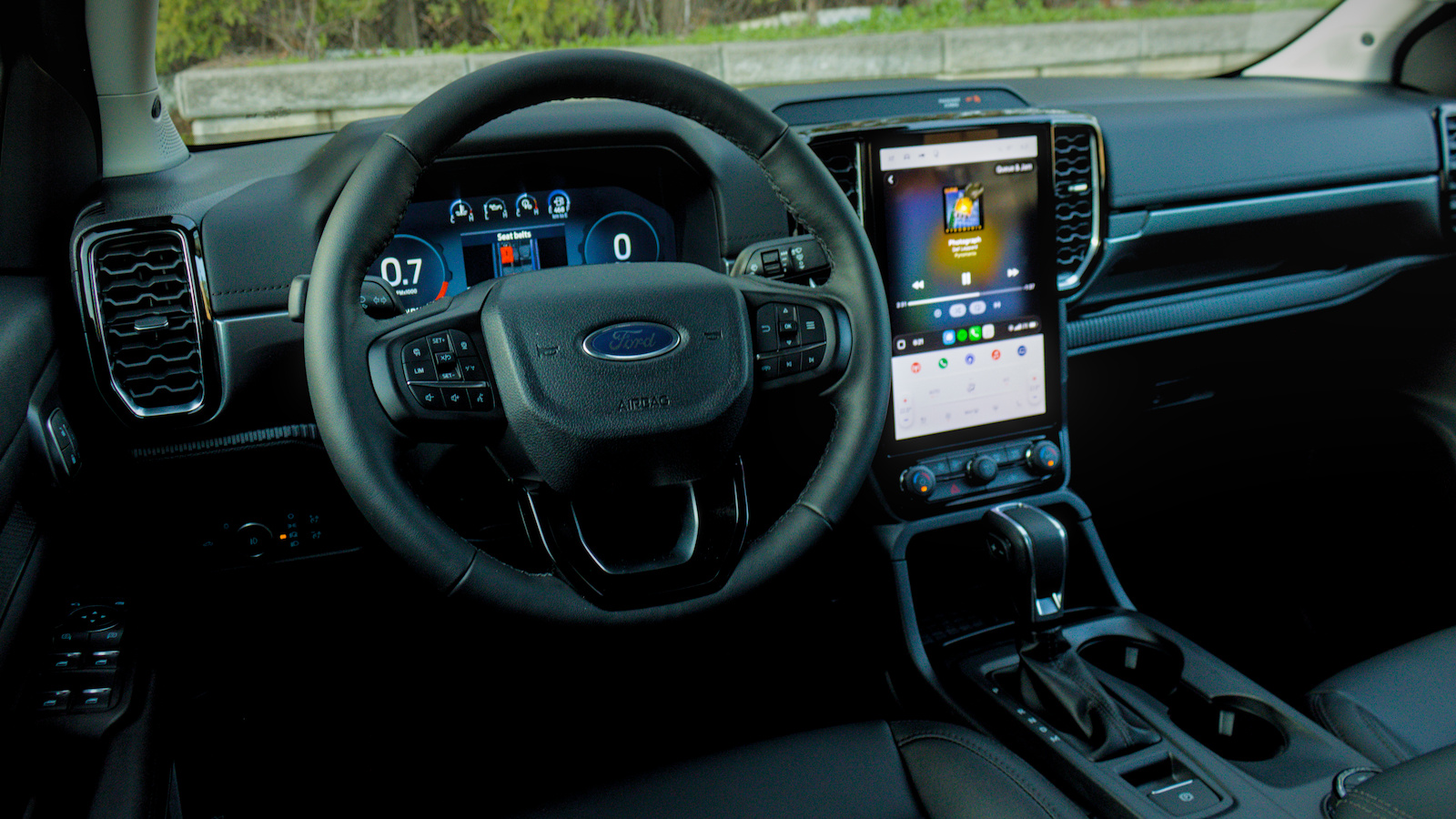
That clean purposefulness continues on the inside, where the Ranger has reasonably nice materials, comfy front seats, and a litany of simple, easy-to-grip knobs. Two rotary controls for temperature, one for volume, another in the console for drive mode selection with pushbutton shift-on-the-fly four-wheel-drive modes inset. The real intrigue here is in the details, like the relatively ornate climate control vent slats and the ribbed brightwork breaking up the dark dashboard. Or the details Ford missed. Maybe I’m just used to living in snow for nearly half the year, but putting the heated seat and heated steering wheel controls in the infotainment on a truck seems shortsighted. They aren’t especially fast or easy to adjust, and many gloves don’t play nice with touch-sensitive screens.
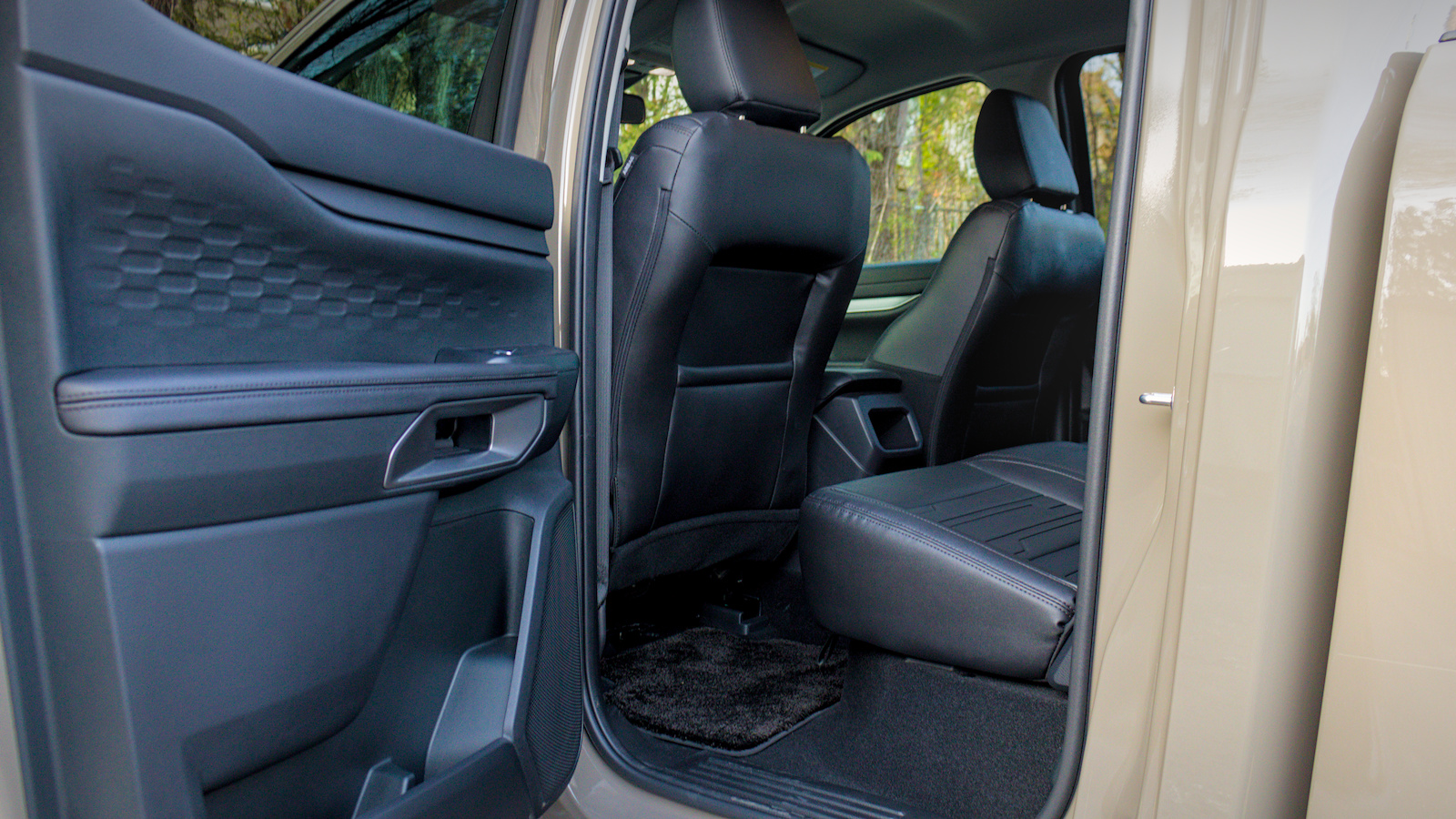
The curious omissions continue in back with 2.3 fewer inches of rear legroom than its unibody Maverick little brother. Oh, and no rear seat air vents. You do still get the same ultra-plush floor mats as up front, but overall, it feels reasonable to expect a little more rear seat comfort in a well-equipped midsize truck. On the plus side, rear door storage is solid, and there’s a little extra stowage under the rear seat.
How Does It Drive?
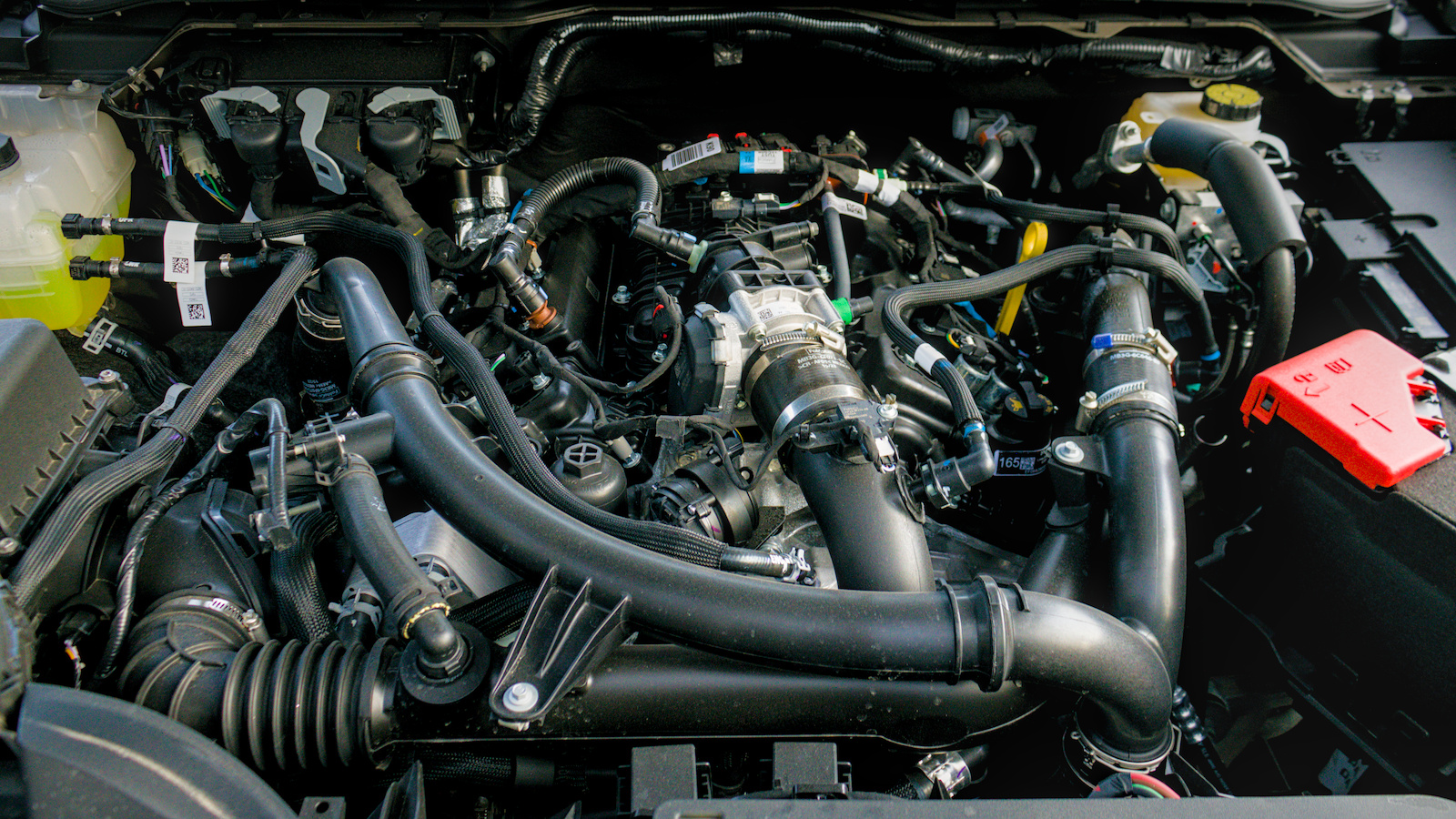
Underneath the tangle of hoses and pipes you see in the picture above lies the treasure you seek: Ford’s familiar 2.7-liter twin-turbo V6. This second-generation engine may now be eight years old, but it still kicks out a solid 315 horsepower and a serious 400 lb.-ft. of torque in the Ranger. Hitched to the corporate ten-speed automatic transmission, it’s here to make one request and one request only: Come and have a go if you think you’re hard enough. Bring your i-Force Max Tacomas and your Turbomax Colorados, a party time launch in the V6 Ranger will show them all a set of Ford taillights. We’re talking zero-to-60 MPH in the mid-fives. That’s quick, full-stop.
Of course, 400 lb.-ft. of twist and ratios to spare also makes for astoundingly effortless passing power, and it comes with only the slightest tradeoff: Fuel economy drops by just one mile per gallon over the four-cylinder model. A 4.76-percent increase in consumption for this much extra oomph? Yeah, I’ll take that.
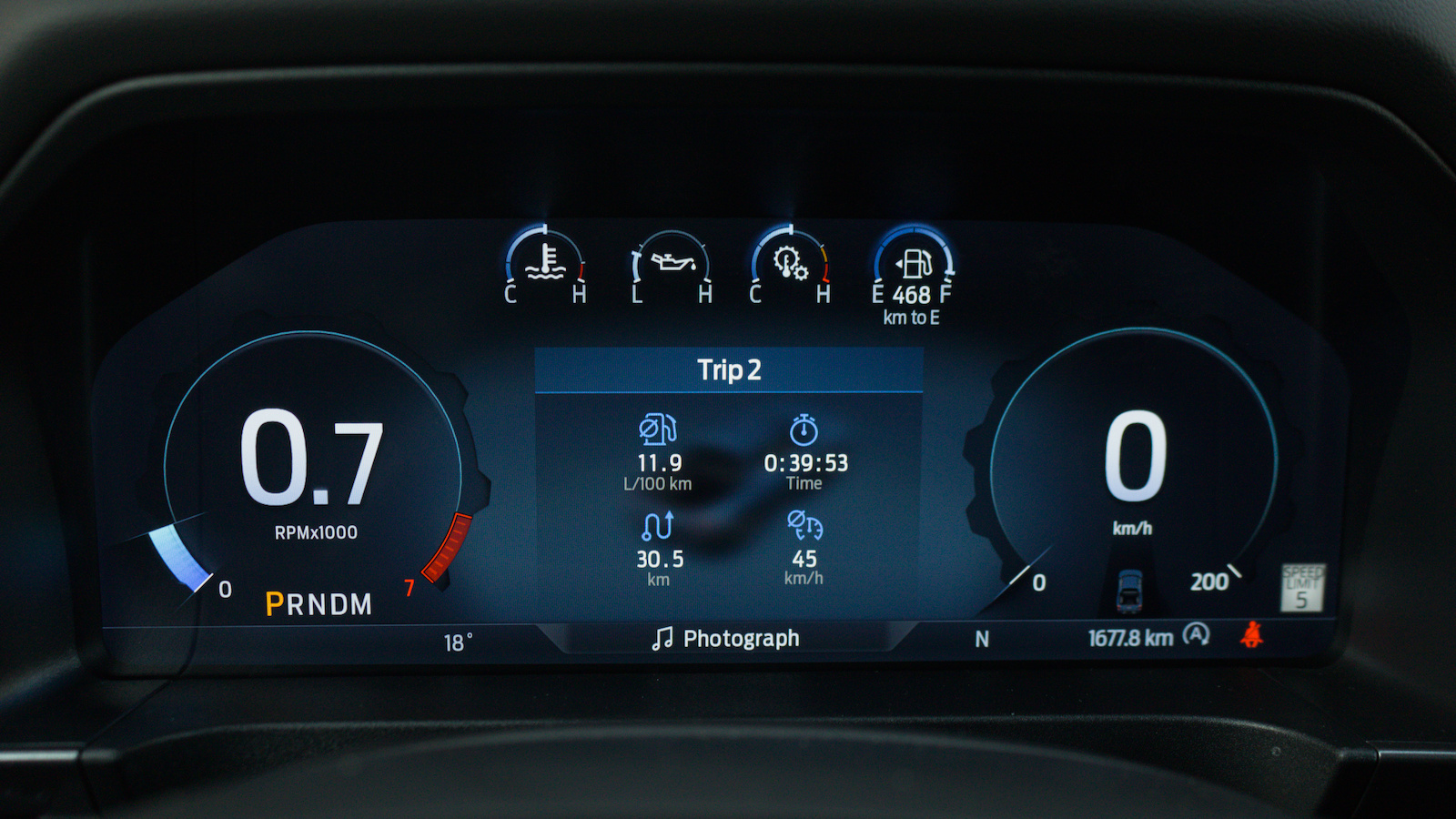
Mind you, this powertrain isn’t perfect, and that all comes down to that ten-speed automatic. It’s definitely calibrated better than when it launched in 2017, as it no longer hunts for gears during fairly steady cruising in slightly hilly areas, but you still get the occasional harsh downshift. Not dropping-a-cast-iron-bathtub-out-of-a-fourth-floor-window harsh, but definitely firm.
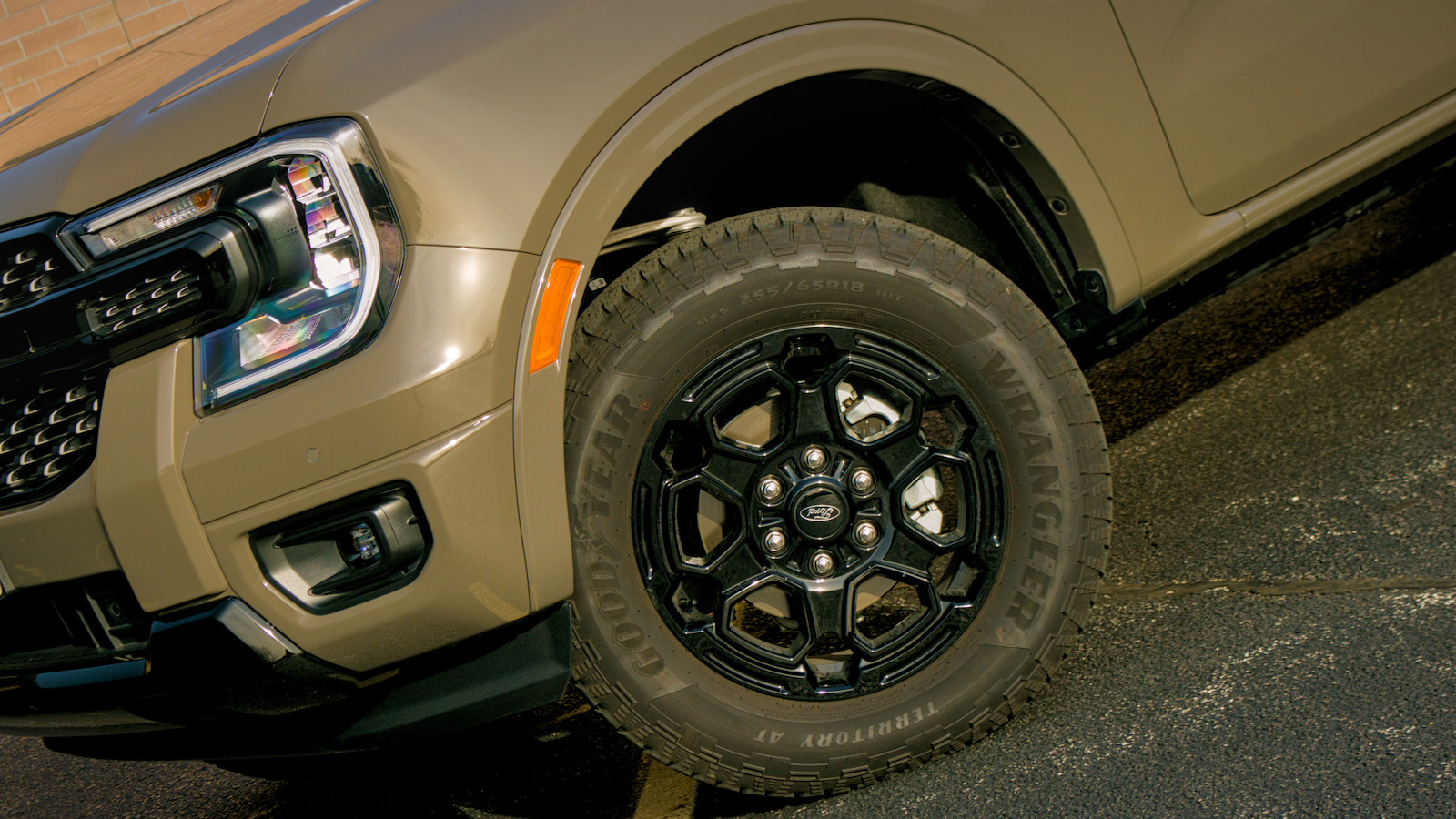
So then, what about ride and handling? Surprisingly, the Ranger leans more in the latter direction. Heavy but accurate steering makes it easy to hustle up to the rather low limits of the tires, while firm spring and damping rates keep things relatively level for something built for hauling mulch and towing up to 7,500 pounds. How does this translate in the real world? It means the Ranger is easy to place on the road with confidence, and the secondary ride quality is excellent. Granted, things get a bit choppy over successive expansion joints, but that feels like a suitable compromise when viewed against the rest of the driving experience.
Does It Have The Electronic Crap I Want?
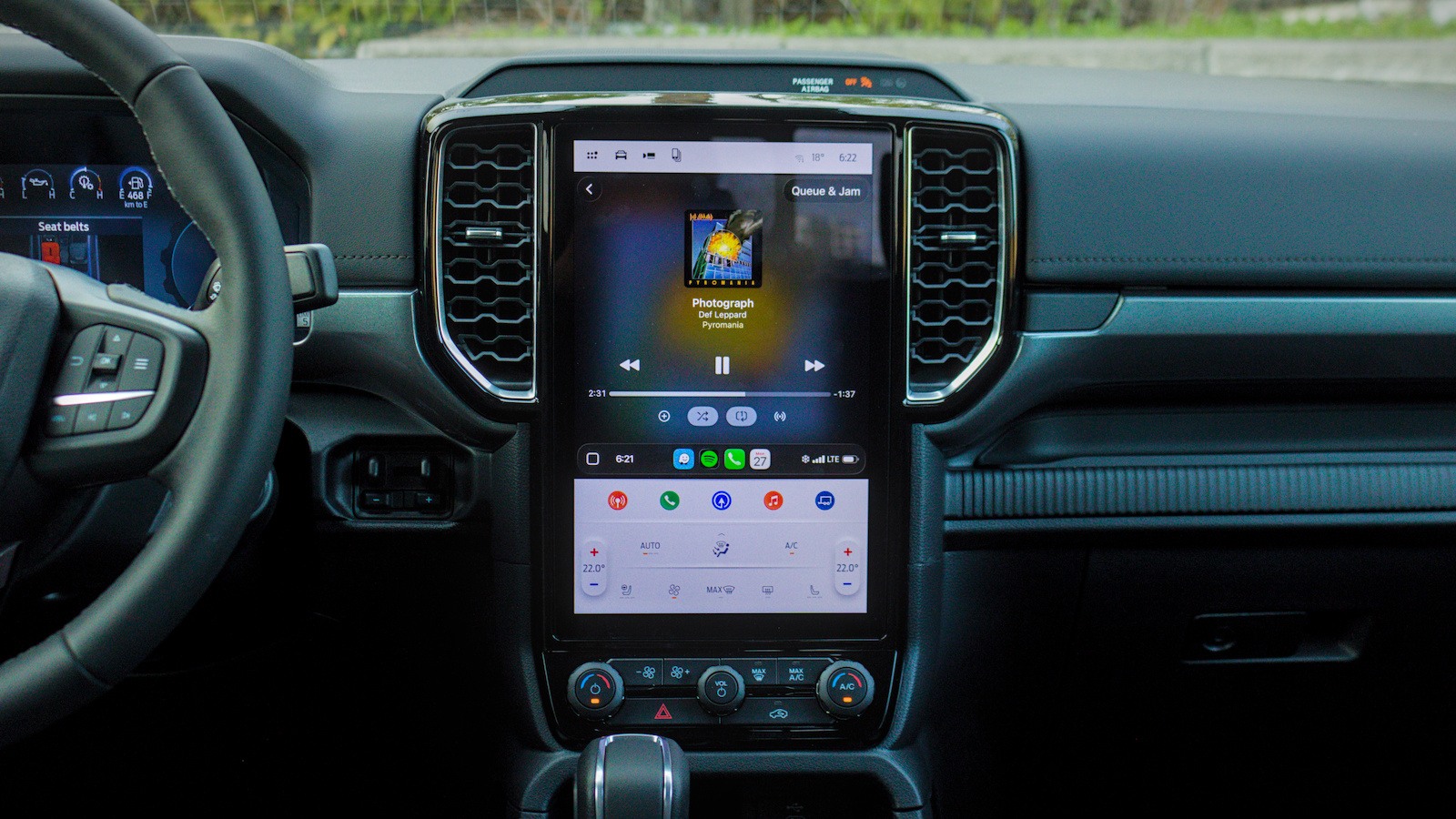
Every single V6 Ranger gets a huge portrait-style infotainment screen with wireless Apple CarPlay and Android Auto, heated seats, a big suite of advanced driver assistance systems, remote start, LED lighting, dual-zone climate control, and an auto-dimming rearview mirror. From there, the toys increase contingent on how deep your pockets go. Stepping up to the Lariat trim gets you a heated steering wheel, a 12-inch digital gauge cluster, ambient lighting, and a 360-degree camera system. Perhaps the best luxury on the Ranger, however, is a set of rear camera views specifically designed for lining up the trailer hitch without a spotter. That’s much appreciated.
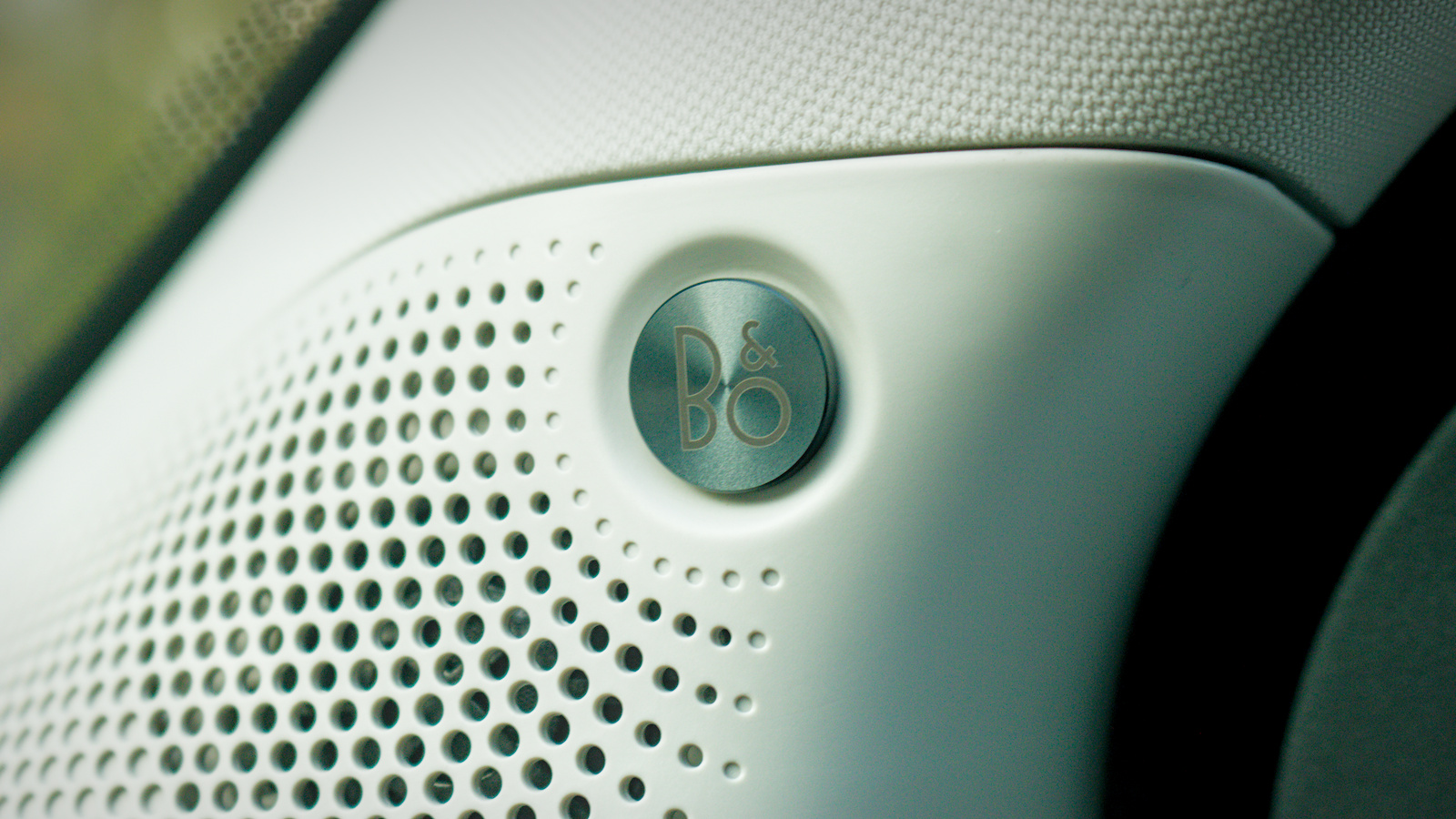
Less appreciated is this Lariat trim’s B&O sound system, which is as loud as it is awful. Not only does this 10-speaker Bang & Olufsen-branded affair sound muddy like it’s pushing sound through a mattress, the staging feels unfinished. You can’t help but get the sense that Harman International will put the B&O name on anything if the contract’s right. However, this system is still competent at absolutely cranking hair metal, and you know what? Depending on what you listen to, that might be good enough.
Three Things To Know About The Ford Ranger V6
- It’s as quick to 60 MPH as a stick-shift New Edge Mustang GT.
- The real-world fuel economy penalty of the V6 is virtually unnoticeable.
- That V6 engine doesn’t come with a huge added cost over a similar four-cylinder model.
Does The Ford Ranger V6 Fulfil Its Purpose?
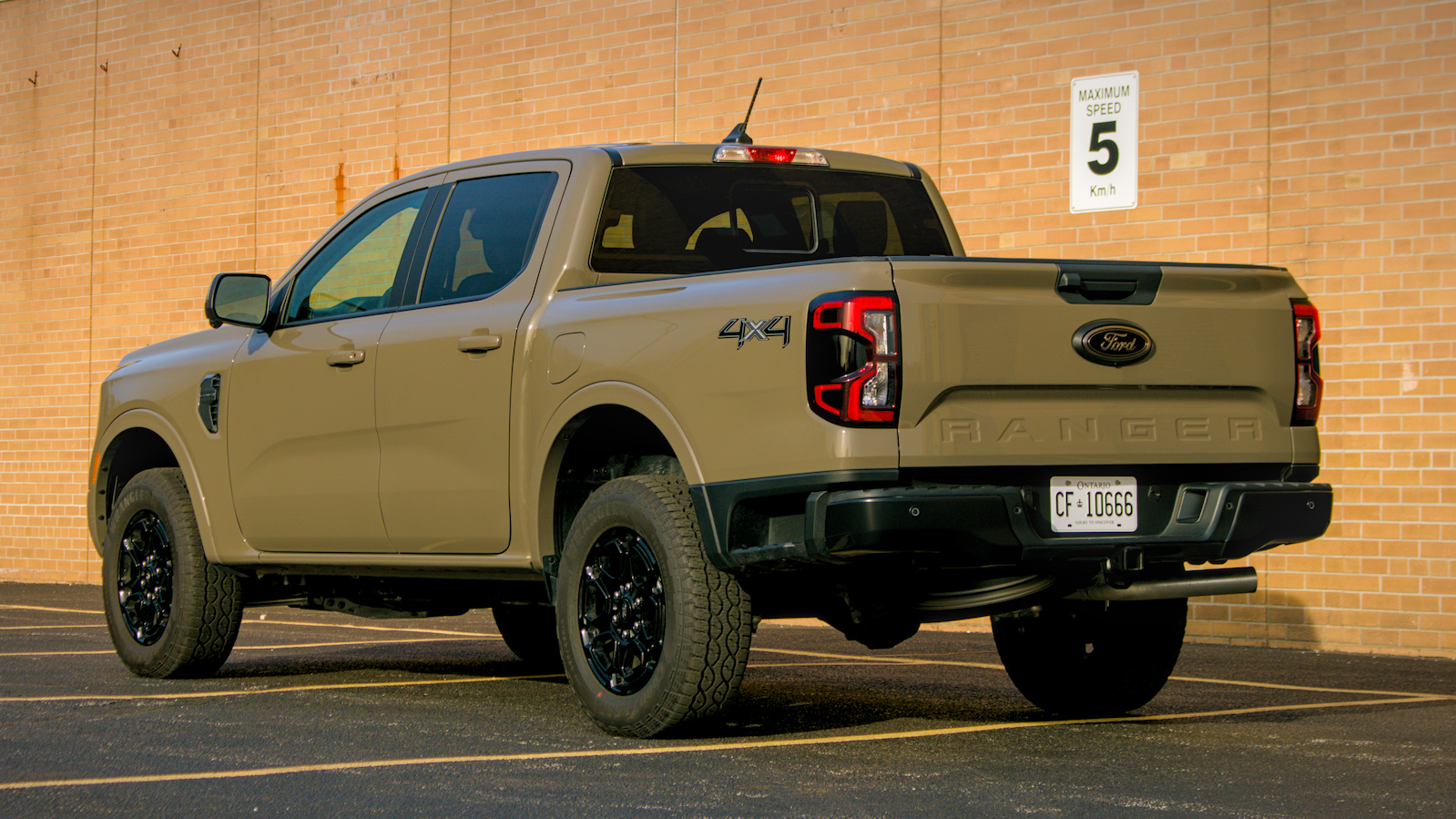
Absolutely. There’s actually almost zero reason not to tick the option box for the V6 if you’re already looking at a 4×4 Ranger XLT or Lariat. It offers effortless acceleration with a fuel economy penalty of one measly MPG over the four-cylinder, and it’s a relatively cheap option. We’re talking $2,295 ($2,895 in Canada) for the engine itself, although if you’re looking at an XLT, the V6 does require the $1,250 ($2,550 in Canada) High Series package that adds heated power seats, the big screen, dual-zone climate control, and a power-sliding rear window.
However, the Ranger does sit on the pricey side of the midsize truck spectrum. A largely similarly-equipped Chevrolet Colorado Z71 is nearly six grand cheaper than my $55,110 Ranger test unit, while a similarly-optioned Toyota Tacoma TRD Sport i-Force Max costs about $2,100 more than this Ranger. Then again, neither of those trucks has this much punch, and if you’re buying for the engine, there really is no substitute.
What’s The Punctum Of The Ford Ranger V6?
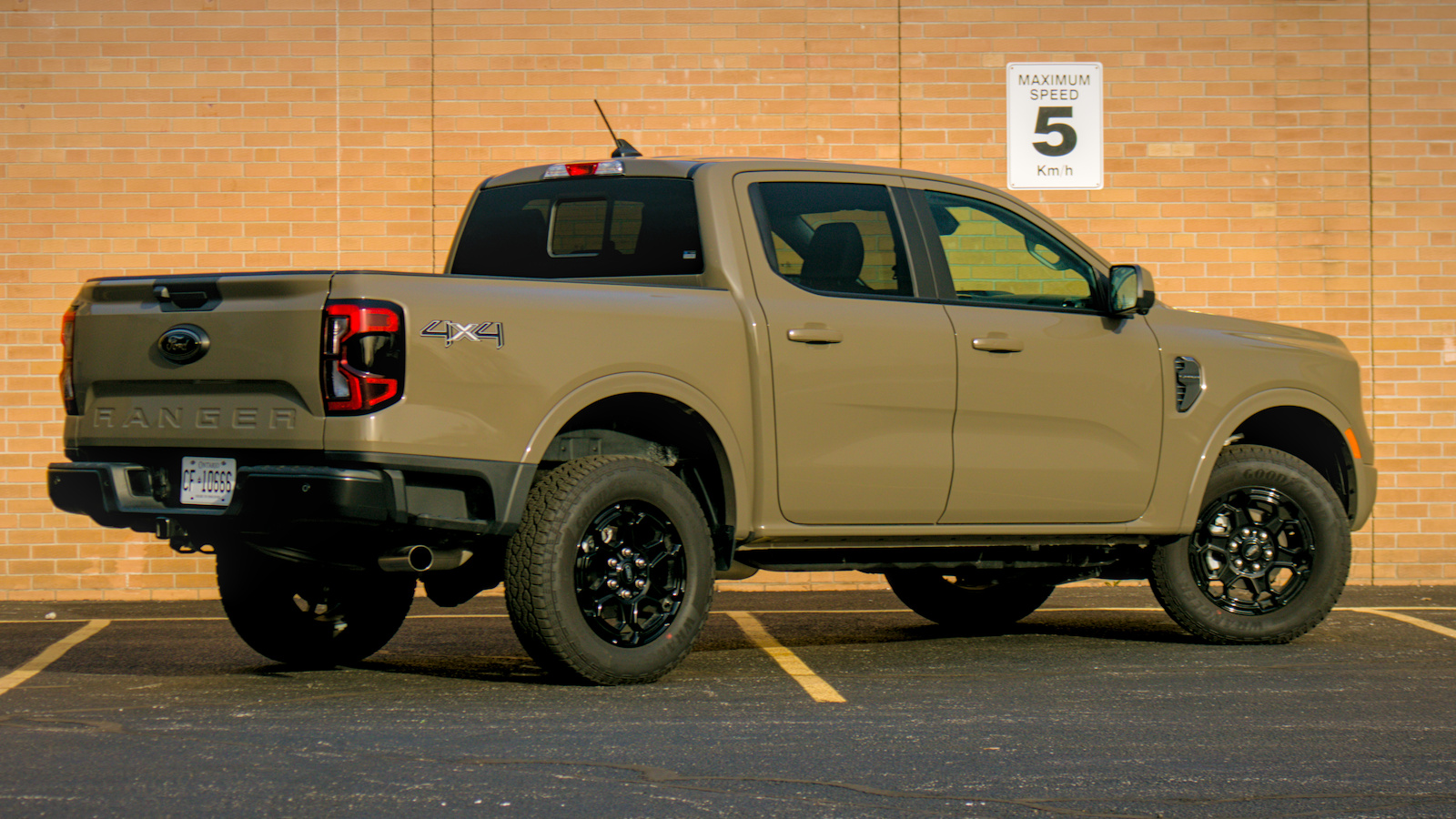
This twin-turbo V6 midsize truck hauls in every sense of the word.
Top graphic image: Thomas Hundal


Well, YMMV, and maybe that’s the result in an EPA test loop, but you gotta have the hay to feed the horses, and this thing is gonna be thirsty in real world driving.
Since when is Bang & Olufsen owned by Harman?
Since 2015. Harman acquired B&O’s automotive arm at that time.
Dear god that color is horrible. Just washed my 2 year olds butt after changing the diaper, pretty sure I was the color sample there.
Yep! Baby shit brown. And that engine compartment does not look like a fun place to do any work.
and to think this is an extra cost paintjob……
My brother in law had the Gen2 Colorado and current Colorado 4 door and both have less back seat room then the 2000-2004 Quad Cab Dakota. Whats the dealio?
This is a question that no one ever seems to answer for me. I’m probably missing the reporting on it somewhere but it makes no sense to me how huge these mid-size trucks are yet the back seats on the crew cabs seem have less room with each generation.The beds aren’t getting longer either.
Price As-Tested: $55,110 including freight ($64,750 in Canada).
Go home Ford, you’re drunk.
I saw a nearly $60K stickered Nissan Frontier at the auto show in March. Nearly did a spit take all over the driver side window.
who would’ve said the Colorado would become the best priced mid sized truck nowadays? The MSRPs almost sound reasonable when compared to the rest of the pack.
On top of that Chevy throws some rebates on the regular, Nissan too, but it’s almost needed as their MSRPs don’t make sense anymore. Ford almost has no rebates as they don’t build too many Rangers as they prioritize Bronco production….
Nissan is absolutely insane with their stickers. Sure you will probably get a good discount from the dealer compared to other brands; but why are they pricing it that high in the first place?!
Nissan should take advantage of the fact that the Frontier is so old by making it the clear value leader in the segment. This is one case where “old” is better, because many truck buyers do not want or need the latest razzle-dazzle technology in their powertrain or interior. But instead they are trying to make the Frontier compete with the Tacoma by pricing it like one.
I’m really curious to see if they actually deliver on the sub-$40K starting price for the reborn Xterra. If so it’s going to be a great value prop.
Unless the strategy is to price lower and then let dealers add a bunch of accessories to drive the sticker higher in-store.
Most people don’t need the 2.7 or 4×4 – these options come together, and you can’t get the XL with the 2.7. So the 2.7 really is a pretty expensive upgrade if you’re set on it – and the 2.3 is a very proven and powerful engine.
A 2wd XL is around 30K with Ford’s employee pricing. That’s a lot of savings and for that I think most people can deal with some extra hard plastics in the interior.
I just laughed when I saw that. I think these automakers are reading the increasing age of vehicles on the road metric wrong. It means their new cars are too expensive. If they don’t change soon, China will be here and they’ll all be fucked.
Truck pricing is so wild considering what you are getting at the end.
Now do the PHEV Ranger. Or is that only available in Australia?
Never mind the turbo V6, the important Ranger news is that steel wheels are back!. Base XLs come with 17″ black steel wheels, and when you option the FX4 off road package they don’t require the optional aluminum wheels (they are, in fact, not available with the FX4 package).
All that complexity in the engine and transmission to get 70 lb-ft or torque over a 30 year old 350 small block in my Chevy C1500. With the same gas mileage.
I think I’ll have a V8.
Comparing the emissions of a 1995 Chevy 350 V8 to a modern Ford Twin-Turbo V6 reveals a massive shift in automotive engineering.
A 1995 Chevy 350 legally emitted up to:
1.5 grams per mile (g/mi) of hydrocarbons (HC)
15.0 g/mi of carbon monoxide (CO)
2.0 g/mi of nitrogen oxides (NOx)
A New Ford V-6 must conform to Tier 3 Bin 125, thus capped to:
.07 g/mi HC
1.7 g/mi CO
.020 g/mi NOx
This represents:
95% reduction in HC
89% reduction in CO
99% NOx
That’s an amazing reduction in emissions and the engineering that went it that progress is amazing and impressive. But I also know which one I’d rather pay to maintain over the long haul.
Interesting. I thought this segment had gone all turbo four with the exception of the V6 in the Frontier. If I could set aside Fords recent reputation for regrettable reliability and regular recalls, I might reasonably rationalize a real interest. Plus the price is pretty rich at 55k. That gets you solidly into F150 territory and there lies the problem with the mid size class.
It’s got 50lb-ft more torque than the 2.3 Ecoboost in the Mustang but it surprises me that they didn’t just use that instead of a V6 making the same HP
almost all trucks use a detuned version of the same engine used in cars and SUVs. The 2.3 in the Ranger is tuned for low-end torque and durability rather than peak HP and Torque. Yes, they could have just matched the Mustang numbers but at the expense of reliability when the truck is used for truck things. I guess the formula has worked; the 2.3 Ecoboost has never been problematic in the Ranger
If you’re just doing it for the launch and the fuel economy, do what I did and get a stripper Ranger with the 270 hp 2.3 EcoBoof.
(Hello, I’m Tong Thrower and this is my first comment.) (On Autopian.) (I was Batshitbox elsewhere.)
My ’23 SuperCab* in XT trim weighs 4200 pounds**. That gives me a 0.0643 hp/lb power-to-weigh ratio. If this high-option truck weighs in around where the Ranger Raptor does (5300 lb) then it has 0.0594 hp/lb. This is what nobody ever mentions along side horsepower ratings; big-block engines have to haul big blocks around.
I regularly pull 25 mpg, but I live in the country and rarely break 60 mph or stop at a red light. MPG does nosedive to 20 if I visit the big conurbation down south.
*You’re never getting another SuperCab Ranger out of Ford USA. Forget it.
**Last time I was weighed I had a 6′ x 10′ single axle on the hook and the whole kit was 5000 lb. This is an extremely low-option truck, not a full-dress 4WD like in the article, but the headline was all horsepower and fuel economy.
Pretty sweet, I’d also argue subjectively to my eye the Ranger is one of the best if not the best looking pickup on the road atm.
Even back in the mini truck ’90s heyday I don’t remember 4 cylinder trucks ever really getting enough extra mileage to justify how much slower they were. Not googling to verify my hazy memories but when I was shopping XJ cherokees back then I think it was like a 2 or 3 mpg difference on the highway.
Going back many years i went from a 1992 Toyota pickup (a compact by any sense of the word) with the 3.0V6 and a 5 speed to a 1997 F150 long bed with the V6 and 5 speed. The F150 was getting me a few more miles a gallon and had room to spare in the cab and had a real and could tow more. I went from a joke of a truck to a real capable truck and picked up a few miles per gallon.
that reminded me that this Ranger V6 gets the same mileage as my 2018 F150 with the same powertrain. Midsizers have long been an option because they’re easier to park and are better suited for trails, but there’s little to no fuel economy gains vs a full sized truck
That’s why I switched to full size trucks long ago. After driving an Isuzu P’up for a few years, I realized that I could have a V8 and not much of a fuel economy hit, especially since it wasn’t a daily driver. The increase in space and towing capacity was what I wanted.
Not surprised honestly. When I got out of high school in 2002 I worked delivery at a local auto parts shop and we had one full size gmc with a v6 and several s10s w 4 cylinders. That I recall the smaller trucks barely got any better gas mileage and were slower and less pleasant to drive on the highway than the full size (as well as far less comfortable) though the one older 5 speed iron-duke ‘80s s10 was kinda fun to rod around town.
I’d prefer this engine/trans combo in a 2WD RCLB F-150, for $16,000 fewer dollars. This configuration eliminates the all-but-useless back seat and changes the silly 5′ bed for one that can haul sheet goods *with the tailgate up*. Did I mention it’s sixteen grand cheaper?
They would be pleased if you bought the F-150. Margin’s fatter. In fact, the Ranger probably doesn’t make much at all.
I think the fat margins in F-150 land come from the Platinum King Ranch Extreme Tremor models. I think the margin is much thinner on 2WD XL regular cabs.
My most recent truck purchase is the reg cab work trucks spec silverado. I am not the guy GM is hoping will buy on their full size truck platform.
The ability to haul sheet goods with the tailgate up is overrated. 2 straps and they aren’t going anywhere, and I get far more use out of the extra room in my Crew Cab than I do from the extra 2′ of bed. Also, I’ve been able to haul 12′ board in there, too.
Yeah but why can’t I buy it with the 2.3t and 7speed manual from the bronco.
I had no idea they made the V6 an option on the Ranger. I thought they were all still 4cylinder only except for the Raptor.
I’m kind of surprised it only is rated to tow 7500 pounds. I wonder what the linpmiting factor is. Can’t be the engine or transmission.
Sales. Can’t have it compete against the F-150.
Oh, I should think the margins on one of these are as good or better than an F150, considering they can make money selling four-cylinder models for $33K.
But then they lose the ability to market that “The F-Series is the best selling truck in America!”
They’re never letting that go.
Likely intentional as Gene mentioned, to avoid cannibalizing sales. However it may be a platform limitation, as the frame, brakes, and suspension need to be able to handle the load as well. Brakes followed by frame are usually the limiting factor for tow ratings, it’s almost never engine/trans.
Don’t forget cooling, as well.
Very good point, but also much easier for an automaker to correct vs strengthening the frame or designing a new brake package.
That’s true, I suppose.
Brakes and vehicle stability.
i would love this gen ranger if only you could option it with a 6 foot bed. that 5 foot bed is like .. what is even the point of having a truck with this tiny of a bed. My first truck was a s10 with a 6 foot bed. i rarely needed anything bigger but the number of times ive filled that bed compleatly full of crap moving, hauling things for music production, camping and so on i just can’t imagine having a smaller bed. Nissan and Toyota will sell you a 6 foot bed quad cab and extended cab truck why can’t GM or ford??
Profit. Nissan and Toyota offer a couple cab choices and a couple bed lengths.That’s a lot more expensive than offering a singly body/bed choice.
Why? Most truck buyers don’t actually do truck things. They just want the image of being a truck person, and maybe haul something dirty once a year.
The ones that actually do truck things tend to either be fleet buyers or HD Diesels to pull big trailers.
Because I want one. I probably would have traded in my 2nd gen ZR2 for a 3rd gen if they still offered it in ext cab / long bed.
The new Taco extended cab makes no sense to me, with no rear doors it’s just a hard to access space for coolers and boots.
I’m also irritated that Nissan won’t sell me an extended cab / long bed Pro-4x.
i forgot they took the seats out of the extended cab Taco but i guess it makes sense to maximize cargo for the fleet buyers. people rarely used the seats in the extended cab trucks anyway. i guess safety regs don’t allow the hide away flip down side facing seats like the 80s and 90s extended cab trucks had.